







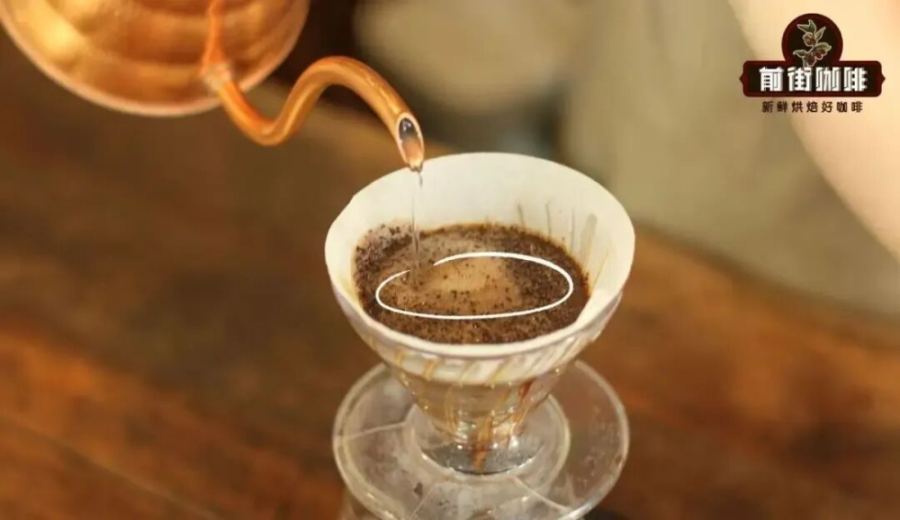
Introduction:Which direction should the circular pouring for pour-over coffee follow—clockwise from the center outwards, or counterclockwise from the outside in? This seemingly minor technique actually has a direct impact on extraction uniformity and the final flavor profile of your coffee. Through comparative testing, we’ll take an in-depth look at how these two pouring paths differ in terms of concentration, flow rate, coffee bed condition, and flavor complexity. We’ll also offer practical brewing tips tailored to conical drippers to help you refine your pour-over skills.
Pour-over coffee may seem simple, but every step hides subtle details that influence flavor. Among them, the direction of the circular pour—whether pouring from the inside out or the outside in—is a commonly overlooked yet crucial factor. This choice not only affects turbulence in the coffee bed but also directly impacts extraction evenness, which in turn influences taste and aroma in the cup.
To explore the differences between these two pouring methods, we conducted a rigorous comparative experiment. All parameters were kept consistent except for the direction of the circular pour. Using the same medium-light roasted Ethiopian coffee bean, we poured water using both the inside-out and outside-in methods. By measuring concentration with a refractometer and conducting sensory evaluation, we observed the differences in concentration, flow rate, coffee bed morphology, and flavor expression between the two.
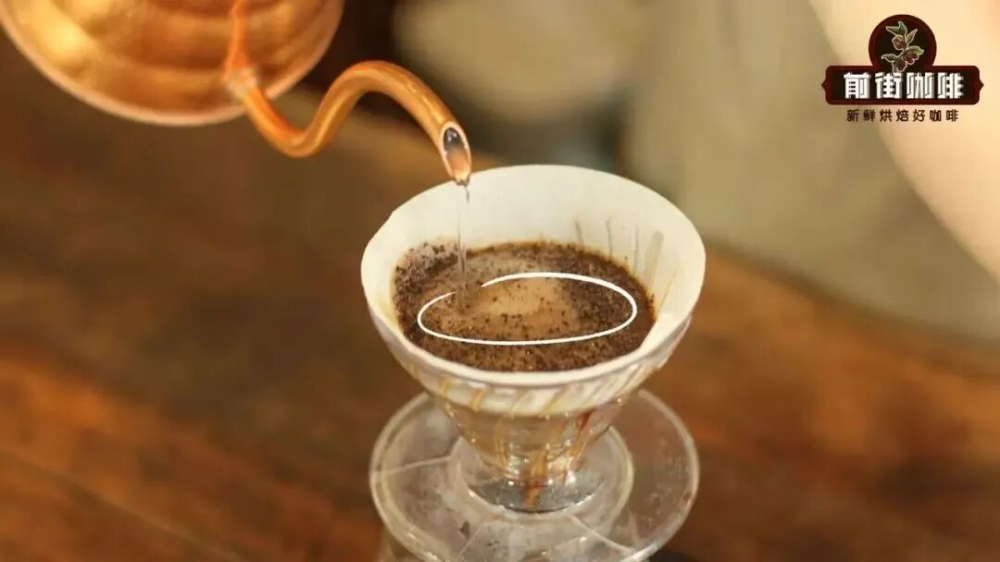
A customer once asked an interesting question while selecting beans: when pouring water during pour-over, should you start from the center and spiral outward, or begin from the outer edge and gradually move inward? Would either affect the taste of the coffee? While many believe pour-over doesn’t require too much fuss, for coffee enthusiasts aiming for better extraction, these details are indeed worth understanding. When coffee turns overly sour or astringent, or when a crater-like indentation forms in the coffee bed, it’s often due to improper pouring technique.
There are many variables in pour-over brewing, and just the circular pour can be adjusted across multiple dimensions—circle size, water stream height, clockwise or counterclockwise direction, even pouring speed and stirring techniques. While there’s no absolute standard for these, each has its own extraction logic behind it. We always recommend a gentle and steady circular pouring method—not only is it easier to control, it also promotes more even extraction. The core purposes of the circular pour are twofold: first, to create agitation in the coffee bed through water flow, encouraging the release of soluble compounds; second, to use the round structure of the dripper to allow water to evenly pass through all parts of the coffee grounds, minimizing the chance of uneven extraction.
No matter which circular path you choose, pay attention to two key points: first, try to maintain a circular water trajectory to avoid irregular impacts that could lead to an uneven coffee bed; second, always pour in the same direction throughout the process—for example, if you choose clockwise, stick with that direction—to help form a stable vortex in the water flow. These two principles apply to any circular pouring method, whether from the inside out or the outside in.
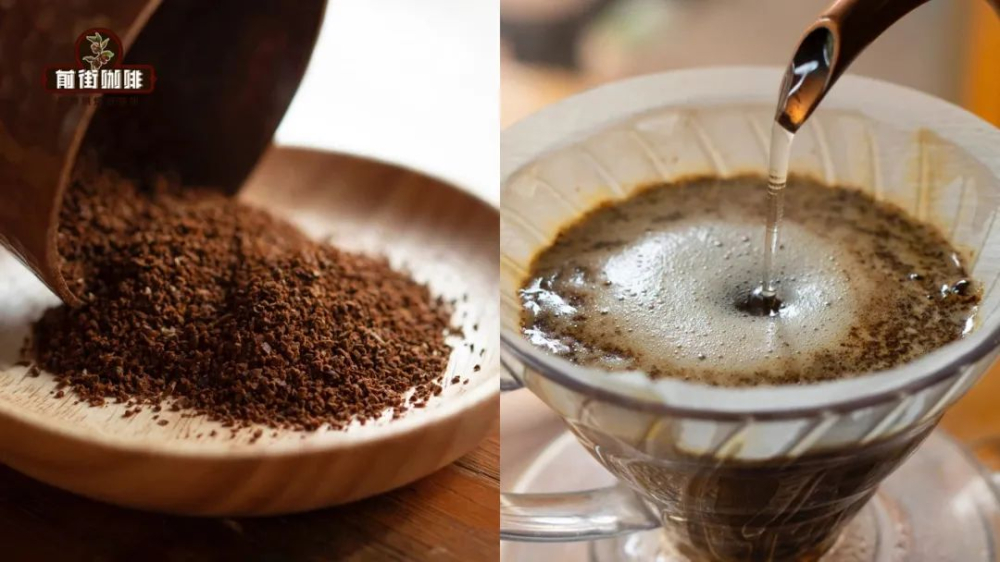
So, when all other conditions are exactly the same, how big is the actual difference between pouring from the inside out versus the outside in?
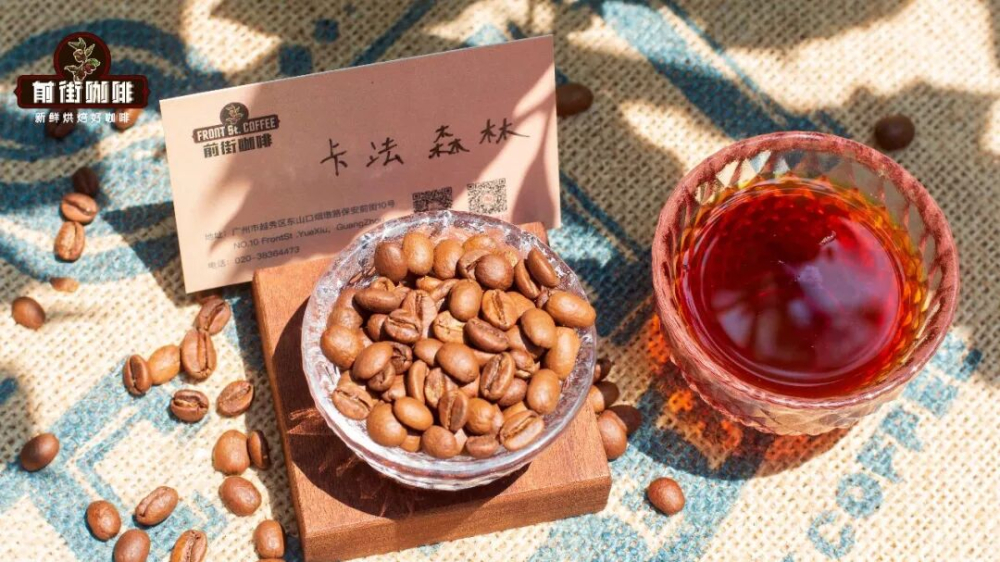
We selected an Ethiopian coffee bean with balanced flavors, citrus notes, and nuttiness—Kafa Forest—as the brew subject for this experiment. This medium-light roasted bean not only features the bright acidity and floral-fruity aromas typical of African beans, but also has a hint of creamy roasted melon seed aroma. It has moderate body, making it ideal for observing subtle extraction changes.
In the experiment, all brewing parameters were consistent with daily recommendations, with the only variable being the direction of the circular pour. Specific settings were as follows: 15 grams of coffee, a 1:15 coffee-to-water ratio, grind size roughly equivalent to that of fine sugar (80% passing through a Chinese No. 20 sieve), water temperature at 93°C, using a V60 conical dripper.

【Inside-Out Circular Pour】
This method involves pouring hot water onto the center of the coffee bed, then slowly spiraling outward in a clockwise direction. The first pour is 30 grams of water for a 30-second bloom, followed by a second pour of 90 grams using a small stream spiraling from the center outward. The scale showed a total of 120 grams of water at this stage. Once the water level dropped enough to reveal the coffee bed, a final pour of 105 grams was added. The overall extraction time was controlled between 1 minute 25 seconds and 1 minute 35 seconds, with the brewed coffee dripping through by around 1 minute 55 seconds.
The benefit of the inside-out approach is that hot water first contacts the thickest part of the coffee bed at the center, helping to fully extract the core section. Meanwhile, the outward-spreading water flow also evenly agitates the surrounding coffee bed. This “mosquito coil”-style path helps form a more uniform coffee wall, reducing the likelihood of water flowing away from the edges.
【Outside-In Circular Pour】
As a comparison, the outside-in method starts pouring from the edge of the coffee bed, spiraling clockwise from a large circle gradually narrowing toward the center. The first pour is again 30 grams of water for a 30-second bloom. The second pour begins from the “bulge” at the outer edge of the coffee bed, spiraling inward while gradually adding 90 grams of water. The scale showed 120 grams at this point. After the coffee bed becomes visible again, the remaining 105 grams of water is poured. The entire extraction process finished in about 2 minutes and 10 seconds.
However, because this method starts pouring from the outer edge, it can cause the edge coffee grounds to release their compounds too early, while the center may be under-extracted. As brewing progresses, water tends to flow away through gaps at the edge of the dripper, not only affecting overall extraction efficiency but also often leading to a flow rate that starts fast and slows down later.
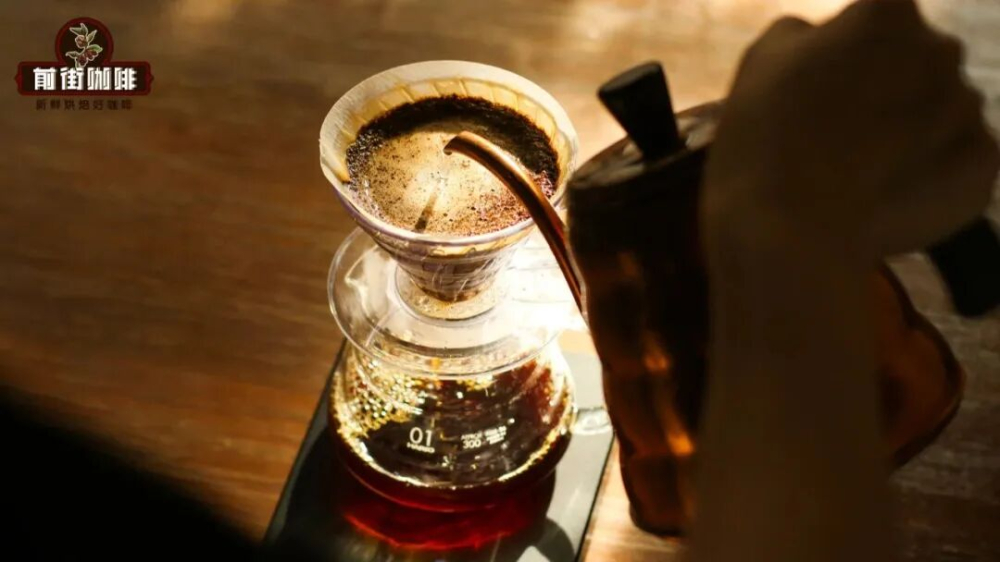
Experimental results showed that coffee brewed with the inside-out method had a neat, bowl-shaped coffee bed with an even coffee wall and stable water flow. In contrast, the outside-in method resulted in coffee grounds being washed down to the bottom and accumulating, causing uneven flow and ultimately less foam on the cup walls, with fine coffee particles appearing at the bottom.
Concentration tests further confirmed this: the coffee brewed with the inside-out method had a concentration of1.42%, slightly higher than that of the outside-in method, which was1.39%, indicating that the former more effectively extracted soluble compounds from the coffee under the same conditions.
In terms of flavor, both coffees exhibited a base note of citrus, nuts, and orange, but the inside-out version had stronger flavor intensity, a richer mouthfeel, and a clear sweet apricot aroma. Its acidity and sweetness were well-balanced with distinct layers, and it didn’t turn overly sour or bitter even as it cooled. In contrast, the outside-in coffee had a shorter-lasting aroma, weaker layering on the palate, and more pronounced acidity and bitterness after cooling.
Based on the comprehensive experimental results, we conclude that due to the structure of conical drippers like the V60, coffee grounds naturally accumulate toward the bottom center, resulting in a thicker coffee bed in the center and a thinner one at the edges. Using an outside-in pouring method can easily lead to over-extraction at the edges and under-extraction in the center. Coupled with water tending to escape from the edges, overall extraction efficiency is actually reduced. The inside-out circular path not only fully mobilizes the release of flavors from the thick central coffee bed, but also forms a stable coffee wall structure, reducing ineffective water flow and thereby improving overall extraction uniformity and concentration.
Therefore, if you’re using a V60 or similar conical dripper and want to brew coffee that is rich, full-bodied, and has clear flavor expression, try the “mosquito coil”-style inside-out circular pour—starting from the center and slowly spiraling outward in a clockwise direction. It might just bring an unexpectedly satisfying upgrade to your pour-over experience.
The above content is compiled by CoffeeHunters, a coffee news website.


