








Introduction:Is pour-over coffee only meant to be sipped black? Actually, adding milk can also bring out unique flavors. This article explains in detail how to adjust the coffee-to-water ratio, grind size, and water temperature to brew a high-concentration pour-over base using dark roasted beans, and then mix it with milk in scientifically precise proportions to create a smooth, layered milk coffee. We provide complete parameter settings, step-by-step pouring techniques, and flavor evaluations to help you easily recreate professional-level pour-over milk coffee at home.
What if a friend suddenly says to you: “Boss, give me a pour-over with sugar and milk!” Would you be stunned? Behind this internet meme lies many people’s misunderstanding of how coffee should be consumed. The traditional view is that pour-over coffee should be enjoyed purely for its original flavor, and adding milk or syrup will ruin the flavor profile. But the truth is, coffee is fundamentally an everyday beverage, and how you drink it is entirely up to personal preference.

From its very beginning, coffee has been about providing a clean, grit-free drinking experience—whether it’s espresso or pour-over drip, the difference lies only in the brewing method. The key is to find the flavor combination that suits you, rather than adhering rigidly to certain established rules. Adding an appropriate amount of milk can not only neutralize the sharp acidity of coffee but also soften the mouthfeel, creating a new balance of taste.
Take Indonesian Golden Mandheling, for example. This dark roasted bean features distinct notes of chocolate, spices, and nuts, making it particularly suitable as a base for milk coffee. Its rich body and long-lasting aftertaste can present a more full-bodied flavor structure when brewed at high temperatures, and even when mixed with milk, it can maintain clear layers of flavor.
To make a high-quality pour-over milk coffee, the first step is to brew a higher-concentration coffee liquid. It is recommended to use the followingprofessional-grade parameter configuration:Use 20 grams of medium-fine ground coffee (approximately 80% extraction through a #20 sieve), with the coffee-to-water ratio precisely controlled at 1:8, and the water temperature maintained at 90°C. Use a conical filter (such as Kono) for a 2-minute step-by-step extraction, which can effectively improve extraction efficiency while avoiding excessive bitterness or astringency.
The specific operation uses a three-stage pouring method: initially pour hot water at twice the weight of the coffee grounds (about 40ml) for a 30-second bloom to activate the coffee’s soluble compounds; then divide the remaining 120ml of hot water into three equal parts (40ml each) and slowly pour in small streams in a circular motion from the center outward. This technique ensures even extraction, achieving a coffee concentration more than 1.5 times that of a regular pour-over, laying the foundation for later blending with milk.

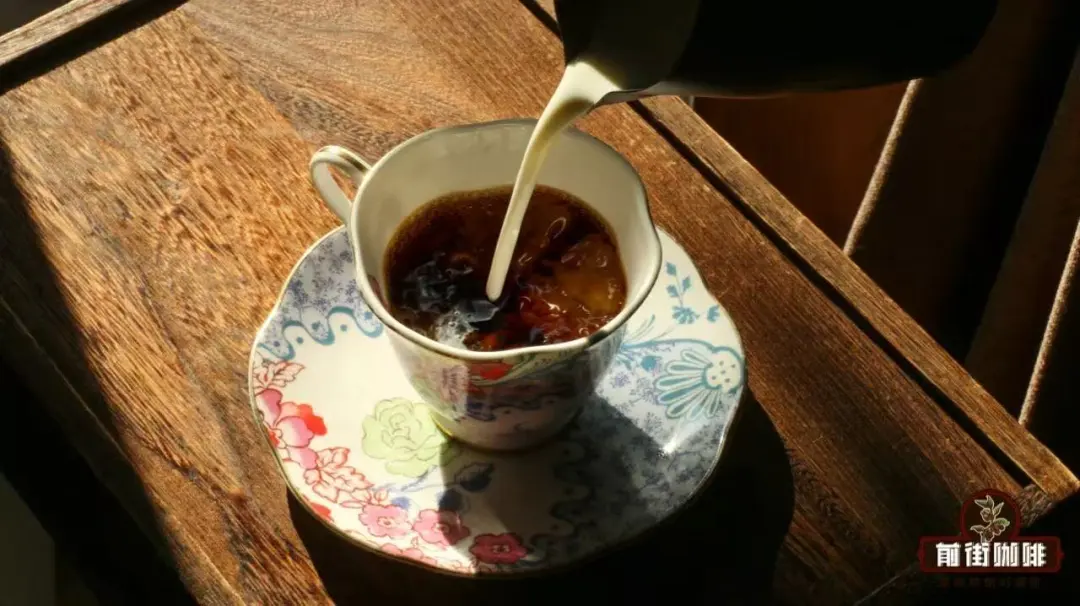
Once you have obtained the high-concentration coffee liquid, the key step is mastering the golden mixing ratio. Experiments have shown that when coffee liquid and whole milk are mixed at a 1:1 weight ratio (i.e., 120ml of coffee liquid + 180ml of milk), it can both preserve the main flavor of the coffee and achieve the desired silky mouthfeel. Be sure to use fresh refrigerated milk with a fat content of 3.5% or higher, which can better coat the coffee particles to form a dense foam.
The final product’s flavor performance is surprisingly delightful: first and foremost is the silky-smooth texture, completely overturning the impression of a thin pour-over; on the taste level, it presents a balanced three-phase experience—initially a mild caramel sweetness, followed by the slight bitterness of dark chocolate and nutty aromas in the mid-palate, and the finish retaining the refreshing citrusy notes unique to coffee. The overall body is noticeably enhanced, yet without the cloying issue commonly found in traditional milk coffees.

Common mistake reminders: Avoid using too coarse a grind, which can lead to under-extraction, or too low a water temperature, causing dull flavors. If you find the mixed result too intense, you can appropriately increase the milk ratio to 2:1; if you’re aiming for a stronger coffee character, you can adjust the coffee-to-water ratio to 1:7 to increase concentration. Remember, the best recipe always requires fine-tuning according to personal taste—this is the charm of pour-over coffee.
The above content is compiled by CoffeeHunters, a coffee news website.


