







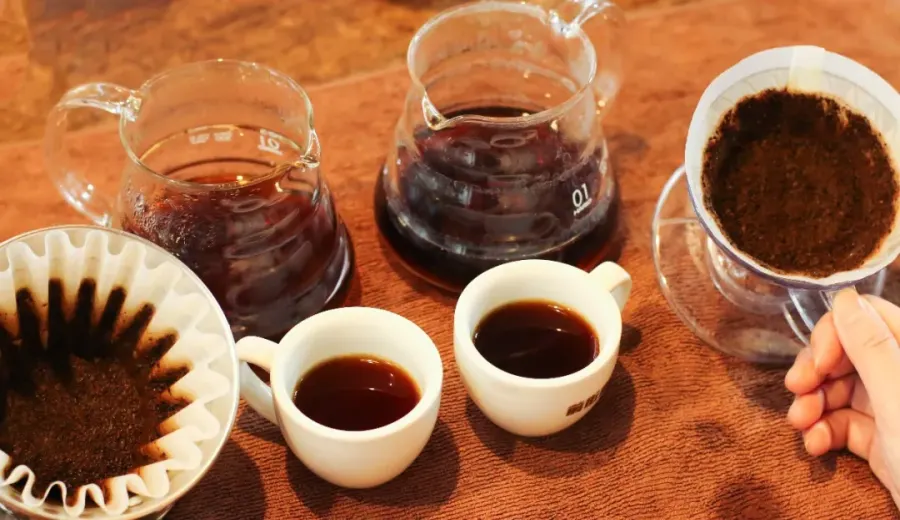
Introduction:When adjusting pour over coffee extraction parameters, the combination of grind size and brew time is key to influencing flavor and mouthfeel. This article delves into two extraction strategies—"fine grind with short brew time" and "coarse grind with long brew time"—analyzing their impact on flavor layers, body, and practical brewing processes. It helps you understand the characteristics of different parameter combinations, and provides real-world testing data using Ethiopian Hua Kui beans to help you find the brewing method that best suits your taste.
In the world of pour over coffee, many factors influence the final flavor, but the pairing of "grind size" and "brew time" is one of the most critical elements in determining whether a cup of coffee can achieve its ideal expression. Coffee enthusiasts often discuss the two mainstream methods—"fine grind quick brew" and "coarse grind slow brew." What are the differences between them in terms of flavor presentation and mouthfeel experience? This article will use actual pour over coffee extraction parameters as examples to comprehensively compare these two brewing methods, and guide you from theory to practice in mastering their applicable scenarios and adjustability.
Simply put, "fine grind quick brew" refers to grinding coffee beans finer while shortening the contact time between water and coffee grounds; whereas "coarse grind slow brew" uses coarser coffee grounds and extends the extraction time. Both methods can produce good-tasting coffee, but they differ significantly in aroma expression, flavor layering, and mouthfeel.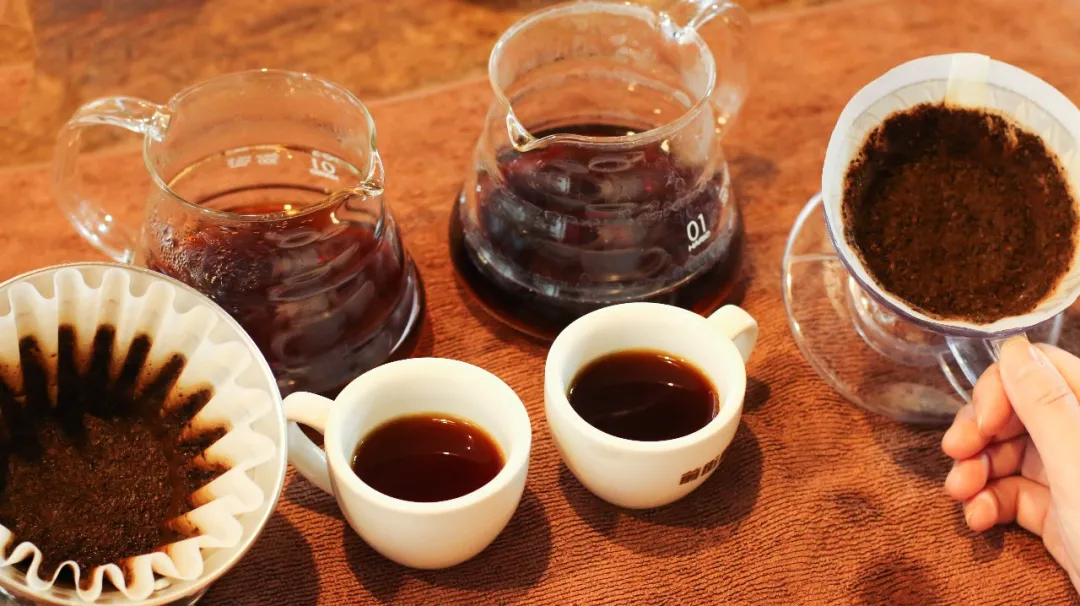
Fine-ground coffee has a larger total surface area, allowing it to release its internal flavor compounds more quickly. When these fine grounds come into contact with hot water, if the time is not properly controlled, over-extraction can easily occur, leading to increased bitterness and astringency. Therefore, the core of "fine grind quick brew" is to use a shorter extraction time to mitigate the risk of over-extraction, while preserving bright, clear acidity and complex aromatic layers. This method is especially suitable for drinkers who prefer strong, distinctly layered flavors. Pairing it with a cone-shaped filter—like a V60—that enhances the thickness of the coffee bed can further intensify the flavor expression.
Take an Ethiopian Hua Kui coffee bean as an example—one that uses a natural processing method and is medium-light roasted. This bean is known for its floral and fruity aromas and soft, sweet acidity, making it an excellent choice for everyday drinking. The tested parameters are as follows: 15 grams of coffee, a 1:15 coffee-to-water ratio, water temperature around 92°C, grind size controlled to a fineness where 75%–80% passes through a #20 sieve, using a fast-flowing V60 filter, with the total extraction time maintained at around 2 minutes. These parameters can be considered a typical setup for "fine grind quick brew," suitable for beginners who want to directly experience distinct flavor layers.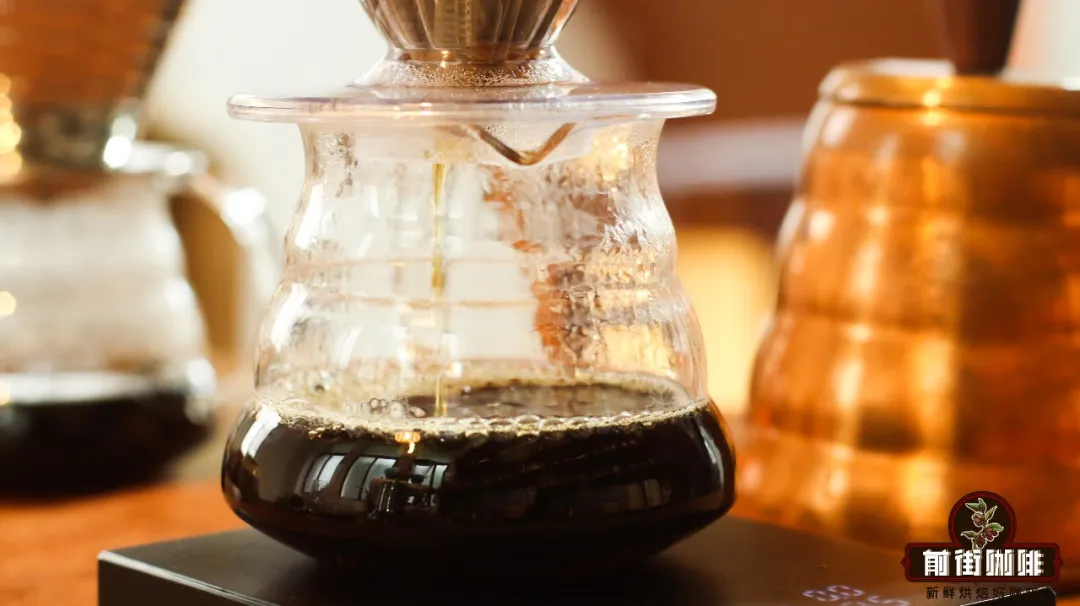
In practical operation, you can follow the standard three-pour method: First, pour about 30 milliliters of hot water (twice the weight of the coffee) for a 30-second bloom to activate the release of aromas from the coffee grounds; then, with a steady and moderate stream, pour in about 120 milliliters of water in large circles; when the water level drops to just above the visible coffee bed, switch to a finer stream and smaller circles to pour the remaining 75 milliliters. Wait until the filter has completely dripped through before removing it, resulting in a Hua Kui pour over with clear layers, balanced sweetness and acidity, and a long-lasting aftertaste. This brewing method allows you to clearly taste notes of apricot, citrus, berries, and a subtle oolong tea finish, with an overall refreshing mouthfeel and prominent aromas.
In contrast to fine grind quick brew, "coarse grind slow brew" takes the opposite approach: it uses a coarser grind and extends the contact time between water and coffee grounds, typically ranging between 2 minutes 30 seconds and 3 minutes. Coarse grounds have a smaller total surface area, so the rate at which they release flavor compounds is slower. Without sufficient time, under-extraction can easily occur, resulting in a weak, thin-tasting coffee lacking in layers. However, when done correctly, coarse grind slow brew can deliver a fuller body, more even flavor distribution, and a smoother mouthfeel.
Using the same Ethiopian Hua Kui as an example, if you opt for the coarse grind slow brew method, the recommended parameters are: 15 grams of coffee, a 1:15 coffee-to-water ratio, water temperature at 92°C, grind size adjusted to 70%–75% passing through a #20 sieve (relatively coarser), paired with a slower-flowing flat-bottomed filter such as a Kalita Wave. The total brew time is controlled between 2 minutes 30 seconds and 2 minutes 45 seconds. The operation can still follow the three-pour method: start with a 30-second bloom, then pour 100 milliliters of water in a steady “spiral” pattern; once the water level drops, add another 95 milliliters, and finally let it fully drip through. Though this method takes slightly longer, it effectively improves extraction consistency, resulting in a more balanced and richly flavored cup.
It’s worth noting that due to the slower release rate, coarse grind slow brew is less prone to over-extraction even with extended time—especially for coffee beans that are less prone to clogging and can withstand longer extraction. This better showcases the full integrity of the flavors. In actual tasting, the Hua Kui beans still retain their clear floral and fruity character, but with a fuller body, more harmonious sweetness and acidity, and an even longer aftertaste. This makes it suitable for those who prefer a richer mouthfeel and balanced flavors.
In summary, "fine grind quick brew" and "coarse grind slow brew" each have their own strengths—there is no absolute superior or inferior. The former emphasizes flavor layering and clear acidity, making it ideal for those seeking bright tastes and complex aromas; the latter excels in delivering a full body and consistent flavor, catering to those who enjoy smooth, rich mouthfeels. In fact, the parameters listed in this article are relatively conservative. You can experiment based on your personal taste preferences—trying finer grinds with shorter times or coarser grinds with longer brews—to find the perfect combination that truly matches your palate.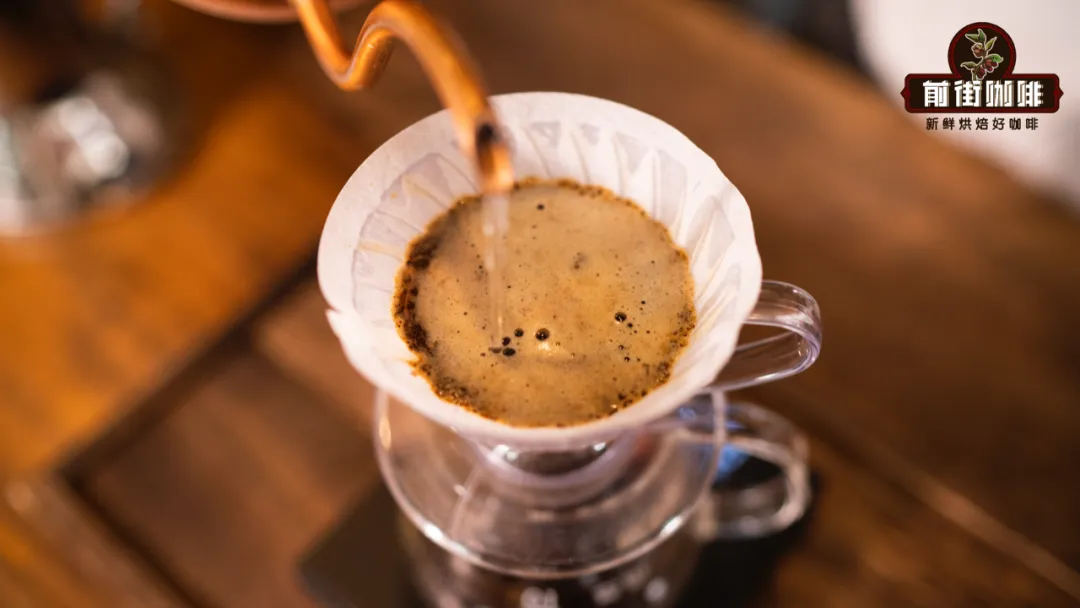
The above content is compiled by CoffeeHunters, a coffee news website.


