








Introduction:Freshly roasted coffee beans are rich in carbon dioxide, and brewing them directly can easily affect flavor and stability. This article delves into the differences in resting (degassing) times between pour over and espresso beans, explains why freshly roasted beans need time to settle and release gas, and provides recommended resting durations for different roast levels, as well as how the brewing method impacts degassing. Additionally, it shares tips—such as pre-grinding and adjusting water temperature—if you wish to enjoy freshly roasted beans immediately, helping coffee enthusiasts achieve optimal flavor expression.
Roasted coffee beans contain a large amount of carbon dioxide, which can not only interfere with the stability of the brewing process but also affect the final flavor presentation. Therefore, allowing the beans to go through a resting period—that is, a degassing process—is crucial for extracting a balanced and rich coffee flavor. Different roast levels and brewing methods correspond to different recommended resting times. Generally speaking, light roast beans are recommended to rest for 3 to 5 days, while dark roast beans require 5 to 7 days. Moreover, if using immersion brewing methods such as French press, siphon, or cold brew, about 2 days is usually sufficient; however, for pressure-based espresso extraction, an additional half of the base resting time is needed to ensure that carbon dioxide is fully released.

Why do freshly roasted coffee beans need to rest? Primarily because newly roasted beans contain a high concentration of carbon dioxide, which can hinder most brewing methods from effectively extracting the flavor compounds in the coffee, leading to unstable extraction or less-than-ideal flavors. With an appropriate resting period, the internal carbon dioxide in the beans is gradually released, making the subsequent brewing process smoother and the flavor performance more outstanding. Especially for dark roast beans, due to the greater amount of carbon dioxide produced during roasting, they require a longer time for degassing compared to light roast.
Recommended resting times vary depending on the roast level of the coffee beans. Light roast beans are typically advised to rest for 3 to 5 days, by which time the carbon dioxide release has significantly decreased, making them suitable for most drip-style brewing. Dark roast beans, on the other hand, are recommended to rest for 5 to 7 days, as their internal structure is denser and carbon dioxide is released at a slower rate. It’s worth noting that the brewing method also affects how resting time is adjusted. For example, if using immersion brewing methods such as French press or siphon, around 2 days of resting is usually enough regardless of roast level, as these methods are less affected by carbon dioxide. With coffee grounds fully submerged in water, sufficient steeping time allows flavor compounds to be adequately extracted. However, resting for 2 days also helps reduce the possible harshness that fresh beans may bring, which can also be partially mitigated through pre-grinding.

If you’re using a pour over method such as a V60 or similar drip-style brewing, it’s advisable to refer to the above resting times for both light and dark roasts. But if you’re using a pressure-based espresso machine, you’ll need to extend the base resting time by half. This is because high-pressure extraction is more sensitive to carbon dioxide; insufficient degassing can not only affect the brew flow rate but may also result in less focused flavors or unpleasant sharpness. Therefore, if you’re using an espresso machine, it’s essential to allow for a longer resting time to ensure stable extraction and full flavor expression.
Of course, if you’re eager to taste the unique flavors of freshly roasted coffee beans but are concerned about incomplete resting affecting extraction, there are some techniques you can use to improve the experience immediately. For instance, pre-grinding—also known as “coffee blooming” or “pre-activating the grounds”—is a simple yet effective method. For example, if you’ve just received freshly roasted beans and they’re still very new, you might consider grinding them into powder ahead of time and letting the grounds sit for 2 to 3 minutes before brewing, allowing the coffee powder to fully interact with the air. This accelerates the release of carbon dioxide while also reducing the common harshness of fresh beans, making the brewing process smoother.
In addition to pre-grinding, fine-tuning extraction parameters is another effective way to enhance extraction efficiency and ensure that flavor compounds are fully dissolved. It is recommended to moderately increase the water temperature—for example, adjusting it to 94°C—and pair it with a medium grind size, such as 75% to 80% of a 20-mesh sieve’s fineness. Then use a 1:15 coffee-to-water ratio for a three-pour pour over method, keeping the total extraction time around two minutes. This parameter setup helps bring out the coffee’s rich layers and balanced flavors, even when the resting period isn’t fully complete.
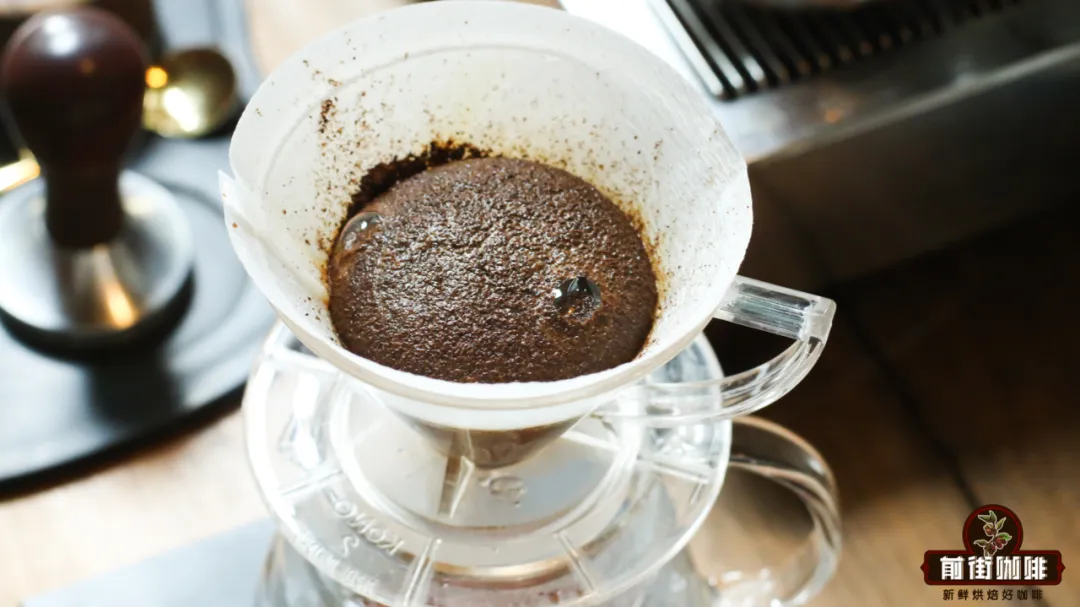
Through the above methods, it’s still possible to extract a coffee with balanced flavors and harmonious acidity and sweetness, even if the beans haven’t completed their full resting period. For instance, a properly adjusted pour over coffee might showcase distinct notes of apricot, citrus, oolong tea, and subtle floral aromas, with a light mouthfeel and a long aftertaste—almost no trace of the usual harshness or lack of depth found in fresh beans. Therefore, techniques like pre-grinding and fine-tuning parameters are especially suitable for coffee enthusiasts who want to enjoy freshly roasted coffee right away while maintaining good extraction quality.
However, it’s important to note that while pre-grinding is convenient, once coffee beans are ground, their surface area exposed to air increases significantly, and flavor compounds are more prone to volatilization over time. Therefore, it’s recommended to use the ground coffee within 2 to 3 minutes after grinding to avoid prolonged exposure that could lead to substantial flavor loss, ultimately affecting the final cup quality. In summary, understanding the resting time needs for different roast levels and brewing methods, and making good use of pre-grinding and parameter adjustments, will allow you to easily achieve satisfying flavor results—even when working with freshly roasted coffee beans.

The above content is compiled by CoffeeHunters, a coffee news website.


