








Introduction:As an important branch of Arabica, Bourbon coffee—with its Red Bourbon and Yellow Bourbon varieties—often piques the curiosity of coffee enthusiasts regarding their differences. This article delves into their historical origins to explore how this pair of “same-origin, different-color” siblings took root around the world, and compares their differences in cultivation traits, yield, and pour over flavor profiles. Through real-world menu examples, we’ll take a deeper look at the unique charm and brewing recommendations of these two popular Bourbon varieties.
Bourbon is one of the oldest varieties in Arabica coffee, originating from a mutation of Typica and standing alongside it as one of the most ancient coffee lineages still in existence. This variety has not only given rise to many descendant varieties but has also long held a place in the coffee growing community due to its elegant flavors and relatively stable yield. Among them, Red Bourbon and Yellow Bourbon have become focal points for many roasters and consumers due to differences in fruit appearance and flavor.

To understand the differences between these two varieties, we need to start with the origins of Bourbon. As early as the beginning of the 18th century, Europe’s demand for coffee surged, yet coffee trade at the time was almost monopolized by Yemen, and the exported beans were processed and not suitable for planting. In an effort to break this monopoly, France made multiple attempts starting in 1708 to “borrow” coffee seedlings from Yemen. The successful introductions in 1715 and 1718 allowed coffee to be planted on Bourbon Island (now Réunion Island), located about 680 kilometers east of Madagascar. Under the region’s unique environment, these coffee trees mutated, evolving into a shorter plant with firmer fruit—what later came to be known as the “Bourbon” coffee variety.
Over time, the Bourbon variety was brought by French missionaries to Africa, South America, and other regions, where it continued to mutate under varying microclimates and soil conditions, forming a diverse “Bourbon family.” Red Bourbon is one such member, initially planted in places like Africa and showcasing clear fruity acidity and floral-fruity notes through washed processing. The Rwandan washed Red Bourbon on the menu comes from the southern region of Nyamasheke, grown at altitudes of 1500 to 1700 meters. This medium-light roasted bean exhibits flavors of berries, apples, green tea, and apricots, making it a representative choice for experiencing the refreshing characteristics of Red Bourbon.
As for Yellow Bourbon, its emergence is closely tied to Brazil. As early as 1860, the Bourbon variety was introduced to Brazil and quickly became one of the main cultivated varieties. By 1930, on a plantation near Pedernales in the state of São Paulo, farmers discovered a mutant coffee tree that bore yellow fruit. Since it appeared in a Bourbon-growing area—and the region also had the yellow-fruited Yellow Botucatu variety (a yellow Typica)—it was thought to possibly be a hybrid result and was simply named “Yellow Bourbon.”

However, although Yellow Bourbon possesses fascinating potential, it also comes with no shortage of challenges. It inherited Typica’s high environmental demands—not only is it weak in disease resistance and intolerant to wind and rain, but it also has a low yield—which leads most coffee farmers to be reluctant to plant it on a large scale. Yet, in high-altitude environments, Yellow Bourbon can display intense sweetness, chocolatey tones, and a rich mouthfeel, making it suitable for consumers who prefer medium-to-dark roasted flavors. The Brazilian Queen Estate Yellow Bourbon is a classic example. These beans from the Mogiana region, grown at altitudes of 1400 to 1950 meters and processed using the honey method, are medium-to-dark roasted, highlighting aromas of chocolate, nuts, and caramel, with subtle berry and fermentation notes lingering in the aftertaste, delivering a richly layered flavor.
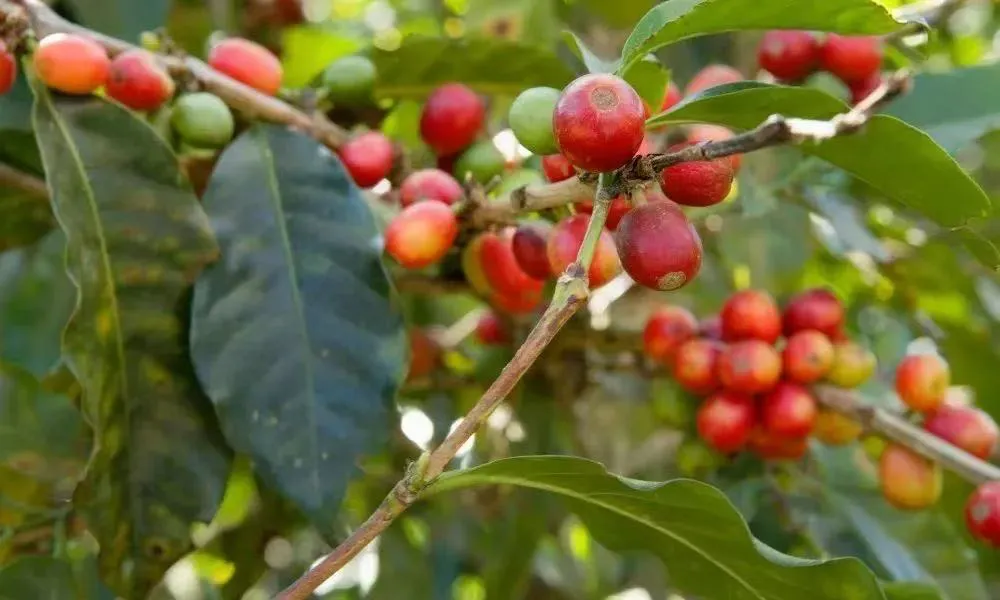
For coffee enthusiasts, Red Bourbon and Yellow Bourbon also show significant differences in pour over performance. Red Bourbon generally features bright flavors, soft acidity, and distinct floral, fruity, and citrus notes. It is suitable for medium-light roasting and a slightly higher water temperature (around 90–92°C). It is recommended to use V60 or Kalita Wave drippers, with a grind size between medium-fine and medium-coarse, and a brewing time controlled between 2.5 to 3 minutes. Yellow Bourbon, on the other hand, stands out for its pronounced sweetness, making it suitable for slightly darker roasts. When brewing, you can slightly lower the water temperature (around 88–90°C) to highlight its caramel and nutty aromas. The grind size can be slightly coarser, and the brewing time can be a bit longer to fully release its rich underlying tones.
In summary, although Red Bourbon and Yellow Bourbon share the same origin in the Bourbon variety, they exhibit distinctly different flavor profiles and cultivation challenges due to differences in fruit color, growing environment, and processing methods. For coffee lovers, understanding their historical background and characteristics not only enhances the drinking experience but also helps make more precise choices when selecting coffee beans. Whether you prefer a refreshing fruity profile or a rich, sweet aroma, these two classic Bourbon varieties are definitely worth trying.

The above content is compiled by CoffeeHunters, a coffee news website.


