








Introduction:Many pour over coffee enthusiasts often encounter issues like weak flavor and lack of complexity in their brews, yet struggle to find a solution. In fact, this is often related to "bypass water" — water that flows directly into the bottom carafe without passing through the coffee grounds, which significantly dilutes concentration and flavor. This article delves into two common causes: the habit of rinsing the edges of the filter cone leading to water shortcuts, and forcibly raising the coffee bed, which backfires with high-density beans. It also offers specific adjustment suggestions based on different filter designs and bean characteristics to help you precisely control water flow, avoid bypass water interference, and brew rich, balanced coffee.
When brewing pour over coffee, it’s common to end up with a flat-tasting cup, yet many can’t pinpoint the real reason. In fact, “bypass water” is likely the culprit. Bypass water refers to water that doesn’t actually participate in extraction but ends up mixed into the final brew. Since it never fully interacts with the coffee grounds, it fails to extract the desired flavor compounds, resulting in diluted concentration and a dull, uninspired taste. This article will thoroughly and systematically analyze the two main causes of bypass water, including the habit of rinsing coffee grounds stuck to the edge of the filter and forcibly raising the coffee bed. It will also explore how different filter types (e.g., V60, Origami) and bean density variations (e.g., high-density vs. low-density beans) contribute to why some seemingly effective brewing techniques may actually have the opposite effect, diminishing the flavors you’re aiming for. Additionally, it shares practical strategies for handling high-density beans to help minimize bypass water interference and achieve a rich, full-bodied brew.

When your coffee consistently tastes weak and bland, the real “culprit” is often an excessive amount of bypass water. In pour over brewing, too much bypass water forcibly lowers the coffee’s intended concentration. As a result, even if other brewing parameters—like water temperature and brew time—are similar, the final cup may still end up with very thin flavor, failing to showcase the coffee’s rich taste and aroma. So what exactly is bypass water? Simply put, it’s water that never participates in the extraction process but instead mixes directly into the brewed coffee. And in the pour over process, bypass water typically arises due to the following two common reasons, which we’ll examine in detail below.

Many beginners—or even seasoned pour over brewers—often have a common habit: when pouring water over the coffee grounds, they instinctively use the water to rinse down coffee grounds stuck to the edges of the filter cone. They do this because they believe that those grounds clinging to the edges, which might not otherwise get enough hot water contact, should also be agitated and involved in the extraction process to ensure a more thorough and even brew. Without this intentional rinsing, grounds at the edges, due to their position and surrounding water flow, often struggle to receive sufficient hot water, which negatively impacts their extraction. However, this well-intentioned move to improve extraction can sometimes lead to unexpected issues, especially with certain filter cones.
If you’re using a filter cone like the Kono or Infinity—types without bypass holes—this habit of rinsing the edge grounds is generally not a major issue. But if you’re using a V60 or Origami, whose filter designs feature dense ribs, pouring water along the cone wall can cause the hot water to quickly and smoothly flow away through the gaps created by those closely spaced ribs. In this process, the water doesn’t fully interact with the coffee grounds—it bypasses extraction entirely—and directly drips into the bottom carafe. This negatively affects the final coffee’s concentration and extraction quality, compromising its flavor and mouthfeel. So if you often brew with ribbed filter cones like the V60 or Origami, it’s wise to be cautious during brewing: try not to pour water directly onto the cone walls. This helps avoid creating excessive bypass water from this small action, preserving the coffee’s original taste and texture, and resulting in a more delicious brew.
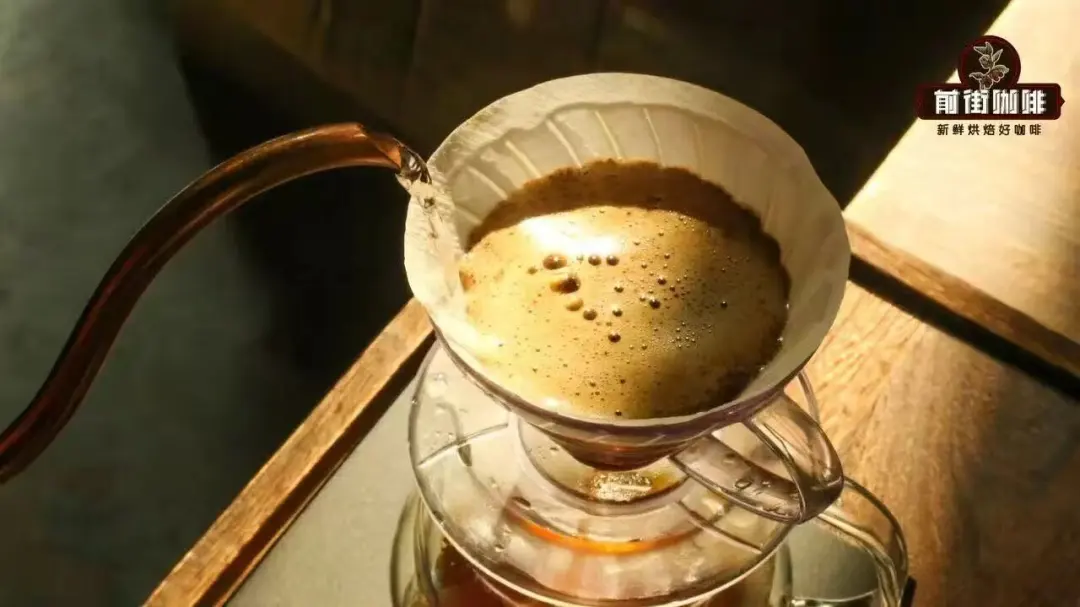
Next, let’s discuss another common cause of bypass water — forcibly raising the coffee bed. Raising the coffee bed is a technique often regarded as a way to enhance a coffee’s complexity. Previous articles have provided detailed introductions to this method (if you’re interested in learning more, you can check out the relevant “Portal” content). Simply put, this technique involves increasing the water flow intensity during pouring to encourage the coffee grounds to spread out and fill the entire filter cone space as much as possible. During brewing, this leads to varying amounts of hot water contacting coffee grounds in different parts of the cone. These differences in water exposure result in varying extraction rates across the bed—some areas extract more, others less—ultimately producing a cup with more nuanced layers and a richer tasting experience.
However, while raising the coffee bed can add complexity, this technique isn’t suitable for all coffee beans. For instance, lighter-roasted, high-density beans are generally not ideal candidates. The reasoning is straightforward: these beans just don’t “lift” easily. Consider this: most coffee grounds rise relatively easily with rising water levels because they’re lower in density and relatively light—almost buoyant—and naturally float upward as the water level increases. High-density beans, on the other hand, are heavier and denser, so even as the water rises, they tend to stay firmly settled at the bottom of the cone, resisting the upward push. If you insist on trying to raise the coffee bed with these high-density beans, often only the water level rises while the bed itself barely moves. And if you’re using a rib-heavy filter cone like the V60, this can lead to a situation where large amounts of water flow along the edges of the cone—areas untouched by coffee grounds—creating bypass water that flows freely into the bottom carafe. This significantly impacts the coffee’s concentration and extraction efficiency, ultimately degrading the quality of your brew. So when working with high-density beans, remember: avoid pouring too much water at once, or you risk generating substantial bypass water, which can negatively affect the coffee’s taste.

Some might worry that using smaller pours could lead to longer brew times, potentially causing over-extraction. But in reality, over-extraction is much less likely than you might think. High-density beans are inherently more resistant to releasing color, aroma, and flavor compounds. On the contrary, when brewing high-density beans, you can afford to be bolder and not overly concerned about over-extraction. For example, brewing high-density beans often involves slightly longer extraction times and more pulsed pouring steps. Take the Yirgacheffe Gudina from our coffee list—a classic example often used to discuss high-density beans. As mentioned in yesterday’s post, even with a two-and-a-half-minute brew time, this bean doesn’t exhibit over-extraction. In fact, it delivers a smooth yet structured cup with delightful flavors: fresh jasmine floral notes, bright citrus acidity, and a green tea-like freshness, all combining for a crisp, refreshing profile. It’s a highly resilient bean, excellent for pour over, and even well-suited for cold brew, showcasing its unique charm across different brewing methods.
In summary, as long as you remain mindful during your pour over process and strive to prevent hot water from flowing along uncovered edges of the filter cone, you can effectively reduce the generation of bypass water. With less bypass water, its negative effects—such as diluting concentration and disrupting flavor layers—are also greatly minimized. This way, you’ll be able to brew a delicious, flavorful, and well-balanced cup of coffee, turning each pour over session into a truly enjoyable experience.
The above content is compiled by CoffeeHunters, a coffee news website.


