







Introduction:Have you ever wondered why an Americano made from the same coffee beans using an espresso machine often tastes more intense than the pour over version? In fact, the key isn’t the brewing method itself, but rather the differences in coffee dosage and brew strength. This article delves into the extraction principles, liquid volume comparisons, and filtration precision of both methods, along with real test data and coffee bean recommendations suited to each technique. It will help you understand the true reasons behind the flavor differences and enhance your brewing skills.
Many coffee enthusiasts have noticed that when using the same coffee beans, the Americano made with an espresso machine tends to have a stronger and more pronounced flavor profile compared to the pour over version. This phenomenon leads many to assume that espresso machines yield better extractions. However, the truth has less to do with the brewing method itself and more to do with two core variables: coffee dosage and brew strength.
For example, real-world testing has shown that when using 20g of coffee grounds for both pour over and espresso-based Americano extraction, the Americano can reach a concentration of 1.95%, while the pour over only achieves 1.54%—a quite noticeable difference. What factors contribute to such a disparity? We’ll break it down step by step, looking at coffee dosage, liquid volume, and filtration methods.
First, many consumers often ask this question when selecting coffee beans: “Why does the Americano made from the same beans using an espresso machine taste more aromatic and stronger than the pour over?” In reality, coffee made with an espresso machine does exhibit stronger aroma than that from pour over, but this difference is not due to a vast gap in extraction technology. Instead, it’s more influenced by filtration methods and extraction parameters.
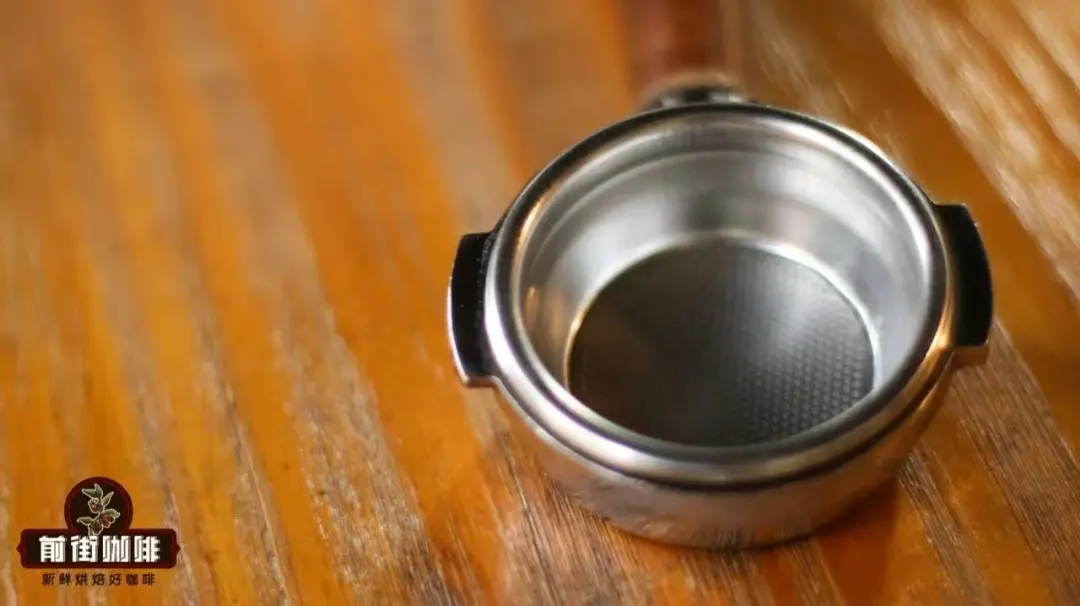
The filter basket of an espresso machine generally has lower filtration precision compared to the paper filters used in pour over, allowing some very fine coffee particles and coffee oils to pass through into the cup. This can slightly enhance the aroma. However, the effect is limited and not the decisive factor causing the overall flavor difference.
One of the main reasons behind the flavor difference is the variation in coffee dosage. Typically, a single serving of pour over coffee uses about 15g of coffee grounds, whereas espresso-based coffee usually starts at 18g or more. This is because the double shot portafilter in an espresso machine usually has a minimum coffee dosage requirement, commonly set at 18g.
Taking a practical example, if pour over uses 15g of coffeeand espresso uses 20g of coffee, under the same extraction efficiency, the 5g difference in coffee dosage directly affects the total amount of soluble substances extracted, thereby altering the overall flavor and strength of the coffee. Simply put,20g of coffee releases more flavor compounds, which is why espresso naturally results in a more intense taste.
However, if the coffee dosage is standardized to 20g, and the extraction efficiency remains the same, would the flavors be identical? The answer is not necessarily, because another crucial factor—brew strength—also plays a significant role.
To compare more clearly, we can use common medium-roast coffees as a control group. Since Americanos are primarily made by diluting concentrated espresso with hot water, while pour over is extracted via atmospheric drip, it's recommended to choose medium-roast beans that feature distinct notes of berries, citrus, and floral tones. These allow you to more easily perceive the differences between the two brewing methods.
Here are several medium-roast beans well-suited for both brewing methods, such as Strawberry Candy, Hua Kui, Gran Reserva Geisha, Blackberry, and Queen Estate. These beans all showcase rich and clear flavor profiles. In testing, using 20g of coffee grounds to make both pour over and Americano, there was a significant difference in concentration: the Americano reached 1.95%, while the pour over only achieved 1.54%. Flavor-wise, the Americano also exhibited a bolder berry and citrus profile.
So, why is the Americano still stronger in concentration even under the same coffee dosage and extraction efficiency? The key lies in the differing liquid volumes used during preparation.
Typically, pour over coffee uses a brew ratio of 1:15, meaning 20g of coffee is brewed with 300ml of hot water, yielding approximately 270ml of final coffee liquid. Meanwhile, Americano is usually made by first extracting about 40ml of concentrated espresso using a 1:2 brew ratio, then adding 160ml of hot water at a1:4 ratio
. The final total liquid volume is around 200ml. 70mlComparing the final liquid volumes, the pour over yields about
more coffee than the Americano. This is the main reason for the differences in concentration and taste. With a smaller total volume, the Americano ends up with higher concentration, making it taste richer and more intense.
If the Americano’s liquid volume were also adjusted to around 270ml—comparable to pour over—the flavors would be much closer under the same extraction efficiency. While slight differences may remain, these are mainly due to filtration precision. Americanos contain more coffee oils and very fine particles, giving them a slight edge in aroma. In fact, if you replace the paper filter in pour over with a lower-precision filter like a cloth or felt filter, the aroma will become noticeably closer to that of an espresso-based Americano.
The above content is compiled by CoffeeHunters, a coffee news website.


