








Introduction:Iced pour-over coffee is often bland like iced water due to improper parameter adjustments. This article delves into key adjustments in coffee-to-water ratio, grind size, water temperature, and pouring techniques to help you avoid common pitfalls and master the essence of iced extraction. Drawing from practical experience, it also provides bean selection suggestions tailored to different processing methods, along with detailed parameter settings—so even beginners can easily brew richly layered and full-bodied iced pour-overs.
Iced pour-over coffee isn’t simply hot coffee cooled with ice cubes; it involves multiple adjustments in coffee-to-water ratio, grind fineness, water temperature control, and pouring method. If these elements aren’t adapted to the reduced water volume, the result is often a weak, iced-water-like drink.

Many assume that simply reducing the pour volume is enough to quickly make iced coffee, but they overlook the simultaneous drop in concentration and extraction yield, which severely compromises flavor. In reality, while ice cubes rapidly cool the brew, they also dilute it. Therefore, total pour volume must be reduced while increasing overall concentration to maintain flavor intensity.
How should each parameter be adjusted? Take a common practice as an example: hot pour-over typically uses a 1:15 coffee-to-water ratio—15 grams of coffee grounds to 225 milliliters of hot water—while iced pour-over adjusts to a stronger 1:10 ratio, using only 150 milliliters of hot water. This adjustment helps compensate for flavor loss caused by reduced water volume. At the same time,the grind size should be 1–2 notches finer than for hot pour-over, increasing the 20-mesh sieve passage rate by about 5% to optimize extraction efficiency and avoid excessive bitter compounds.
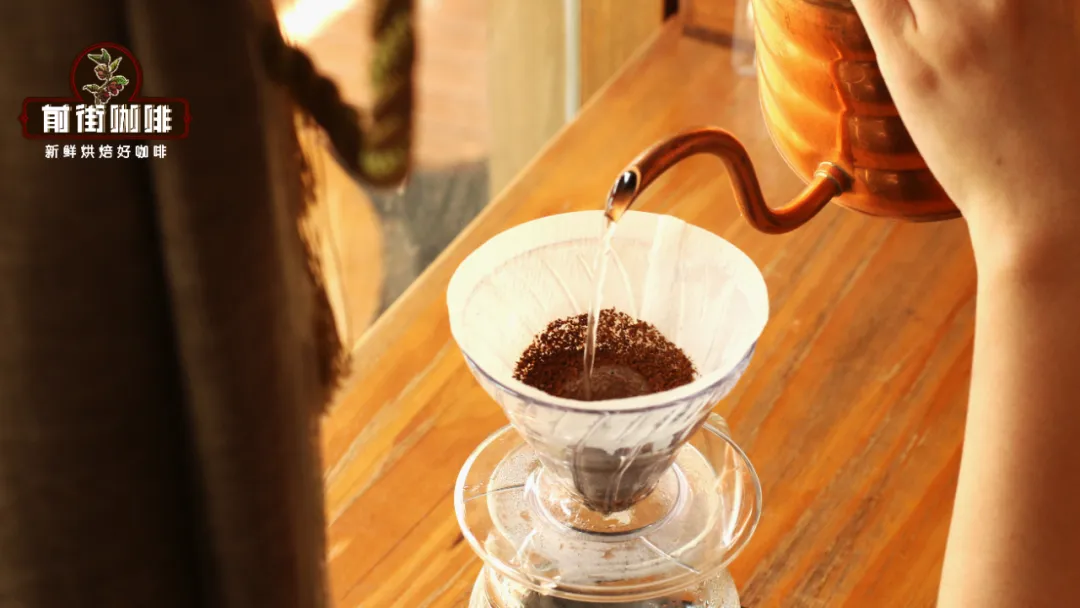
However, adjusting the grind alone isn’t enough to maintain ideal extraction. With less water, total extraction time shortens by about one-third, often leading to insufficient flavor extraction. To address this,a segmented pouring method can extend the pour time, allowing hot water to fully contact the coffee grounds and effectively improving extraction yield to compensate for the efficiency loss from reduced water volume.

To help you better grasp practical operation, here’s a complete iced pour-over parameter example: using 15 grams of Ethiopian Hamashu coffee beans,with a coffee-to-water ratio set at 1:10(compared to 1:15 for hot pour-over), along with about 100 grams of ice cubes. The grind size is controlled to an 80%–85% passage rate through a 20-mesh sieve (compared to about 75%–80% for hot pour-over), with water temperature maintained at 92°C and total extraction time around 2 minutes.
For the pouring steps, start with a 30-second bloom using twice the coffee weight in water, then divide the remaining water into three parts and slowly pour in small circles, ensuring each segment’s water penetrates before moving to the next until the target volume is reached. This method is simple and intuitive while ensuring stable extraction.

Brewing with the above parameters typically yields an iced pour-over with a vibrant sweet-and-sour balance, a thick and full-bodied mouthfeel, accompanied by fruity notes like strawberry, guava, and mango, along with delicate floral tones. The flavor performance is quite outstanding. Of course, the pouring method can be flexibly adjusted based on personal preference—as long as overall extraction efficiency remains good, you can brew a satisfying iced pour-over.
The above content is compiled by CoffeeHunters, a coffee news website.


