







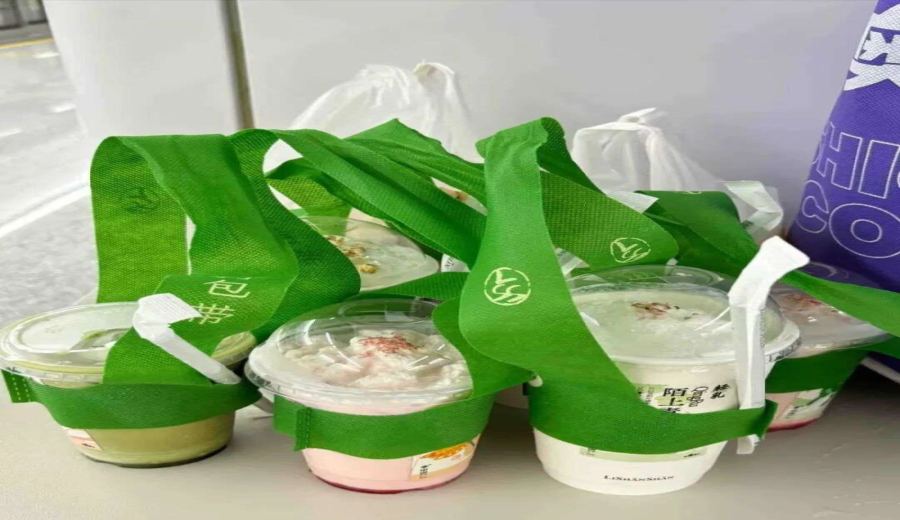
Introduction:Recently, the well-known milk tea brand Lishanshan Tea House has sparked heated discussion among consumers due to its unique takeout packaging method. Many customers have reported that the brand’s self-pickup service does not provide traditional paper or plastic bags, but instead uses a uniquely shaped green cloth strap to tie the cups together. This approach has been jokingly referred to by netizens as a “thong,” and has raised concerns over safety issues such as poor stability and spillage risks. This article delves into the incident, compares common takeaway packaging solutions on the market, and explores the balance between environmental ideals and consumers’ practical needs.
In the habits of tea beverage consumption, receiving a sturdy carry bag when picking up drinks is almost a given. However, the popular milk tea brand Lishanshan Tea House has taken a completely different approach—when customers opt for self-pickup, staff do not provide the usual paper or plastic bags, but instead use a green cloth strap to tie the drink cups before handing them directly to the customer.
This cloth strap, referred to as a “packaging strap,” garnered attention on social media even when not in use due to its unusual design, with netizens joking that it resembles a “thong.” During actual use, staff wrap the strap around the upper half of the cup, but there is no supporting structure beneath the base of the cup.
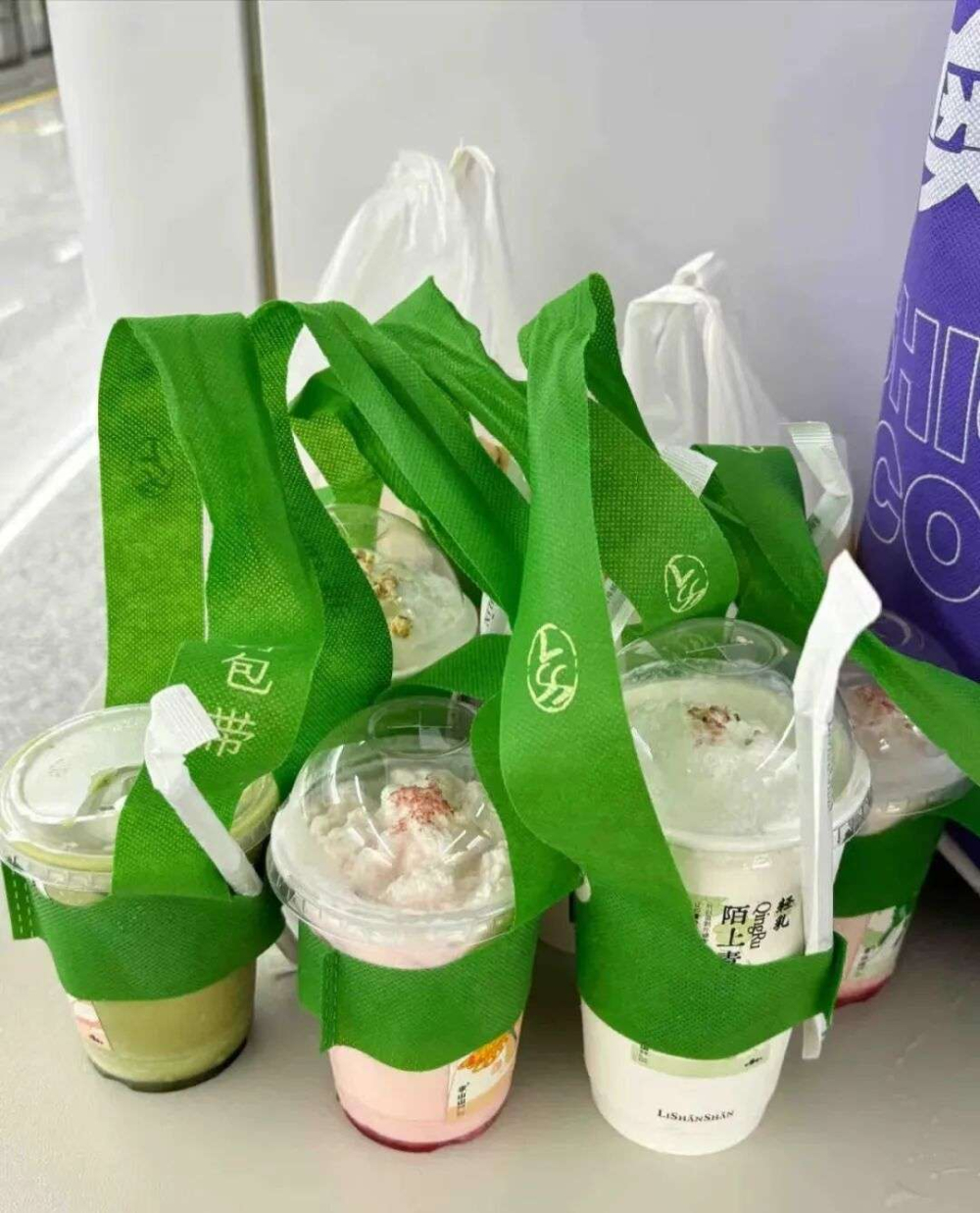
Many consumers have pointed out that this packaging method presents obvious safety hazards.Because the lower half of the cup is left hanging in the air, it can easily lose balance and tip over while walking.This is especially true in crowded places or when making turns. Some customers have said, “My drink spilled as soon as I stepped out of the store,” while others mentioned, “Even a slight bump from a passerby caused the entire drink to tip over.”
Aside from the stability issue, the brand’s policy of “providing only the cloth strap for any number of drinks purchased, unless an additional fee is paid for a special carry bag” has also drawn dissatisfaction. Many consumers feel that this rule lacks flexibility and fails to meet the practical needs of carrying multiple drinks or serving several people.
Compared to the packaging solutions of other brands on the market, the cloth strap design of Lishanshan Tea House is indeed unique. Some netizens have compared it to Starbucks’ previously launched mesh tote-style packaging, noting that although both emphasize environmental consciousness and minimalist design,Starbucks’ version at least includes a bottom support that allows drinks to be placed stably.Meanwhile, Lishanshan’s cloth strap relies entirely on wrapping around the upper part of the cup.
From a practical standpoint, an ideal milk tea packaging design should take into account the following key parameters:stability in securing the cup, balance while walking, reliability in holding the straw, and protection against impacts from sudden collisions.Lishanshan’s current cloth strap solution falls short in all these aspects.
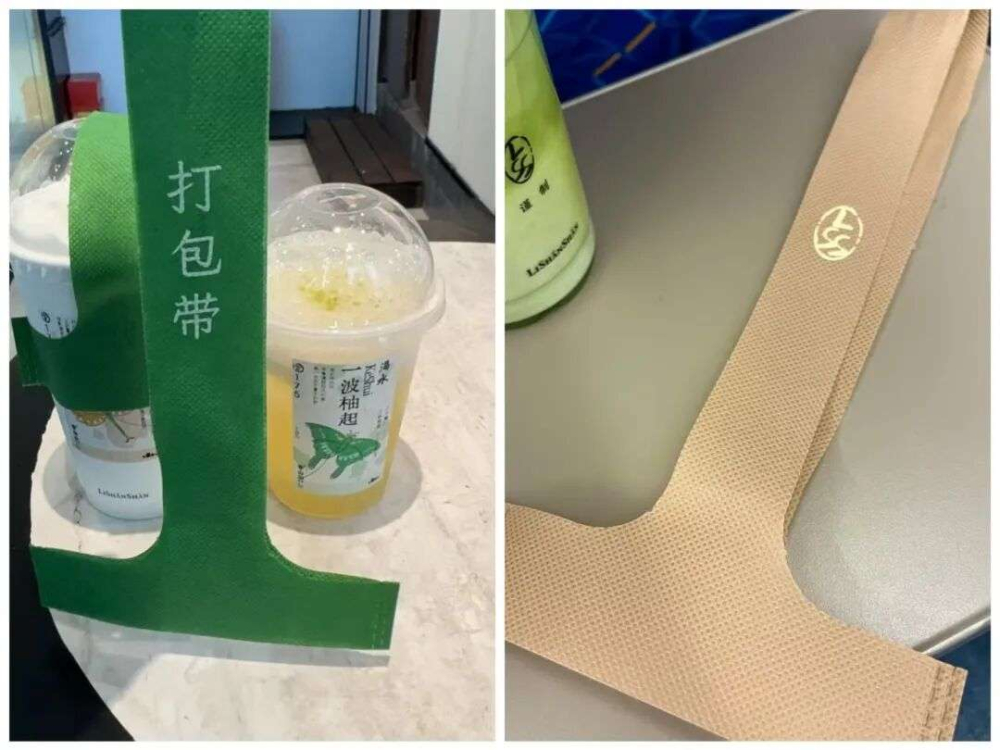
The brand explained that the use of cloth straps is driven by environmental considerations and cost control. While this reasoning has some validity, consumers generally believe thatthe practice of environmental responsibility should be built upon meeting basic usability needs.After all, no matter how eco-friendly a package is, if it leads to frequent spills, it will result in greater waste of resources and a diminished customer experience.
Industry experts suggest that tea beverage brands, when implementing eco-friendly packaging, should fully consider different usage scenarios and varying levels of consumer needs. For example, they could offer a basic cloth strap option as an environmentally friendly choice, while also providing standard carry bags as a paid upgrade, or create dedicated packaging solutions for customers buying multiple drinks.
This incident reflects a noteworthy trend in the current tea beverage market: while consumers’ recognition of environmental principles is growing, their expectations for basic usability have not diminished.Finding the right balance between environmental practices and functional utility will be an ongoing challenge for brands to refine..
The above content is compiled by CoffeeHunters, a coffee news website.


