







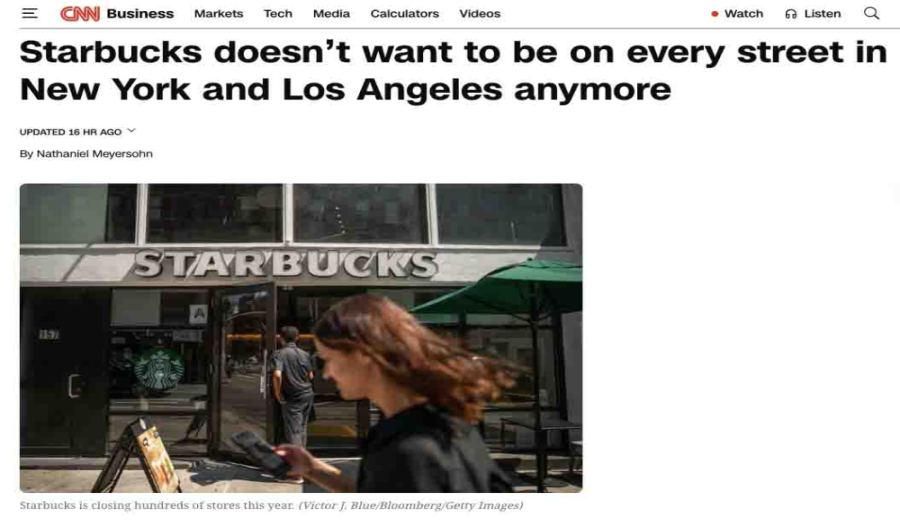
Introduction:Starbucks, the global coffee giant, has recently closed around 400 stores across the United States, primarily in metropolitan core areas, signaling a clear strategic shift toward suburban markets and store experience upgrades. The new CEO has stated that the company will no longer pursue high-density store layouts and plans to renovate a thousand stores within the next year. Meanwhile, Luckin Coffee is quietly expanding in New York, even taking over some locations previously operated by Starbucks. This article explains the reasons behind Starbucks’ adjustments, the details of its market layout transformation, and the movements of competing brands, helping you grasp the trends in the coffee retail industry.
Starbucks is undergoing a profound strategic restructuring. According to multiple foreign media reports, this globally renowned coffee chain has closed approximately 400 stores in the United States, many of which were located in the core commercial districts of major metropolises such as New York and Los Angeles. The newly appointed CEO, Laxman Narasimhan, explicitly stated that the company will no longer blindly pursue high-density urban store distribution but will instead re-evaluate the operational efficiency and brand positioning of each store.
This adjustment was not a sudden decision. As early as after taking office last year, Narasimhan publicly stated that he did not want Starbucks stores to be overly concentrated in cities. As a result, starting this year, Starbucks has gradually evaluated and streamlined its store network. In September, the brand announced the complete cancellation of the pickup-only store model, affecting nearly a hundred stores in more than 20 U.S. states. Subsequently, it conducted a comprehensive review of over 18,000 stores in North America, gradually phasing out a number of physical outlets that “failed to meet performance standards or brand criteria.”
According to reports, as part of a $1 billion restructuring plan, Starbucks has closed about 400 stores, the vast majority of which are located in densely populated metropolitan areas. Specifically, 42 stores were closed in New York City, accounting for 12% of the local total; over 20 in Los Angeles, and 15, 7, 6, and 5 in Chicago, San Francisco, Minneapolis, and Baltimore respectively, with several other cities also seeing closures.
Market observers note that the reduction in Starbucks' store count in New York has caused it to lose its position as the largest coffee chain in Manhattan. The brand has officially responded, stating that the store closures are primarily due to multiple factors, including intensified market competition, the normalization of remote work trends, continued population outflow from large cities, and continuously rising rents and operating costs.
Notably, Starbucks has made it clear that it will allocate more resources to suburban markets in the future, as these regions still hold significant growth potential and consumer demand for the "third space" remains relatively stable. Additionally, the brand plans to renovate about 1,000 existing stores within the next year,adding comfortable sofas, dining tables, ample power outlets, and other amenities in-store,with the goal of creating a more appealing in-store experience to meet customers' needs for extended stays, work, or socializing.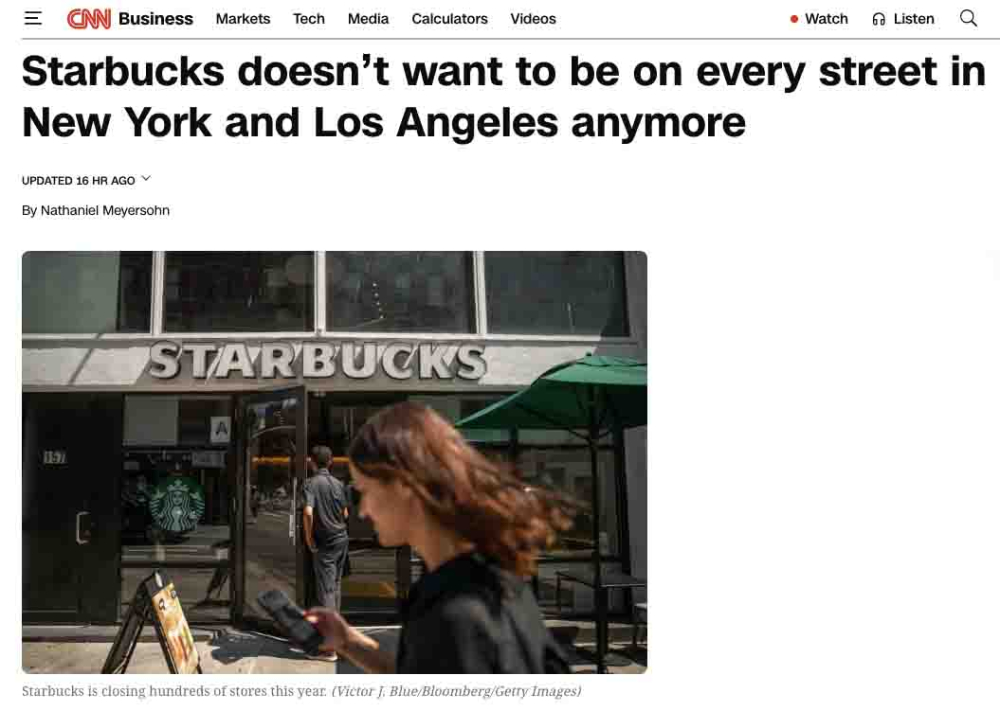
Additionally, the market has observed active moves from competitors. Luckin Coffee, a rapidly rising Chinese coffee brand, has recently demonstrated a noteworthy expansion momentum in the New York market. According to insiders, Luckin has opened nine stores in the area within just seven months, employing a highly targeted site selection strategy—not only seeking new locations but also evaluating several small takeaway storefronts recently vacated by Starbucks.
Market analysis suggests that such a strategy may enable Luckin to quickly enhance its visibility and coverage in the U.S. market in a short time, and it may even have the opportunity to take over some prime locations previously held by Starbucks. Although Luckin has not officially responded to the related reports, the industry is closely watching whether these former green siren-logoed stores will soon be adorned with blue deer-head insignias, becoming a new urban sight in American cities.
Overall, Starbucks’ current wave of adjustments is not just a response to current challenges, but also a significant pivot in its long-term brand strategy. Whether it can regain consumer favor in suburban markets and through upgraded store experiences, while facing competitive pressure from emerging brands like Luckin, will be key to maintaining its global leadership position.
The above content is compiled by CoffeeHunters, a coffee news website.


