








Introduction:Chinese chain coffee brand Luckin is rumored to be entering the Taiwanese market. A currently under-construction coffee shop in Taipei, with a design style highly similar to Luckin’s, has sparked speculation. The latest information shows that its partner agency, Shunyu Holdings, has publicly announced on its official website that “the first store is expected to open in December 2025,” with recruitment notices and renovation permits revealing key clues. This article compiles the currently revealed details, analyzes how Luckin is planning its Taiwan expansion through an agency model, and explores the current competitive landscape of the local market.
Recently, a coffee shop under renovation has appeared in Taipei. Its exterior and posted notices have drawn significant market attention, with multiple signs pointing to the possibility that this could be the first Luckin store in Taiwan. Three notices displayed on-site — including a blue-background “Talent Recruitment Notice” listing positions from baristas to store managers along with salaries, a “Interior Renovation Construction Permit” (applicant: Shunyu Holdings Co., Ltd.) on a gray wall, and a minimalist dark blue “Grand Opening Soon, Stay Tuned” poster — while not directly featuring the Luckin logo, share an overall visual style highly similar to common Luckin promotional materials.
Notably, Shunyu Holdings, the suspected agency handling the Taiwan market, directly displays Luckin Coffee’s English logo and imagery on the menu page of its official website, and clearly states that “the first store is expected to open in December 2025.” This information has become key evidence suggesting that Luckin plans to enter Taiwan via an agency model, similar to Starbucks’ previous operational strategy in Taiwan.
According to public records, Luckin had already applied for trademarks such as “Luckin Coffee” and “luckin coffee” as early as 2019, covering categories related to coffee products and services. However, due to Taiwan’s trademark regulations stipulating that applications not put into actual use within three years will be revoked, those applications were considered largely precautionary registrations. It wasn’t until April 2024 that Taiwan authorities received 30 new applications for the Chinese and English versions of the “Luckin Coffee” trademark, along with design drawings, and on September 25, the approval documents were issued, signaling the brand’s official push to establish a presence in the Taiwanese market.
Although the clues seem clear, market reactions remain divided. The Taiwanese coffee market is highly competitive, with established international chains like Starbucks, domestic leader Louisa Coffee, as well as a large number of independent coffee shops, convenience store coffee services, and community-style cafes, giving consumers a wide range of choices. In media street interviews, some members of the public stated, “I already have a preferred brand and won’t particularly try others,” but there are also consumers who believe, “If the price is more competitive, I might consider it,” especially given the perception that Starbucks has recently been priced higher, making value for money a potential key factor.
However, when reporters tried to inquire about store-opening details through the contact information on the recruitment notice, they received no response, leaving uncertainties as to whether Luckin is definitely entering Taiwan and whether the construction site is indeed its first store.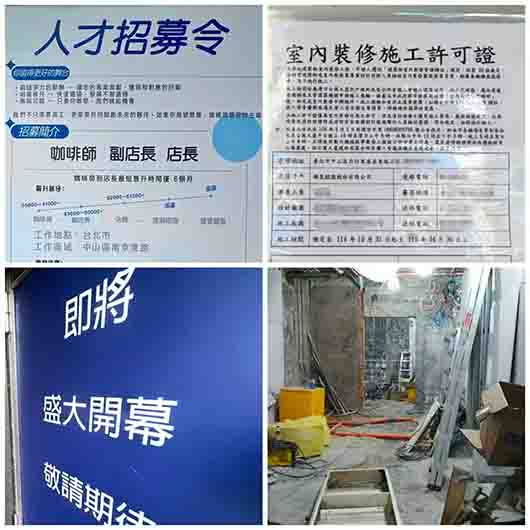
This incident shows that when chain coffee brands enter new markets, the agency model has become a common strategy — it can reduce direct operational risks and leverage local partners’ familiarity with regulations and consumer habits. If Luckin successfully establishes itself in Taiwan, its business model, characterized by high cost-performance and digital services, may introduce new variables to the market. However, its ultimate performance still depends on actual operational details and consumer feedback.
The above content is compiled by CoffeeHunters, a coffee news website.


