







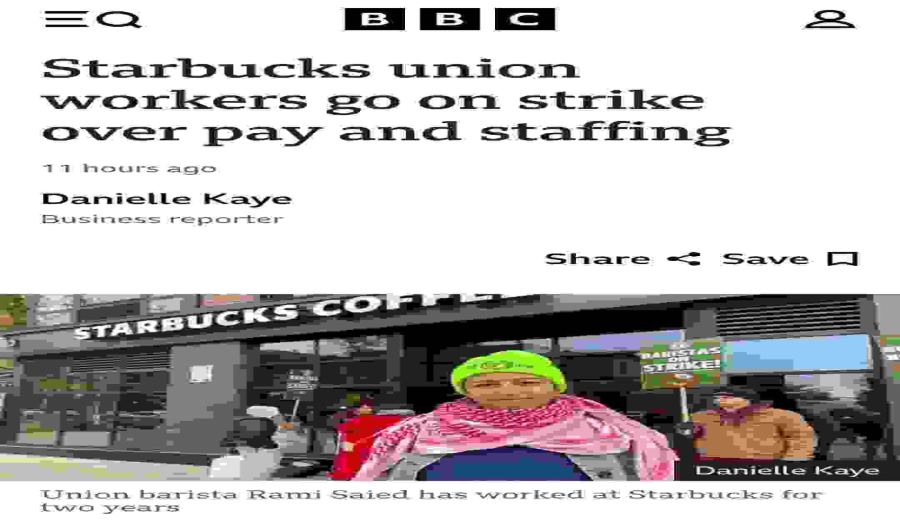
Introduction:Starbucks’ annual “Red Cup Day” is traditionally a festive coffee event leading up to Thanksgiving, but this year it has become the epicenter of a labor storm as over a thousand unionized employees across the U.S. launched an indefinite strike. With 65 stores affected and protests spanning more than 40 cities, workers are demanding better pay, working hours, and resolution of hundreds of allegations of unfair labor practices. How will this, described as the company’s “largest-scale strike in history,” shake up the operations of the coffee giant?
Starbucks’ yearly “Red Cup Day” event usually delights customers with free reusable red coffee cups, but this year the tradition has sparked a labor protest. On November 13, over a thousand unionized Starbucks employees across the U.S. initiated an indefinite strike, involving at least 40 cities and 65 stores, with grievances directed at the company’s refusal to engage in fair negotiations.
The “Starbucks Workers United,” representing baristas, stated that the strike encompasses major cities such as New York, Philadelphia, and Seattle, where Starbucks’ headquarters is located. Due to a significant number of staff calling in sick, many stores were forced to shorten operating hours or even temporarily close. The union also called on consumers via social media to boycott Starbucks “today and beyond,” demonstrating collective strength.
The core demands of the strike include improving work schedules, increasing wage levels, and addressing hundreds of allegations of unfair labor practices against Starbucks, such as allegedly targeting unionized employees for dismissal. The union emphasized that if the company fails to reach a fair contract soon, the strike will expand further, aiming to create “the longest and largest-scale protest in Starbucks’ history.”
In fact, since employees began voting to form a union in late 2021, collective bargaining agreements have been at a standstill with no substantial progress to date. Although both parties initiated mediation in February of this year, effective negotiations have not resumed since talks broke down late last year. In April, hundreds of barista representatives voted to reject Starbucks’ proposed economic package, stating that it only guaranteed a minimum annual raise of 2%, with no additional wage increases or improvements to key benefits such as healthcare.
In response to the accusations, Starbucks has completely denied any wrongdoing and accused the union of walking away from the negotiating table. A Starbucks spokesperson stated in a public announcement: “The employees’ union, which represents just 4% of our partners, chose to leave the negotiation process. We have repeatedly invited them back, and we are ready to continue the dialogue whenever they are prepared, believing that both sides can quickly reach a reasonable agreement.” Company executives also added that they have been negotiating in good faith with the union over the past few months and have reached over 30 provisional agreements on complete contract terms.
Starbucks further emphasized that it provides “the highest-quality working environment in the retail industry,” with the combined average pay and benefits for full-time and part-time hourly workers exceeding $30 per hour. However, union data shows that in about 33 states, baristas start at just $15.25 per hour, and the average weekly working hours are often less than 20, creating a gap between actual income and benefits and the official claims.
In response to the large-scale strike, Starbucks stated that it operates over 18,000 stores in the U.S. and Canada, and the impact of the strike is limited, with “the vast majority” of stores remaining operational as usual.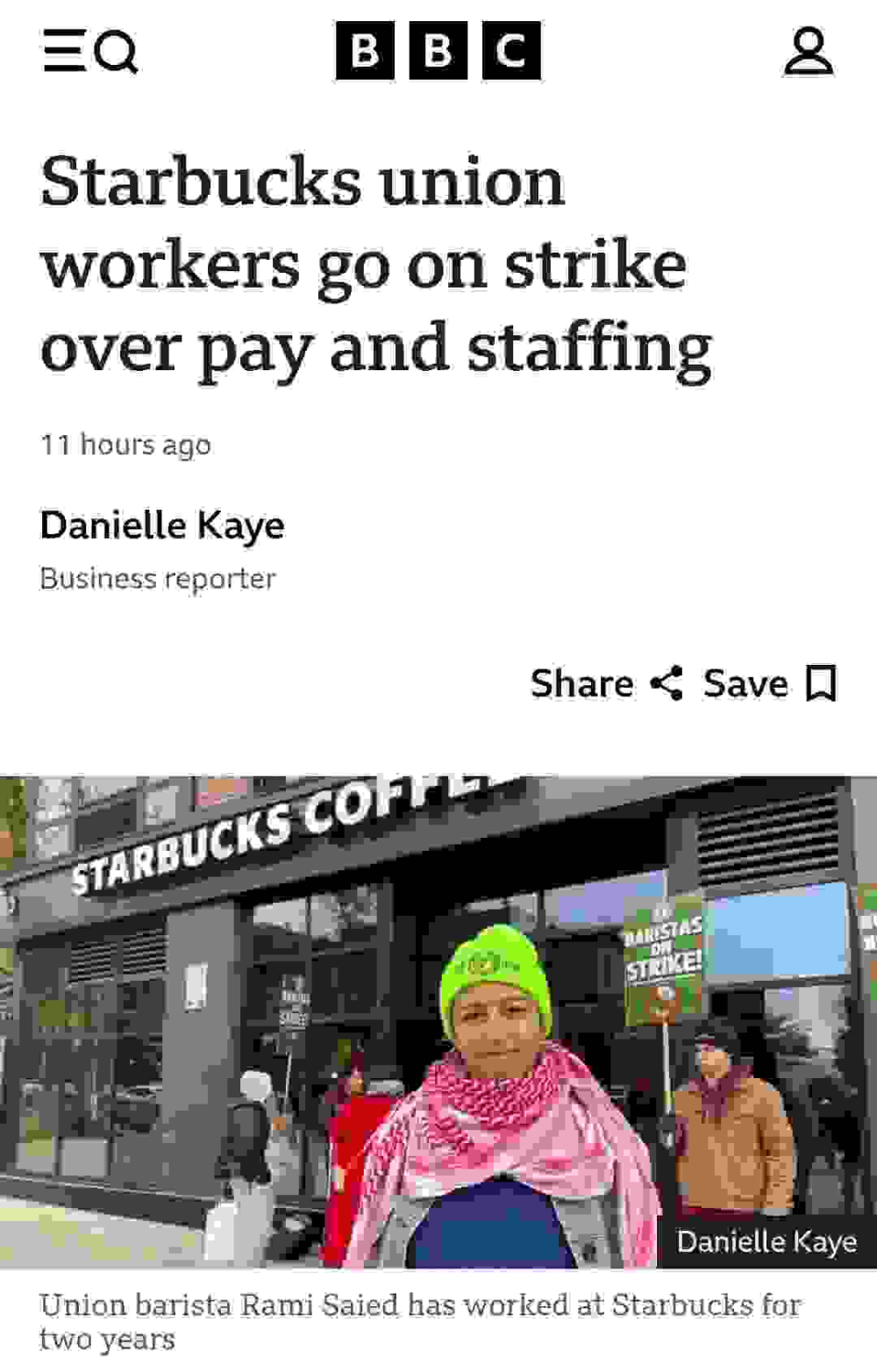 This protest is not only a statement by employees fighting for fair treatment but also poses a challenge to Starbucks’ brand image and operational strategy. On Red Cup Day, a moment that should focus on coffee and gratitude, the labor-management standoff has instead become the center of national attention.
The above content is compiled by CoffeeHunters, a coffee news website.


