







Introduction:In Luckin Coffee’s collaboration with *Zootopia 2*, an otherwise ordinary set of character stickers hides a clever interactive design. Users discovered that the black triangular sections are actually removable Luckin apron stickers—when placed over the characters, they create amusing “staff-themed” looks. This creative approach, which cleverly navigates copyright restrictions, not only satisfies fans’ desire for participation but also showcases the brand’s strategic risk management in IP partnerships. This article breaks down the sticker design details and analyzes the marketing balancing act under Disney’s strict copyright regulations.
Luckin Coffee has teamed up with Disney’s popular animated sequel *Zootopia 2* to launch a seasonal collaboration series, featuring limited-edition drinks, themed cup sleeves, and other merchandise, quickly becoming a market focal point. Notably, the second wave of sticker sets included with orders caught consumers’ attention—among the various movie character designs, two oddly placed black triangular sections turned out to be detachable Luckin employee apron stickers. By cleverly attaching them, the animated characters can instantly be transformed into “café staff.”
According to user experiences who received the actual product, the sticker set’s overall design includes multiple movie scene elements and bilingual text, but the two pure black geometric shapes initially seem out of place with the overall style. After some netizens dissected them, it was revealed that these shapes are actually parts of a Luckin work apron with a stamped deer head logo. Once fully peeled off, they can be precisely aligned over the characters’ torsos, creating humorous effects such as Officer Judy or Nick Wilde dressed in green uniforms.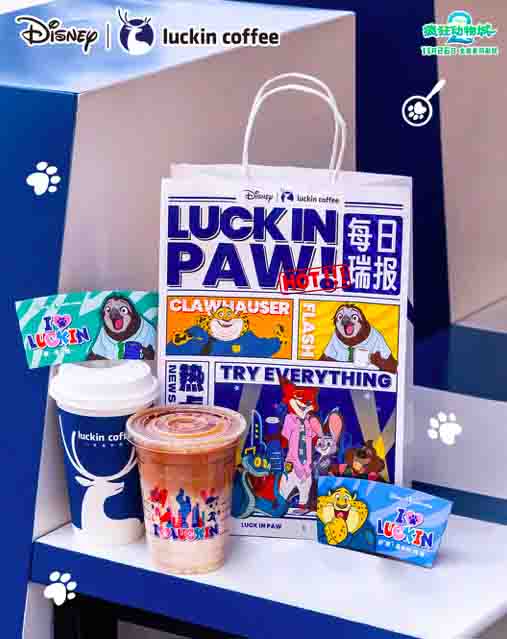
This design is seen by the industry as a textbook example of skillfully avoiding copyright disputes. Disney has always had strict regulations on the use of its IP images, explicitly prohibiting partners from directly placing brand logos on characters and even requiring licensed products to include anti-counterfeiting certifications. In Luckin’s past collaborations with other IPs, common approaches included characters holding drinks with deer antler motifs—direct exposure methods. This time, the brand opted for an indirect interactive form, preserving the collaborative essence while reducing legal risks.
In practice, users simply need to peel off the black apron parts along the pre-marked dotted lines, ensuring the deer head logo remains intact without damage. Aligning them over the target character’s waist to shoulder area completes the “costume change.” Experts recommend using gentle finger pressure to avoid wrinkles, and if restoring the original look is desired, low-tack tape can be used for adjustments. This participatory marketing tactic successfully sparked social media discussions, with many fans joking that “Luckin users have become designers themselves.”
Marketing analysis points out that Disney exerts rigorous oversight over licensed partners, requiring legal reviews for everything from packaging prints to advertising materials. By adopting a model where “consumers complete the final creative mile,” Luckin maintains the purity of the IP image while achieving brand visibility. Market reactions show that the sticker set has even appeared at premium prices on secondary trading platforms, demonstrating how creative design enhances consumer engagement.
Industry insiders comment that this “copyright-friendly” marketing strategy is becoming a new trend in international IP collaborations, especially in the Asian market, where cultural nuances and legal details must be carefully balanced. Luckin has activated user creativity through a simple mechanism while demonstrating respect for intellectual property, providing a worthy reference model for future cross-industry partnerships.
The above content is compiled by CoffeeHunters, a coffee news website.


