







Introduction:A Luckin customer in Singapore requested a drink “without coffee liquid.” While she successfully received a satisfying beverage, the staff member who fulfilled her order was reprimanded by their supervisor, sparking debate over the tension between standardized processes of chain brands and customers’ personalized needs. This article delves into the reasons behind the incident, analyzes the market demand from the caffeine-sensitive population, and explores how brands can strike a balance between maintaining quality consistency and responding to consumer preferences.
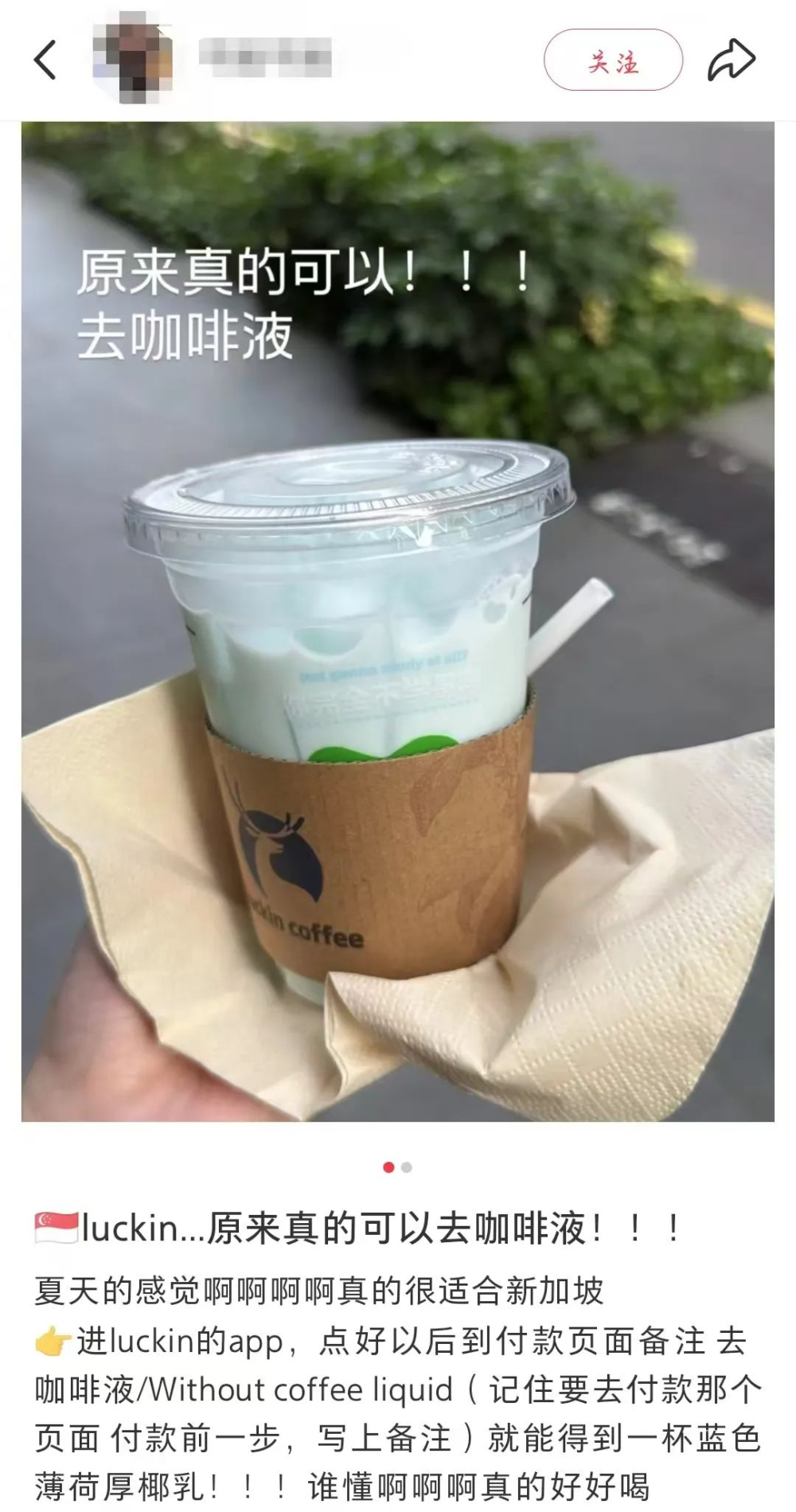
Recently, an online discussion about a Luckin outlet in Singapore has drawn attention. A customer, who noted in her order that she wanted “no coffee liquid,” was served a mint and thick coconut milk drink without any coffee—and later learned that the staff member who made it had been spoken to by management. This led to widespread discussion about the conflict between service flexibility and standardization at chain coffee brands.
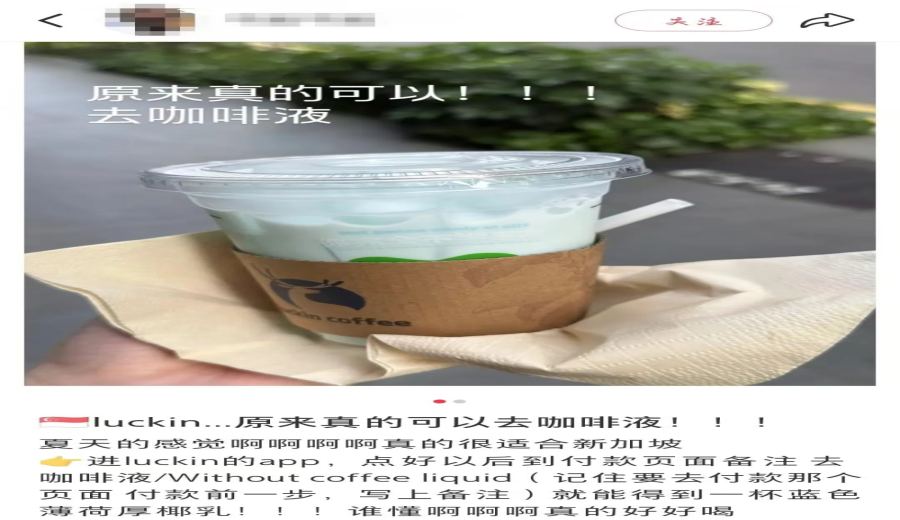
According to the customer, she had previously seen some Luckin stores in mainland China offer “no coffee liquid” options, so when ordering in Singapore, she included the same request in the notes. The staff accommodated her, and she was served a light blue-colored mint and thick coconut milk drink. She shared her experience on social media, unaware that it would spark subsequent controversy.
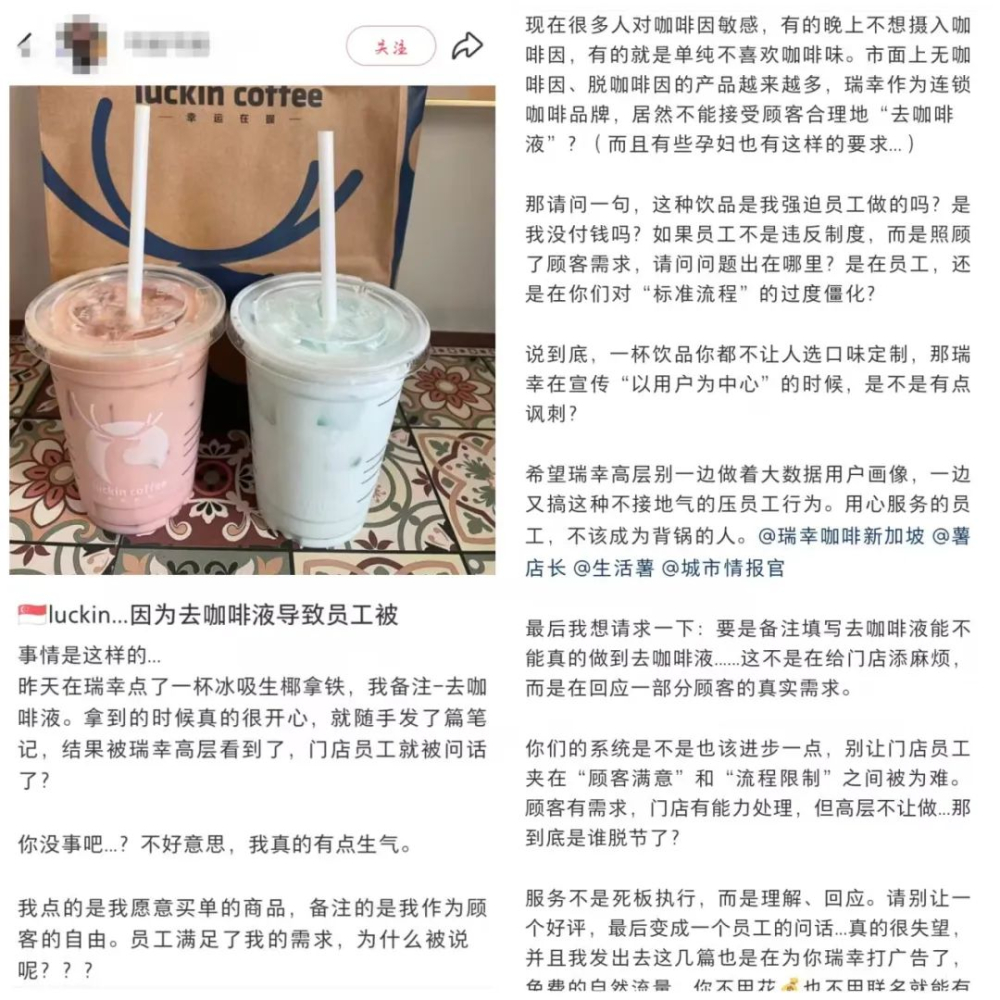
After the post caught the attention of Luckin’s Singapore management, the staff member who prepared the drink was called in for a talk. The customer, upon learning about this from the store, expressed confusion and dissatisfaction. She felt that she had reasonably made a request as a consumer, the staff had cooperated willingly, and both parties were ultimately satisfied—yet the employee at the ground level was held accountable.
She further explained that an increasing number of consumers today are sensitive to caffeine, especially in the Asian market, where demand for low-caffeine or caffeine-free drinks is growing. Luckin has long positioned itself with the brand philosophy of being “user-centered,” and should be more flexible in addressing such needs rather than implementing a one-size-fits-all ban.
Many Singapore netizens left comments in support of the post. Some said: “Honestly, if Luckin had a decaf option, I’d visit way more often,” “I don’t get why you can’t just leave out the coffee liquid??” and “Support having a decaf option!! As someone who’s super sensitive to caffeine, I always want to order from Luckin around noon but end up not doing it…” These comments highlight the high sensitivity of some consumers to caffeine content and also reflect shortcomings in how brands cater to diverse customer needs.
Experts point out that people who are sensitive to caffeine often look for low-caffeine or caffeine-free beverages to avoid side effects such as palpitations, anxiety, or insomnia. In international chains like Starbucks, “decaf” (low- or no-caffeine) options have long been widely available, allowing such customers to enjoy the flavor of coffee without the discomfort caused by caffeine. In comparison, Luckin’s offerings in this area remain insufficient, potentially missing out on part of the market demand.
Some netizens have further suggested that if Luckin could add a “decaf option” in its mini-program, it would not only directly meet these consumers’ needs but also simplify the process for staff handling special notes. At the same time, the brand could introduce an official line of low-caffeine products, improving customer satisfaction while also boosting product diversity and sales opportunities.
However, some consumers and industry professionals hold different views. They argue that the reason chain brands can maintain consistent quality and taste globally or regionally lies in their strict standardized processes. If each store were allowed to decide whether or not to remove coffee liquid, it could lead to inconsistent flavors and affect the uniformity of the brand image and customer experience.
Moreover, accommodating individualized notes for each customer would not only increase the workload for staff but might also lead to negative reviews if customized drinks do not meet expectations. Some frontline employees admitted that, in high-volume operational environments, sticking to established recipes actually reduces error rates and avoids unnecessary complaints and complications.
This incident highlights the tension between rapid expansion and localized service in chain coffee brands. How to find the right balance between ensuring product consistency and responding to the unique needs of different markets will be an important challenge for major brands, including Luckin, in their future development.
The above content is compiled by CoffeeHunters, a coffee news website.


