







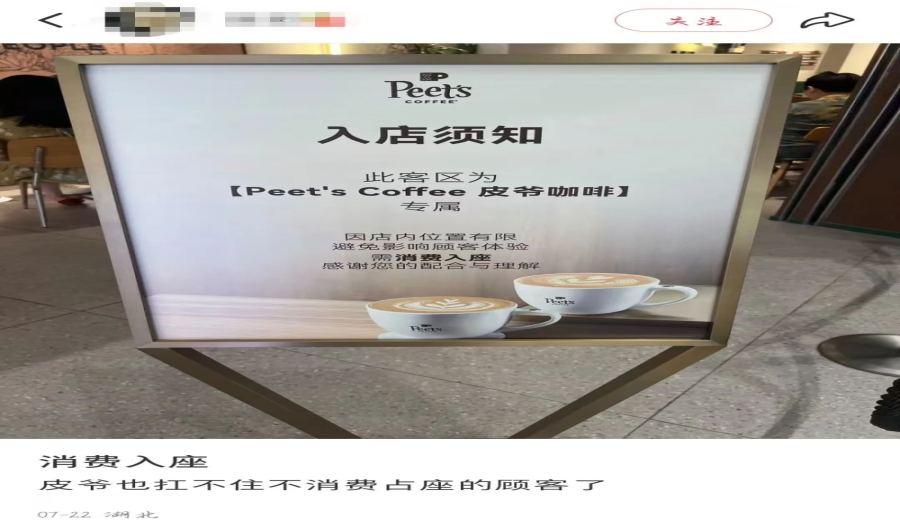
Introduction:Recently, a Peet’s Coffee outlet in Wuhan posted a notice stating “Seating Available Only After Purchase,” sparking heated discussions among consumers and industry insiders. This move aims to curb uncivilized behaviors such as long-term seat occupation, card games, and live streaming, thereby enhancing the customer experience. However, similar policies were previously trialed by Starbucks with limited success. Can Peet’s latest attempt truly improve the in-store environment? This article delves into the reasons behind the policy, the practical challenges of implementation, and the potential benefits.
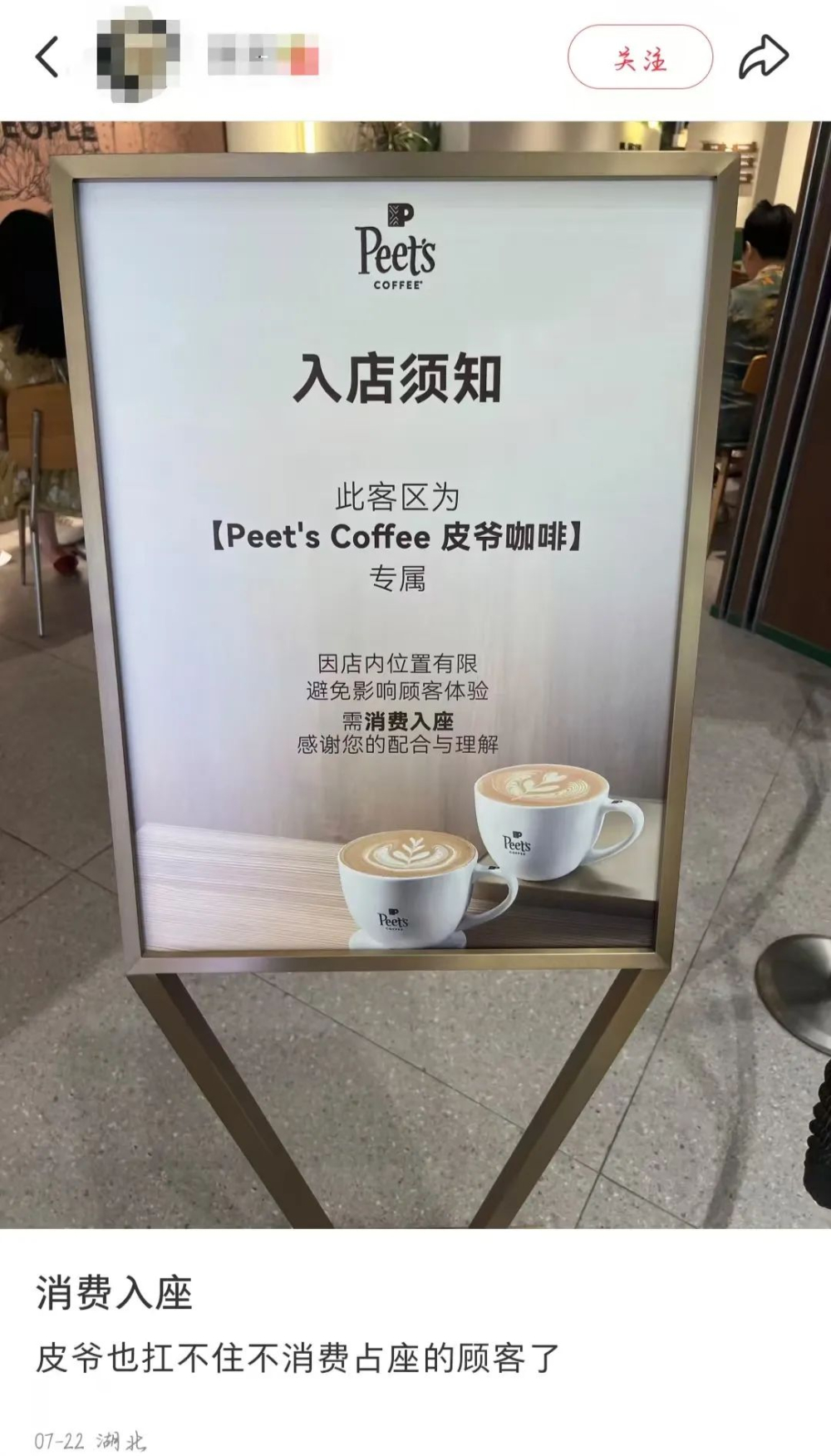
Recently, a Peet’s Coffee outlet in Wuhan’s Qincheng Mixc mall erected a prominent “Store Entry Notice” at its entrance, explicitly stating that customers must make a purchase before using the in-store seating. This measure quickly sparked discussions on social media platforms, with many netizens expressing support, believing it helps prevent behaviors such as prolonged seat occupation, card playing, makeup application, and even live streaming—thus safeguarding the rights of genuine paying customers.
Photos from the scene show that due to the limited number of seats, the outlet implemented the “purchase-to-sit” policy to ensure the comfort of customers dining or resting. A netizen from Hubei captured this sign during a visit and shared it on social media, inadvertently triggering widespread discussion. Many responded that they had seen similar notices at Peet’s outlets in cities like Guangzhou and Zhejiang, speculating that the brand may gradually roll out this policy nationwide.
Regarding Peet’s move, most netizens expressed approval and even called on other chain brands such as Starbucks, Manner, and Nayuki’s Tea to follow suit. They pointed out that many cafes near commercial districts or residential areas have become “free public spaces” for non-paying customers, where people often play cards, talk loudly, or occupy seats for extended periods—leaving those who actually want to sit and enjoy coffee with no available space.
Not only that, some non-paying customers even bring their own food or drinks into the store, treating public areas as their personal living rooms, leaving behind crumbs and increasing the cleaning burden on staff. Some netizens also shared experiences of witnessing people applying makeup, lying down to rest, or even live-streaming sales activities inside cafes without making any purchases—severely impacting the store’s ambiance and the experience of other customers.
Although netizens generally support the purchase-to-sit policy, some question its actual enforceability, arguing that such signs “keep out the honest but not the dishonest,” with limited effect on those intentionally breaking the rules. Especially during economic downturns or peak hours, staff may avoid actively discouraging seat occupants out of concern for service attitude or potential conflicts.
In fact, as early as last May, Starbucks also tried a similar policy, requiring customers to place an order before sitting down, or risk being “politely asked to leave.” However, a year later, in many regions, Starbucks outlets still see non-paying customers occupying seats for long periods, indicating the policy’s limited effectiveness. Observers noted that some seat squatters ignore the notices and even complain about poor service, causing frontline staff to gradually lose the willingness to manage proactively.
Therefore, many netizens worry that Peet’s Coffee’s current purchase-to-sit policy may ultimately end up as mere “decoration” at the entrance. Faced with real-world implementation difficulties, staff may still allow non-paying customers to sit in order to avoid conflicts.
In summary, the “purchase-to-sit” policy aims to enhance the overall customer experience and reduce the misuse of public resources. However, to truly enforce it, in addition to clear signage and regulations, stores must also establish supporting management mechanisms and staff training programs—so as to effectively manage seating resources while maintaining service quality, creating a more customer-friendly environment.
The above content is compiled by CoffeeHunters, a coffee news website.


