








Introduction:A key development has emerged in the sale of Starbucks' China business, with multiple international and domestic investment firms actively bidding. The valuation is expected to reach up to $4 billion, and could surpass $10 billion when including retained equity and franchise income. Carlyle and Boyu Capital have emerged as the frontrunners, while Starbucks has also increased its retained stake to 49%. Learn how this deal could reshape the landscape of China’s coffee market and the strategic advantages of potential buyers.
The equity sale plan for Starbucks’ China business has entered the final decision-making stage. According to market reports, U.S. private equity firm Carlyle Group and China-based Boyu Capital are currently the most likely bidders to secure a majority stake in Starbucks China. This transaction is not only drawing significant industry attention but also carries a valuation that could reach as high as $4 billion. When factoring in Starbucks' retained equity and future franchise revenue, the overall deal value may exceed $10 billion.
It is reported that Starbucks initially considered retaining 30% of its China business equity, but the latest information suggests this figure may be adjusted up to 49%. This means that even with external capital injection, Starbucks will remain the largest single shareholder in the Chinese market, retaining substantial control. Currently, five investment institutions have submitted binding offers. In addition to the leading Carlyle and Boyu, Sequoia China (now renamed Hongshan Capital), Primavera Capital, and FountainVest Partners have also expressed strong interest. The final buyer may emerge as part of a consortium.
Market analysis points out that Carlyle’s main advantage in this bid lies in its extensive experience operating in the Chinese market, having previously led the 2017 divestiture of McDonald’s China business. However, some observers believe that domestic private equity firms like Boyu Capital, which are more familiar with the local operational environment and supply chain management, could help Starbucks stabilize its footing in the complex Chinese market, giving them an edge in the competition.
Starbucks itself has adopted a cautious yet optimistic stance regarding the deal. In an official statement, the company noted that it has received active proposals from several high-quality potential partners, all of whom are confident in the Starbucks brand and its long-term growth potential in the Chinese market. Starbucks emphasized that these investors are particularly drawn to the brand’s value, business momentum, and strong team capabilities.
Starbucks CEO Laxman Narasimhan also publicly stated that the company is seeking strategic partners who align with its "mission and values." "This is not just about short-term operational improvements, but also about the future expansion of the Starbucks brand in the Chinese market. I believe there is potential for thousands more Starbucks stores in China," he further explained.
In fact, since November last year—when market rumors first emerged about Starbucks’ intention to sell its China business—this equity shift has remained a focal point of industry attention. Now, after nearly a year of deliberation and negotiation, the deal has entered its final decision phase. The market expects Starbucks’ management to make a final decision by the end of this month, marking a pivotal moment for a transaction that could redefine the Chinese coffee market.
Industry insiders generally agree that regardless of who ultimately takes over, this deal will have a profound impact on the competitive dynamics of China’s coffee market. The entry of new investors could not only bring improvements in capital and operational efficiency, but may also influence Starbucks’ expansion pace, product strategy, and collaboration models with local players in China.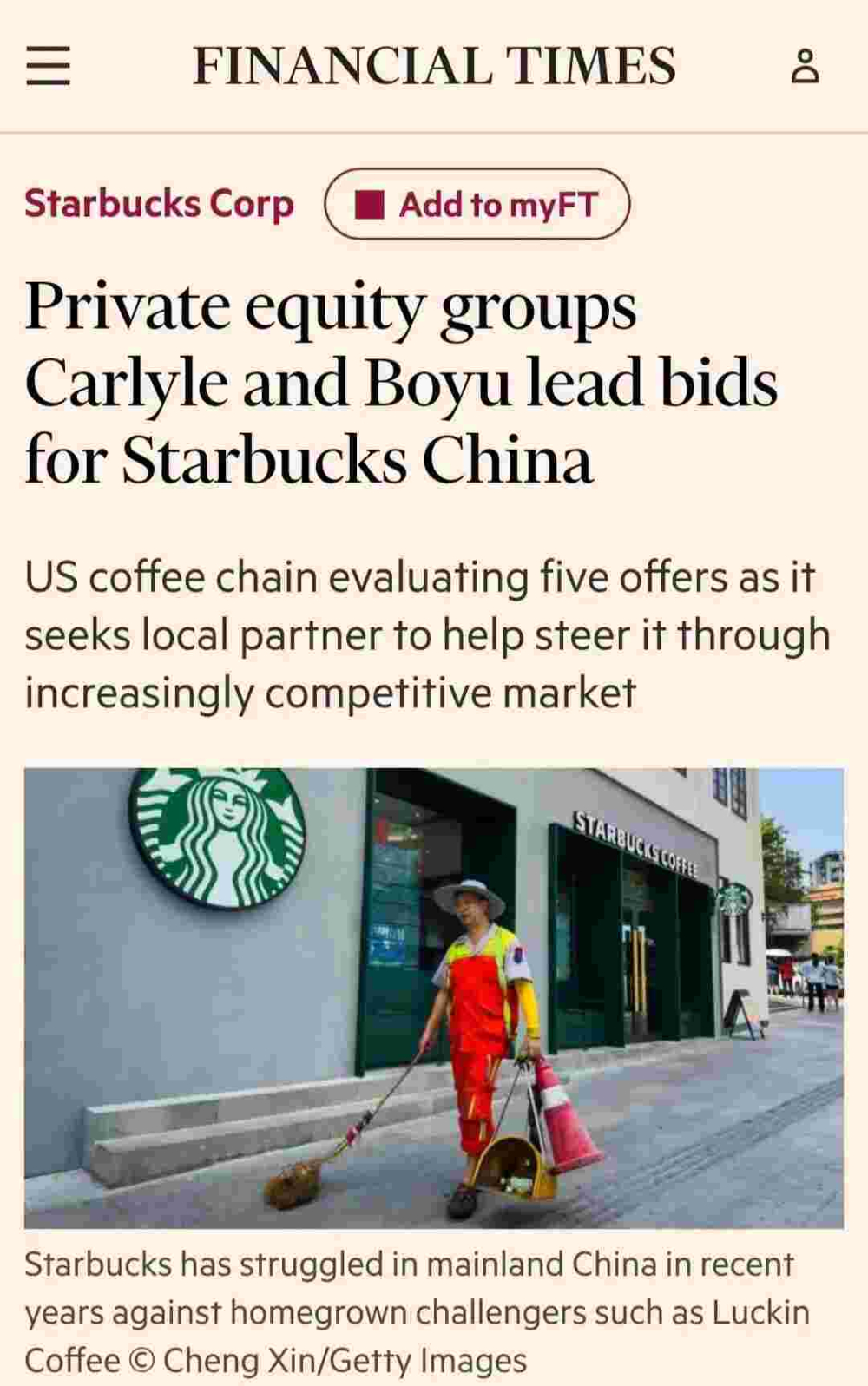
Moreover, for consumers, although the brand name will remain unchanged, future in-store experiences, product innovations, and even membership programs may see adjustments under new strategies. Whether Starbucks can regain its growth momentum in the Chinese market through this equity restructuring will be a key focus in the years to come.
The above content is compiled by CoffeeHunters, a coffee news website.


