








Introduction:When making a beautifully layered Dirty coffee, a common issue is that the coffee and milk quickly mix together, significantly compromising both visual appeal and taste. In fact, by mastering the pouring height of the espresso shot and understanding the density and viscosity of the milk, you can effectively improve the layering effect. This article delves into how to adjust the coffee machine’s spout height, choose the right type of milk, and use chilling techniques to help you easily pull off a Dirty coffee with clear layers and eye-catching aesthetics — complete with real-world comparisons that debunk myths about roast levels.
Have you ever tried making a Dirty coffee at home only to find the coffee and milk blend too quickly, failing to show the beautiful layers it should? You followed the tutorial step-by-step, but the result looks more like an iced latte without ice? The problem often lies in two key details: the distance from which the espresso pours, and the density and viscosity of the milk. Master these two aspects, and you too can easily create a Dirty coffee with distinct layers and outstanding visual and flavor qualities.
Many tutorial videos or articles will tell you that making a Dirty coffee is very simple: just place a cup filled with milk under the coffee machine’s spout and let the espresso drip directly in. In theory, that sounds fine, but in practice, many factors affect the final layering outcome — especially the height from which the coffee falls, which is often one of the decisive factors for success.
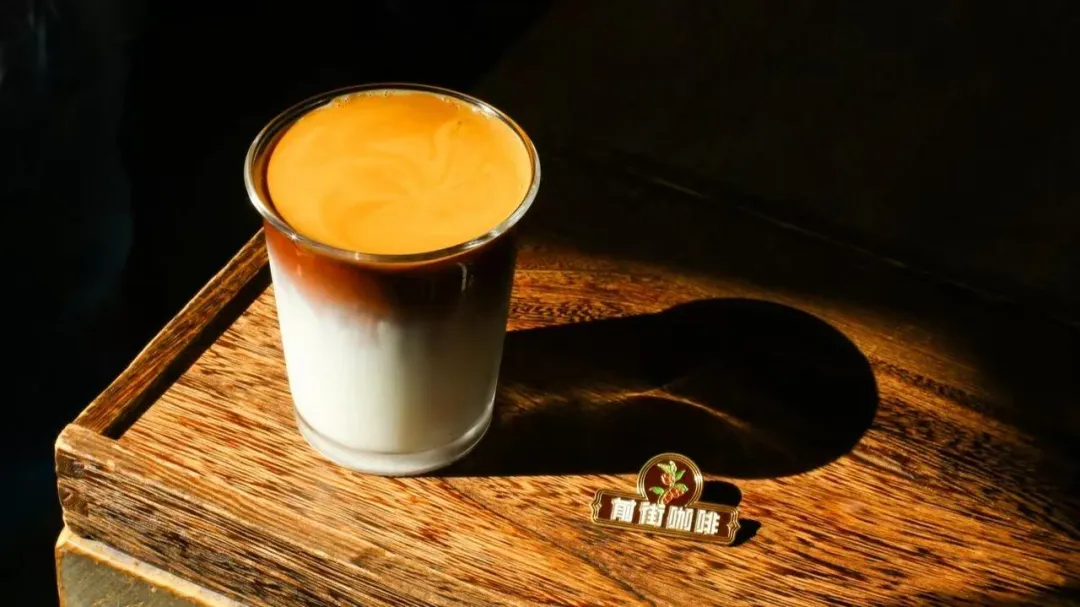
First, let’s talk aboutthe pouring height of the espresso shot. If you simply place the cup directly under the spout without paying attention to the height, the coffee might fall from too great a distance, creating a strong impact that pierces the milk’s surface and causes the coffee and milk to mix rapidly. As a result, the layering effect is greatly diminished.
To improve this, it’s recommended that during the pour, you try to bring the coffee’s landing point as close to the milk’s surface as possible. You can try slightly elevating the cup — for example, placing a small object under the base of the cup, or simply lifting the cup by hand to bring the milk level closer to the spout. Another practical tip is to place a small spoon flat in the center of the milk’s surface so the espresso first lands on the spoon, reducing the impact before it naturally flows into the milk. This helps the coffee float on top, forming attractive layers. However, this method is a bit more complex to execute, as you need to control the coffee machine while steadying the spoon.
Besides the pouring height,the density and viscosity of the milkare also important factors influencing the layering of a Dirty coffee. The higher these properties are, the better the milk can support the coffee, slowing down their mixing and thus maintaining a clear layered appearance.
To enhance the density and viscosity of the milk, the most direct method is to choose a higher-concentration milk, such asevaporated milk. Compared to regular fresh milk, evaporated milk undergoes processing to become more concentrated and richer in texture, so when it meets the espresso, it can more effectively support the coffee, resulting in clearer and longer-lasting layers. Many professional coffee shops actually opt for evaporated milk when making Dirty coffee to achieve better visual and taste performance.
In addition, the temperature of the milk also plays a key role. When the milk is at a lower temperature, both its density and viscosity increase. This is because liquids have reduced molecular activity in colder environments, resulting in a thicker overall consistency. Therefore, it’s recommended that you chill the milk in advance before making Dirty coffee — you can even place the cup in the fridge as well, keeping the entire system at a low temperature to further enhance the layering effect.

Some coffee enthusiasts may wonder whether theroast levelof the coffee beans also affects the layering performance of a Dirty. To address this, actual tests have shown that using a classic medium-dark roast Italian blend and a medium roast strawberry sugar-flavored espresso bean to make Dirty coffee resulted in no significant difference in layering — both produced clear layers. The main difference lay in flavor profile: the medium-dark roast offered aromas of butter, cookies, chocolate, and nuts, while the medium roast showcased fruity notes of rose, strawberry, and raisin.
In summary, if you want to easily make a Dirty coffee with beautiful layers and distinct flavors at home, the key lies in mastering theheight from which the coffee poursandthe choice of milk and temperature control. By adjusting the cup’s position, using a spoon to reduce impact, selecting evaporated milk, and ensuring the milk is kept cold, you can greatly increase your chances of success and enjoy a Dirty coffee that’s as pleasing to the eye as it is to the palate.


The above content is compiled by CoffeeHunters, a coffee news website.


