







Introduction:A bubble tea produced five days prior was delivered to a customer, sparking a responsibility dispute involving the new tea brand Jasmine Milk White. From store management to delivery logistics, conflicting accounts emerged, leaving the ultimate question: who should be held accountable for the spoiled drink? This article outlines the full sequence of events, analyzes common oversights in the storage and pickup process of delivery beverages, and offers practical advice to help consumers avoid similar issues.
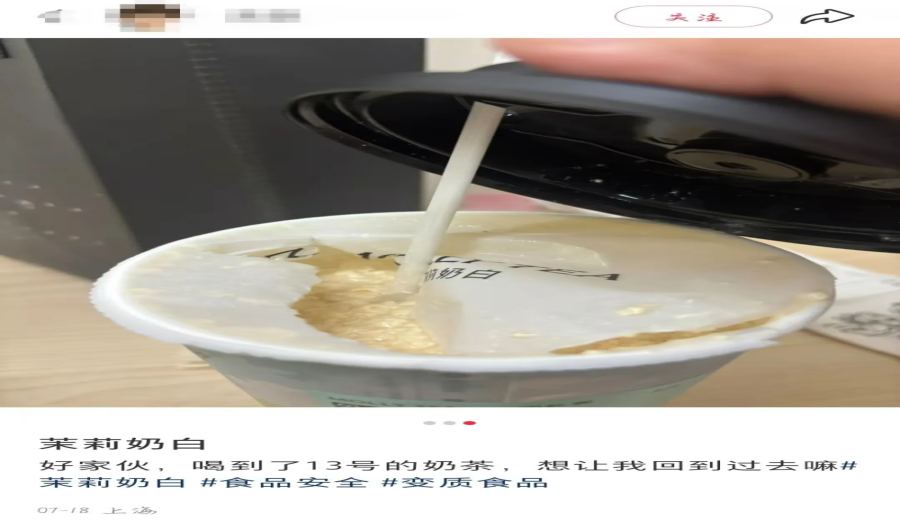
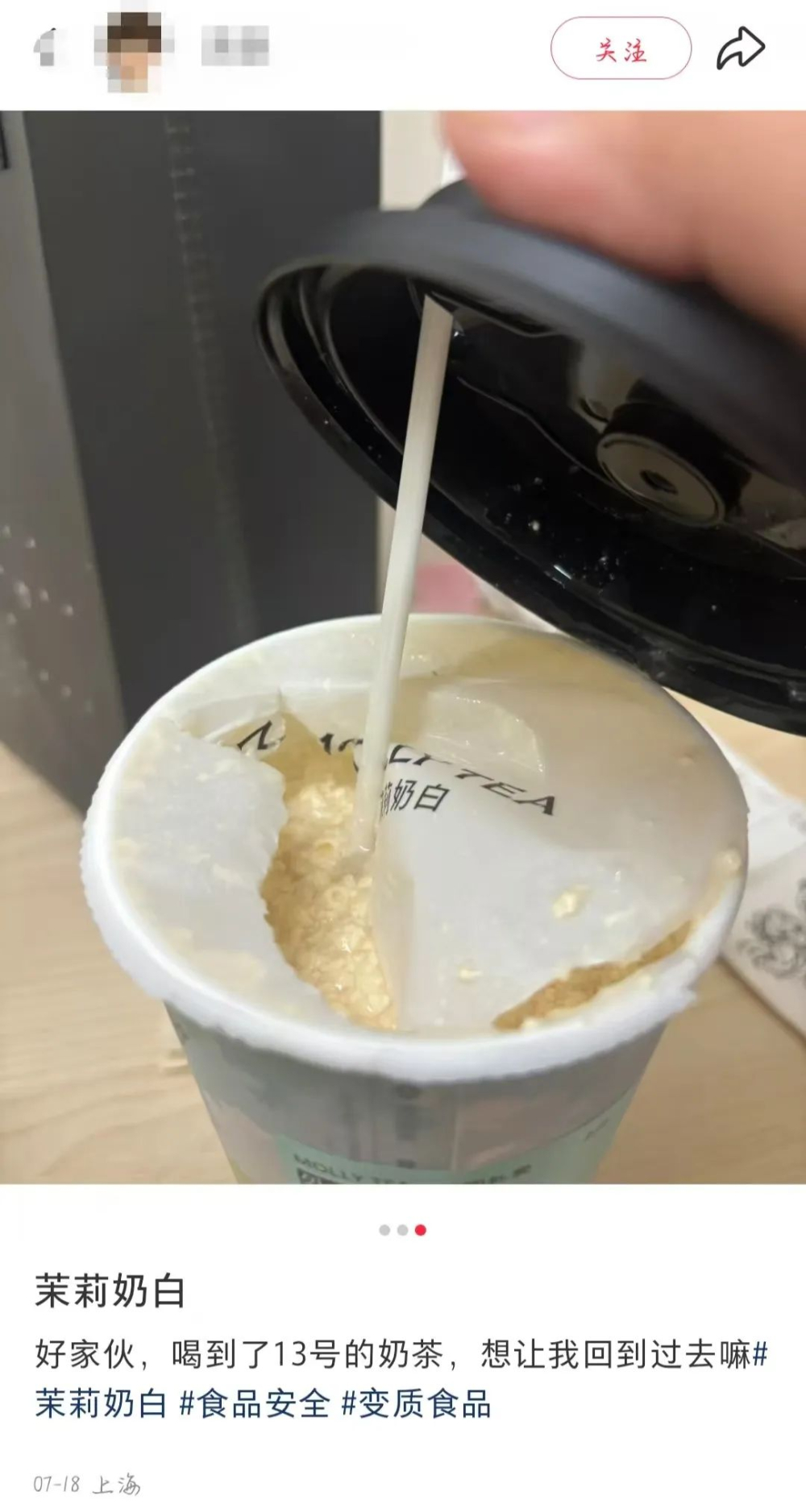
A bubble tea labeled as made five days ago plunged the new tea brand Jasmine Milk White into controversy. The customer ordered the drink via a food delivery platform, only to find it tasted off upon drinking and discovered visible spoilage after opening the lid. The order record clearly indicated the production date as five days prior.
According to the customer’s account, on July 18th, they placed an order for a drink from a Jasmine Milk White outlet through a colleague on a food delivery platform. Upon consumption, they noticed clear signs of spoilage, with yellowish-white flocculent particles floating inside the cup. The receipt clearly stated that the drink was made on July 13th. After complaining to the platform, the customer only received a compensation of 10 yuan and was told to negotiate further reimbursement directly with the delivery rider.
Initially, staff at the involved outlet claimed that due to subsidy campaigns such as “free bubble tea” run by the delivery platform, many customers failed to pick up their orders, resulting in drinks piling up in the self-pickup area. Because these were not cleared in time and the delivery rider did not verify the order when picking up, a customer ended up receiving a bubble tea that had been stored for five days and had gone bad.
At the time, the outlet admitted there had been negligence and stated they were negotiating compensation with the customer. However, the situation took a turn on July 22nd. The Jasmine Milk White brand clarified through media reports that, based on internal investigations and mall surveillance footage, the bubble tea received by the customer did not come from the store’s self-pickup shelf but was instead discarded by another customer in the mall’s public self-pickup area, which had not been cleaned for over 96 hours.
The brand emphasized that the management of this public area falls under the jurisdiction of the mall, not the store’s responsibility.Store staff do not have the authority to enter or clean the mall’s public self-pickup area as part of their daily operations.Moreover, mall regulations prohibit delivery riders from entering the interior; store employees are required to place prepared drinks on a designated delivery shelf located outside the first-floor entrance, where delivery riders then collect them according to order numbers.
The brand further explained that the involved delivery rider later admitted to having picked up and delivered the wrong order by mistake and expressed willingness to take corresponding responsibility for compensation. Chat records also supported this account. The brand reiterated that according to its “Store Operation Guidelines,” “the shelf life of delivery products is four hours after leaving the counter, and expired products are prohibited from being sold.” Furthermore, the store has never placed any for-sale products on the public shelf, nor has it violated this regulation.
This incident highlights management loopholes across all stages of delivery beverage handling—from production and storage, to pickup and delivery. For consumers, it is important to check the production time and appearance of drinks upon receipt, and to immediately contact the platform and merchant if anything seems off. For merchants and platforms, improving self-pickup area management, strengthening delivery rider order verification mechanisms, and clarifying responsibility divisions are key to preventing similar issues from recurring.
The above content is compiled by CoffeeHunters, a coffee news website.


