







Introduction:Many coffee enthusiasts find their brewing results inconsistent even when following standard parameters. The issue often lies in the subtle details of pouring. This article delves into the four core elements of pour over brewing—pouring position, pouring path, water column height, and flow rate—to reveal how these variables affect extraction uniformity and flavor expression. Combining practical experience with scientific data, it offers useful tips for achieving stable pours, helping both beginners and advanced brewers improve consistency in home brewing.
Many home pour over practitioners often encounter a common issue: even when strictly following café-recommended grind size, brew ratio, and water temperature, the resulting coffee can be inconsistent in quality, with unstable flavor performance. The root cause usually lies in the seemingly simple act of pouring—water stability is the key.
In fact, the point where the water lands, the trajectory it follows, the distance from the coffee bed surface, and the flow speed all directly influence the uniformity of extraction from the coffee grounds. According to experimental data from the Specialty Coffee Association (SCA), the more stable the water flow, the more even the extraction of soluble substances in the coffee, leading to more consistent flavor expression. The following section will analyze, from four key aspects, how precise control over pouring details can help you brew a high-quality pour over with stable flavors.
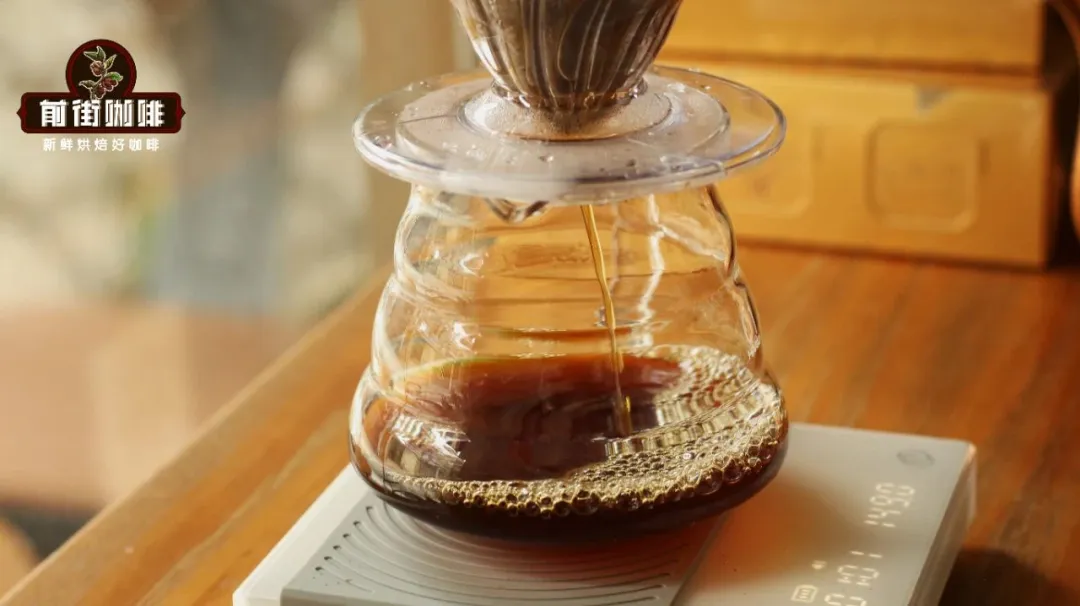
I. Pouring Position: Determining the Contact Area of Coffee Grounds
For beginners, the first thing to observe is where the water lands. Where the water falls, the hot water will primarily contact the coffee grounds in that area, thereby affecting overall extraction efficiency. Take the common V60 cone-shaped filter as an example: its internal coffee bed forms an inverted cone structure, with a thicker layer of grounds in the center that gradually thins toward the edges. As a result, different pouring positions will come into contact with varying proportions and states of coffee grounds, ultimately dissolving different flavor compounds.
If you want the coffee to extract uniformly, the key is to control the pouring range so that the hot water covers as much of the coffee grounds as possible, avoiding direct flow through the channels formed by the filter’s ribs (also known as channeling). For instance, under moderate water impact, maintaining a pouring range of about two-thirds of the coffee bed surface typically reduces channeling, allowing the hot water to interact fully with the coffee grounds and thus improving extraction efficiency. Of course, the actual pouring position should also be flexibly adjusted based on factors such as filter type, coffee dose, and grind size.

II. Pouring Path: Making Coffee Grounds Move to Enhance Extraction Efficiency
In addition to the pouring point, the movement path of the pour is equally important. Many people tend to pour in a fixed spot during brewing. While this method is simple to execute, it can easily lead to uneven extraction. The reason is that once hot water contacts the coffee grounds, flavor compounds begin to dissolve into the water due to concentration differences. Once the internal and external concentrations reach equilibrium, extraction efficiency declines. If you continue pouring in a fixed spot, the outer or lower layers of coffee grounds may not receive enough contact, resulting in a thin flavor profile.
The solution is to move the kettle in a circular motion, using the water flow to create slight turbulence (or chaotic flow) in the coffee grounds, prompting the entire coffee bed to move relative to the water. This enhances the dissolution rate of flavor compounds. The principle is similar to stirring Banlangen granules with chopsticks—the dissolution speeds up noticeably after stirring. However, circling is not the only option; fixed-point pouring also has its uses, such as when targeting specific flavor profiles. The key is to flexibly choose an appropriate pouring path based on the desired flavor and the condition of the coffee bed.
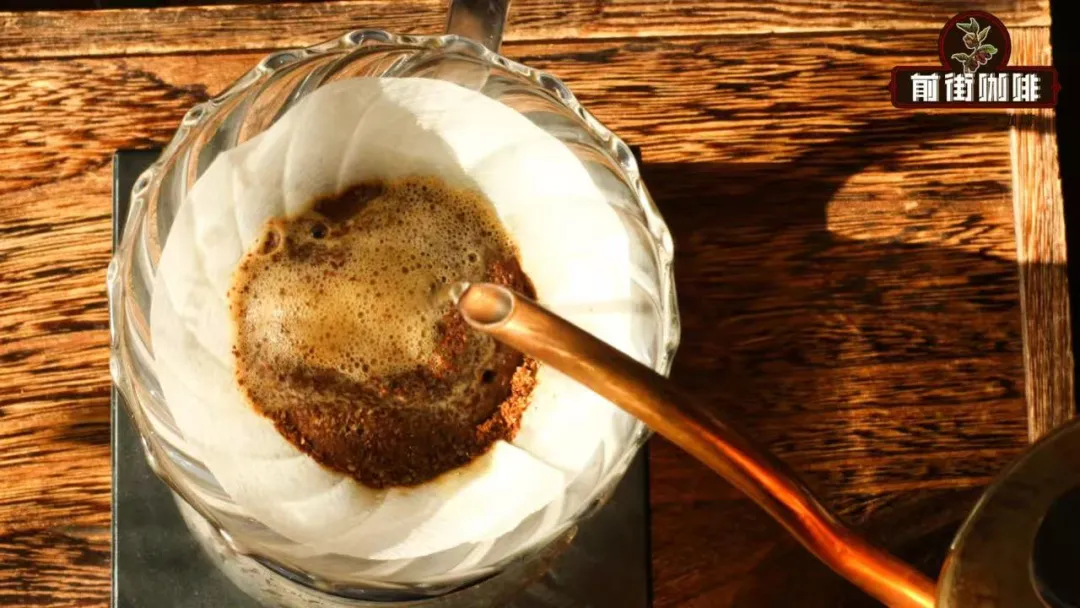
III. Pouring Height: A Key Factor Influencing Impact and Heat Loss
The distance between the kettle spout and the coffee bed surface—i.e., the pouring height—is another often overlooked yet highly impactful factor. The higher the pour, the greater the impact force generated as the water falls, helping to create more noticeable turbulence and thus improving extraction efficiency. Conversely, a lower pour results in a gentler flow, which can reduce the risk of over-extracting fine particles but may sacrifice some flavor intensity.
However, excessively high pouring can also have downsides: intense turbulence may cause fine particles to be stirred up and settle at the bottom of the filter, clogging the paper’s pores, slowing the flow rate, and increasing the risk of over-extraction. Additionally, as water falls from a height, it comes into contact with air and loses some heat, resulting in an actual brew water temperature lower than expected. For example, if the water in the kettle is 92°C, it may drop to around 80°C after a high fall, thereby affecting the overall flavor profile of the coffee. Therefore, it is generally recommended to maintain a pouring height of about a fist’s distance (approximately 10–15 cm), balancing impact and heat retention.
Additionally, note that when the pouring height is too high, the water stream may break into droplets due to instability, and the agitation ability of a dripping pour is far inferior to that of a continuous stream, resulting in lower extraction efficiency. Overall, maintaining an appropriate pouring height is a crucial element in stabilizing flavor.

IV. Flow Rate: Speed Affects Time, Coffee Bed, and Overall Balance
Finally, the flow rate (i.e., the amount of water poured per second) is also not to be ignored. A faster flow means more hot water is introduced per unit time, not only accelerating the overall extraction process but also potentially causing the coffee bed to rise quickly, affecting the evenness of subsequent pours. On the other hand, a slower flow extends the brewing time and is suitable for fine-tuning flavor nuances.
Flow rate mainly affects three aspects: first, brewing time—faster flows usually mean quicker extractions; second, the state of the coffee bed—excessive flow may cause uneven expansion or localized over-saturation; and third, the overall balance of flavors—too fast a flow can lead to prominent early-stage flavors and a weak finish. Therefore, controlling flow rate is not only a tool for adjusting extraction time but also an important means of shaping the flavor profile of the coffee.

Conclusion: The Four Key Elements of Stable Pouring
In summary, the flavor stability of pour over coffee is closely related to the four key elements of pouring position, path, height, and flow rate. Even small changes in each variable can significantly impact extraction uniformity. To brew high-quality coffee with consistent flavors, the key is to maintain as much consistency as possible throughout the pouring process, avoiding unstable operations that fluctuate in speed, height, or intensity.
Beginners are advised to start by fixing the pouring range (e.g., two-thirds of the coffee bed), maintaining a moderate swirling speed, controlling the pouring height to about a fist’s distance, and keeping a steady flow rate. As experience grows, gradually experiment with different combinations to find the pouring rhythm that best suits your taste preferences and the characteristics of your beans. If you’re not yet familiar with the basic process, consider starting with common techniques like the three-pour method to gradually establish your own brewing rhythm.







The above content is compiled by CoffeeHunters, a coffee news website.


