







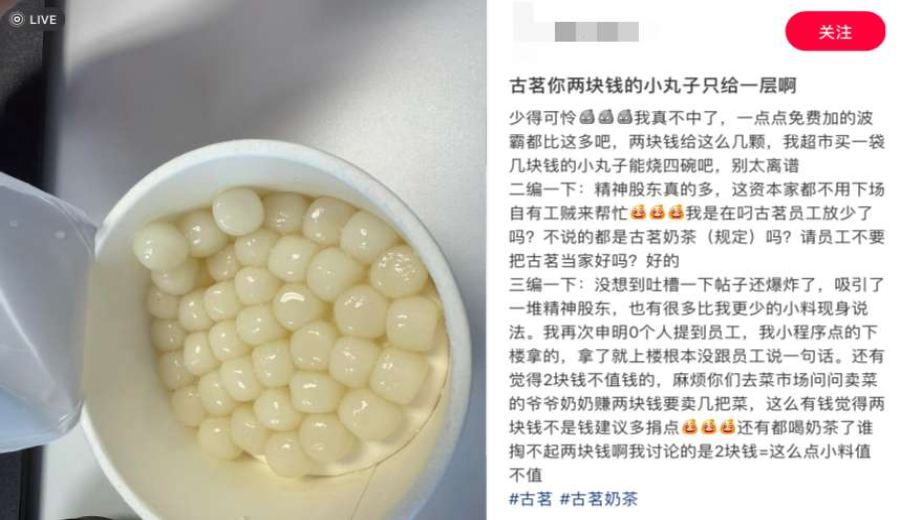
Introduction:Many consumers have noticed that when adding toppings to their GuMing bubble tea, ingredients like tapioca pearls and mochi are often spread out in just a thin layer, sparking widespread debate over cost-effectiveness. After conducting side-by-side tests, netizens pointed out that the portion sizes are noticeably smaller compared to brands like 1点点 and COCO. Is it due to strict brand standards or adjustments to the scoop size? This article delves into the truth behind the portion controversy in the tea beverage industry and reveals the unofficial practice of staff secretly adding extra toppings.
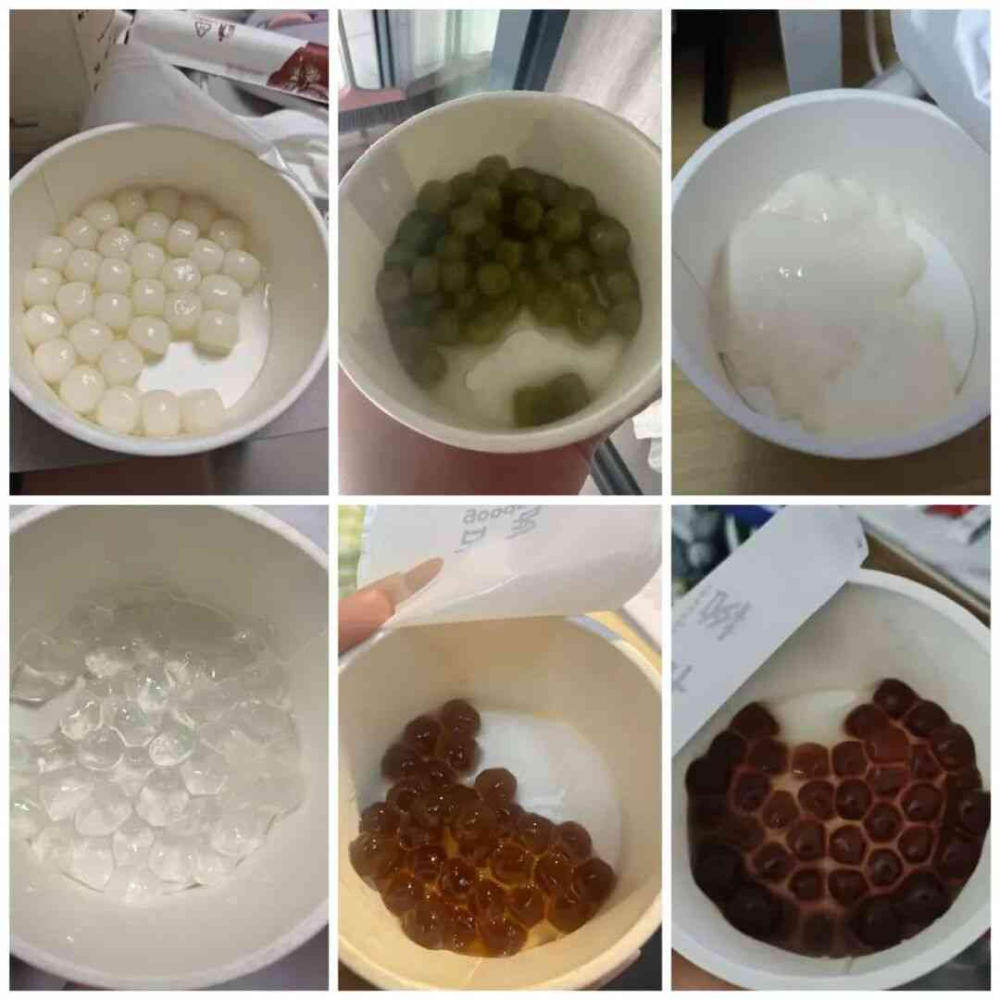
Recently, numerous consumer complaints have emerged on social media platforms, with users reporting that when purchasing individual toppings for their GuMing drinks, items such as mini boba and mochi often only thinly cover the bottom of the takeaway container—raising doubts about the actual amount given. These complaints quickly resonated with many bubble tea enthusiasts, and numerous netizens posted comparison photos showing that GuMing’s topping portions indeed fall short when compared to competitors like 1点点 and COCO.
Official GuMing staff explained that the brand has a strict standardized procedure for preparing toppings, and what is referred to as a “level scoop” is the officially defined portion size. However, some insiders revealed that certain stores have recently switched to using smaller-sized topping scoops, meaning that even when following standard procedures, the actual amount of toppings served is noticeably less than before. Notably, some staff admitted that during times of lax supervision, they would occasionally add an extra scoop or two to maintain customer satisfaction.
For many bubble tea lovers, toppings are not just embellishments—they are a key source of flavor and satisfaction. Some even go as far as ordering multiple extra toppings to turn a simple drink into a richly loaded “eight-treasure congee.” However, when the actual toppings received are spread out in just a thin layer, it’s bound to be disappointing—especially when these add-ons come at an additional cost, making the value-for-money issue even more prominent.
Faced with consumer doubts about insufficient portions, GuMing employees emphasized that the brand has clear preparation standards for individually sold toppings. According to regulations, each additional topping is served with a level scoop, which typically results in just a single layer at the bottom of the container. Therefore, from the brand’s perspective, this approach is not inappropriate and complies with established rules.
However, some attentive employees pointed out that the recent reduction in topping portions may be directly related to stores switching to new scoops that are smaller in size. Online comparison images show that the newly used scoops are indeed noticeably smaller than the old ones, meaning that even if staff continue to scoop a “level scoop,” the actual amount of toppings is less than before.
Interestingly, some staff who noticed this change have revealed on social media that they occasionally sneak in an extra scoop or two when management isn’t looking, trying to bring the portion back to what customers are used to. However, such “extra topping” behavior can only be done when no one is supervising, and normally, they still have to strictly follow brand standards—so some staff humorously suggest that customers “place orders when the boss isn’t around” to increase their chances of getting a more generous portion.
Taking all feedback into account, the controversy over GuMing bubble tea topping portions not only reflects the gap between the brand’s standardized operations and consumer expectations but also highlights the potential variability in operational details within the tea beverage industry. For consumers, understanding these internal processes might help them make more informed choices when ordering, ensuring they get the satisfaction and value they expect.
The above content is compiled by CoffeeHunters, a coffee news website.


