







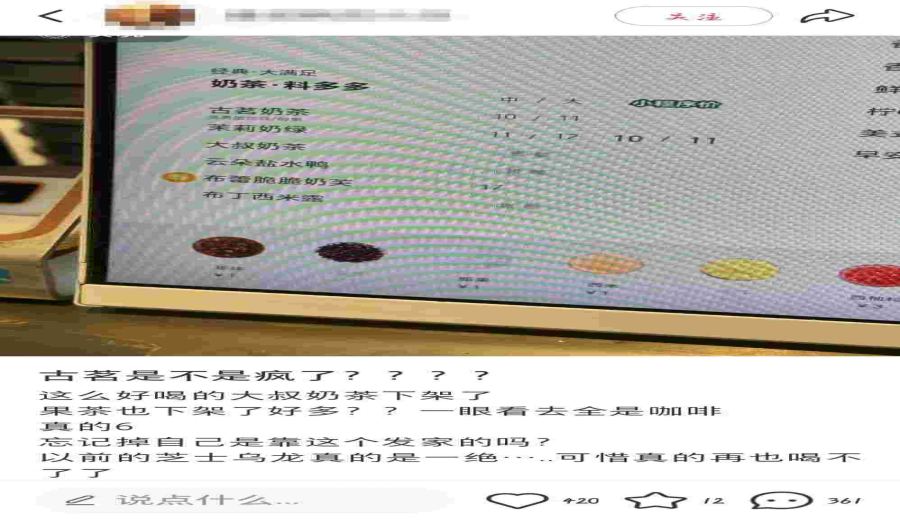
Introduction:Recently, many consumers have noticed that Gu Ming’s signature drink “Uncle Tea” has quietly been removed from store menus, with a noticeable reduction in the variety of milk teas, while the proportion of coffee beverages has increased significantly. This shift has sparked discomfort and heated discussion among many long-time customers. This article delves into the reasons behind the menu adjustments at Gu Ming, explores the strategic challenges of a tea beverage brand transitioning into the coffee business, and shares real consumer feedback and observations to help readers understand market changes and their own choices.
Recently, some customers walked into Gu Ming stores intending to order the signature “Uncle Tea,” only to be told that the product was no longer available. Moreover, many found that the variety of milk teas on the menu had drastically decreased, with several familiar fruit teas also missing, while Americano, lattes, and various specialty coffees now occupied prominent positions. Faced with this change, one netizen exclaimed, “All I see is coffee—it doesn’t look like the Gu Ming I used to know at all.”
In fact, verified by netizens in multiple locations, “Uncle Tea” has not completely disappeared from Gu Ming’s menu—it has only been temporarily removed from some stores due to a shortage of raw materials. However, even this partial adjustment has made many long-time supporters of Gu Ming’s milk tea feel uneasy. Numerous users have noted that the selection of milk teas in-store has become extremely limited, with common complaints including “I can’t find the milk tea I want on the menu,” “It’s always the same few options,” and “They’re pushing coffee all day—milk tea is almost extinct.”
Not long ago, Gu Ming won a large number of loyal customers with innovative drinks such as milk tea with grass jelly and Podu Da. Even though these products have been temporarily taken off the menu, they remain the “white moonlight” in the hearts of many fans. But in the past two years, the brand has clearly shifted its new product development focus toward the coffee category. In comparison, the frequency of new milk tea and fruit tea launches has noticeably decreased. One consumer bluntly stated, “This summer, they didn’t even release the most basic watermelon drink—it’s really disappointing.”
On social platforms, discussions about Gu Ming’s “coffeefication” as a former milk tea shop continue to heat up. Many netizens have raised questions: “Why is a brand famous for milk tea making such a major shift toward coffee?” “Did they change their R&D team?” Observations indicate that while it is normal for chain brands to adjust their product structures according to market trends, many consumers came to know Gu Ming because of its milk tea and fruit tea, and their impression of the brand remains that of a “specialist milk tea shop.” Suddenly pivoting to coffee can easily alienate the existing customer base and even raise concerns that classic tea beverages may gradually disappear.
Regarding the direction of the brand’s transformation, some consumers worry that an excessive focus on coffee products could lead to the loss of customers who originally loved milk tea. After all, for most people, choosing Gu Ming is because of the uniqueness and diversity of its milk tea offerings. Once these characteristics fade, the brand’s appeal naturally declines.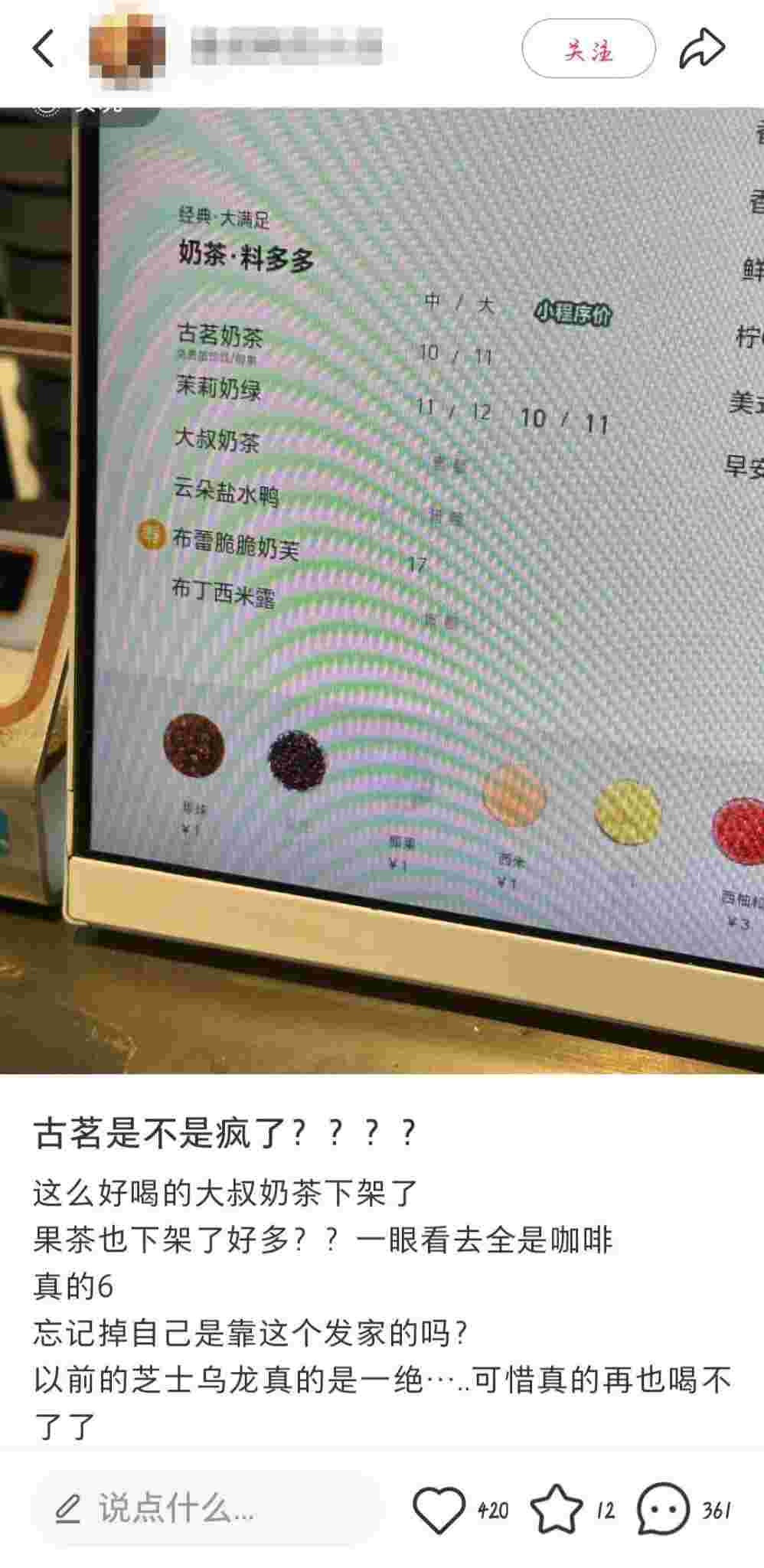
Experts suggest that chain tea beverage brands, while expanding their coffee offerings, should also take into account the tastes and expectations of their original customer base. For example, when promoting new coffee items, they could retain classic milk teas as flagship products and periodically bring back popular seasonal fruit teas to maintain brand diversity and customer loyalty. Additionally, transparent communication about reasons for raw material shortages or seasonal adjustments can effectively reduce consumer concerns and enhance brand trust.
In summary, although Gu Ming’s recent menu adjustments have sparked considerable controversy, they also reflect the current reality of fierce competition and rapidly changing consumption trends in the tea beverage market. As the brand seeks growth and innovation, how it balances the needs of both new and old customers will be key to its stable development in the future.
The above content is compiled by CoffeeHunters, a coffee news website.


