







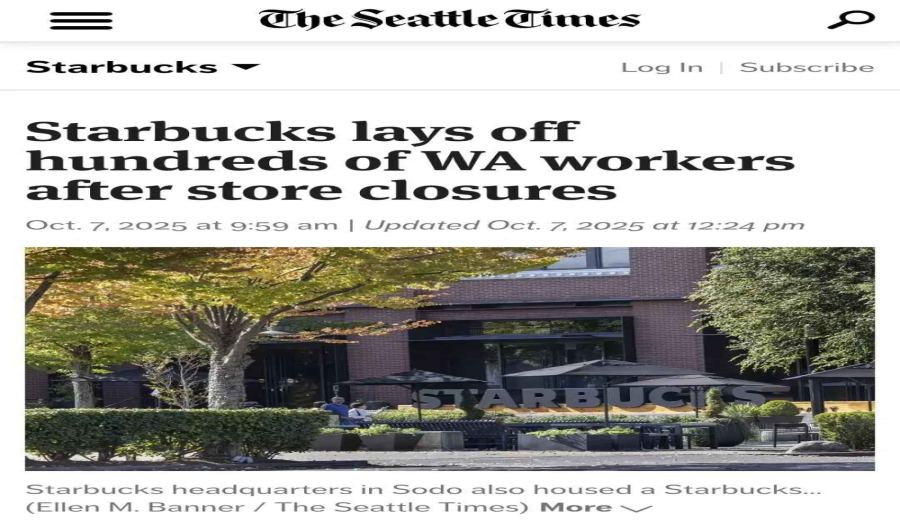
Introduction:Starbucks is investing $1 billion to restructure its North American operations, closing hundreds of underperforming stores and laying off a large number of employees, sparking strong protests from baristas and labor unions at its Seattle headquarters. This article delves into the details of the layoff decisions, disputes over employee placement, and the labor dispute now under investigation by New York regulatory authorities, providing a comprehensive look at the storm affecting thousands of industry professionals.
The global coffee chain giant recently launched a massive $1 billion operational restructuring plan, focusing on structural adjustments in the North American market. The strategy primarily involves permanently closing hundreds of company-owned stores that have consistently underperformed, along with workforce reductions, resulting in many frontline employees losing their jobs. The decision immediately triggered a chain reaction at the Seattle headquarters, where dozens of baristas and union representatives gathered in front of the company’s global headquarters in the SoDo district, holding protest signs to express strong dissatisfaction with the company’s unilateral layoffs.
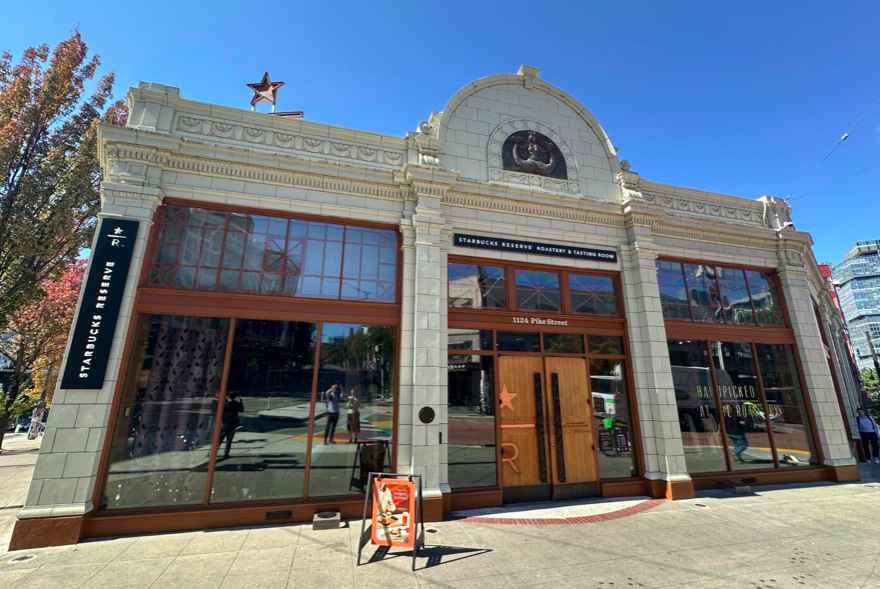
According to detailed information disclosed by the union, 59 unionized stores across the U.S. have been included in the permanent closure list as part of this restructuring effort, with Washington State being the most severely affected—369 full-time employees are facing mandatory layoffs. Notably, the original Capitol Hill Roastery in downtown Seattle, the world’s first Starbucks Reserve Roastery, and the flagship store in the SoDo district are all on the closure list. The shutdown of these iconic locations has had a significant impact on the brand’s symbolic significance.
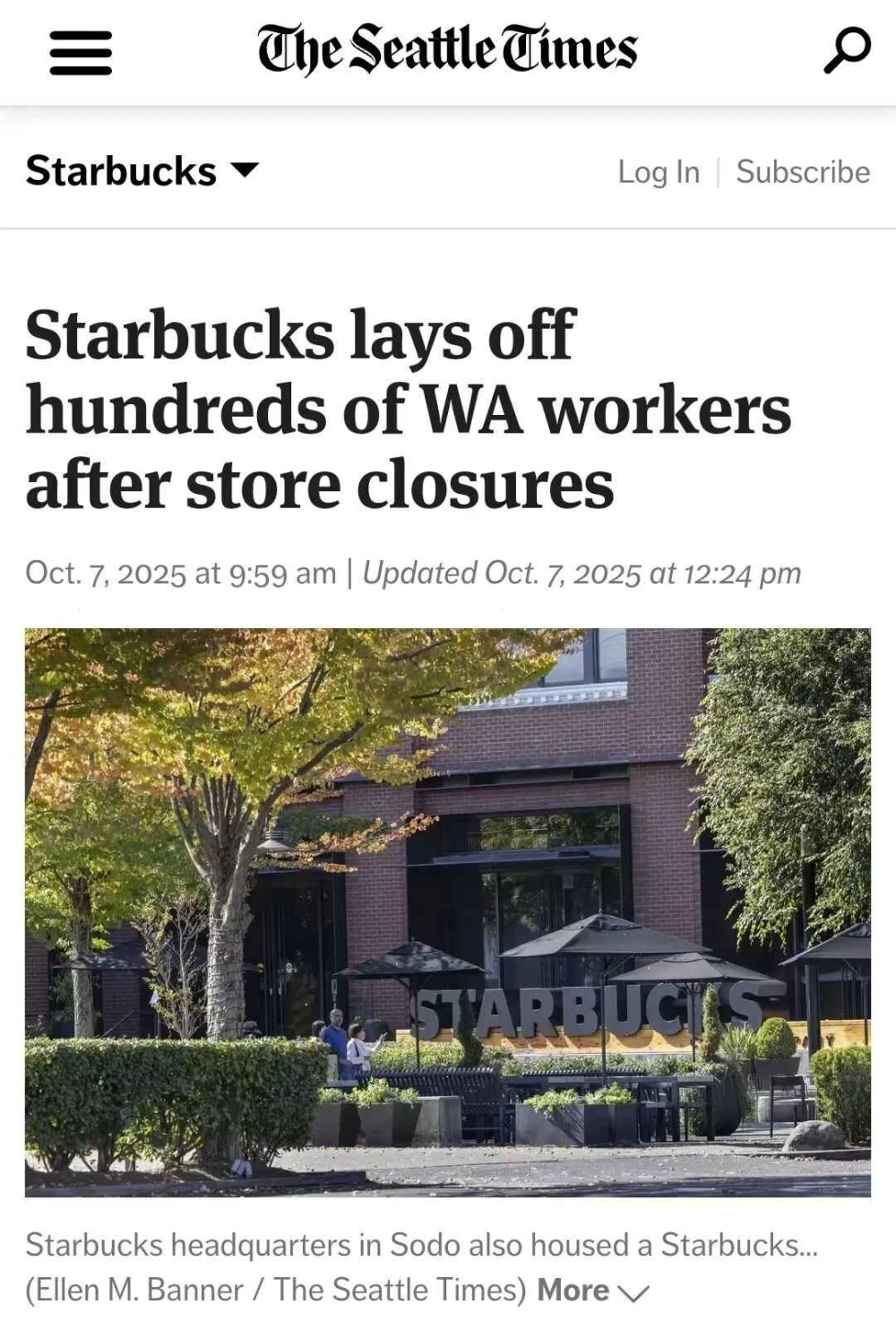
A veteran barista who worked at the Roastery for two years revealed to the media that they only received their layoff notice via a five-minute pre-recorded phone call and were given no career transition or relocation assistance. On the day of the incident, the employee first learned of the store’s temporary closure through a text message from the store manager, and only later confirmed through cross-referencing social media and union communication groups that their location would be permanently shut down. “I didn’t fully accept it until I saw the news reports. This handling was completely lacking in basic respect,” said the former employee, who wished to remain anonymous.
Follow-up reporting by local Seattle media indicates that Starbucks plans to close 28 stores in Washington State, nine of which are concentrated in the metropolitan area. The related layoffs are expected to officially begin on December 5, 2025, with the number of affected employees setting a record for a single retail industry adjustment in the state in recent years. Although the company has emphasized that this move is in response to “six consecutive quarters of declining sales,” employee representatives have questioned the lack of transparency in the decision-making process and the absence of reasonable job transfer solutions.
Labor tensions have continued to escalate over the past month, with multiple protests erupting in the Seattle area. Issues raised include understaffed scheduling, low base wages, and differential treatment of union activists. Union leaders at the protest sites emphasized: “We uphold the principle that ‘hurting one partner is hurting all.’ If the company refuses to address our reasonable demands directly, we will take escalation measures, including but not limited to nationwide strikes.”
The New York City Office of Consumer and Worker Protection has stepped in to investigate Starbucks’ operations in the area. Official documents show that the company hastily closed more than 50 Manhattan locations without prior notice to employees, landlords, or regulatory authorities. Even more controversially, management has been accused of failing to assist affected employees in finding alternative positions within the same borough, as required by New York State labor laws. There have even been leaked records of conversations in which employees were allegedly advised to apply for social assistance. Regulatory authorities have formally sent a letter to Starbucks demanding an explanation of how the company intends to comply with local employment protection provisions.
Professional analysts point out that although this restructuring plan is touted as a “strategic adjustment,” the communication flaws and handling of employee rights exposed during its execution could cause irreparable damage to the brand’s long-term reputation. Especially in the context of intensifying competition in the global specialty coffee market, how to balance financial performance with human capital management will become a core issue that Starbucks management urgently needs to address.
The above content is compiled by CoffeeHunters, a coffee news website.


