








Introduction:Jamaica Blue Mountain coffee is hailed as the "King of Coffee," yet many drinkers are puzzled by why its flavor doesn’t live up to the legendary hype. This article delves into the historical journey of how Blue Mountain coffee was introduced to Jamaica in the 18th century, rose to premier status in the 20th century under a rigorous grading system, and explores the unique flavor profile brought about by its island climate and Typica variety — including balance, smooth mouthfeel, and delicate aroma — to help you truly understand the charm and proper way to enjoy this legendary specialty coffee bean.
Many people, upon their first taste of Blue Mountain coffee, often find themselves wondering: Is this really the top-tier coffee crowned as the "King of Coffee"? Indeed, its flavor isn’t as explosively shocking as street rumors suggest; instead, it comes across as quite reserved and gentle. Yet beneath this seemingly ordinary surface lies the uniquely captivating charm of Blue Mountain coffee. So what makes Blue Mountain coffee so good? Let’s revisit this legendary specialty coffee through its history, terroir, and flavor characteristics.

In fact, when many coffee enthusiasts first truly encounter Blue Mountain coffee, their expressions are often quite telling: slightly furrowed brows, narrowed eyes, and a repeated gentle flick of the tongue, as if trying hard to catch some subtle layer. This reaction actually reflects the gap between the public's expectations behind the name "Blue Mountain" and the actual experience. So where does the true value of Blue Mountain coffee lie? Let’s start with its historical trajectory.
The fame of Blue Mountain coffee wasn’t achieved overnight. As early as 1728, then-Jamaican Governor Nicholas Lawes introduced coffee to the Blue Mountains, but due to various factors, it wasn’t until the 1950s that Blue Mountain coffee gradually ascended to the throne of specialty coffee. In 1952, the Jamaica Coffee Industry Board (CIB), originally established in 1948, was upgraded to take charge of setting industry standards and supervising coffee quality. As an island nation, Jamaica has limited land suitable for coffee cultivation, so the industry strategy shifted toward "quality over quantity" — a positioning that laid the foundation for Blue Mountain coffee’s future premier status.

After its establishment, the CIB implemented an extremely strict grading system for coffee from the Blue Mountain region. Everything from bean size, color, uniformity, defect rate, to moisture content was included in the evaluation criteria, ensuring that only the highest-quality beans could receive certification. Furthermore, through cupping, the CIB discovered that beans produced in certain specific areas within the Blue Mountains exhibited significantly superior flavor and mouthfeel compared to other regions. Therefore, an exclusive zone was designated, and only coffee from this area could be labeled as "Blue Mountain Coffee"; other beans could only be called "Jamaica High Mountain Coffee" or "Jamaica Prime Coffee."
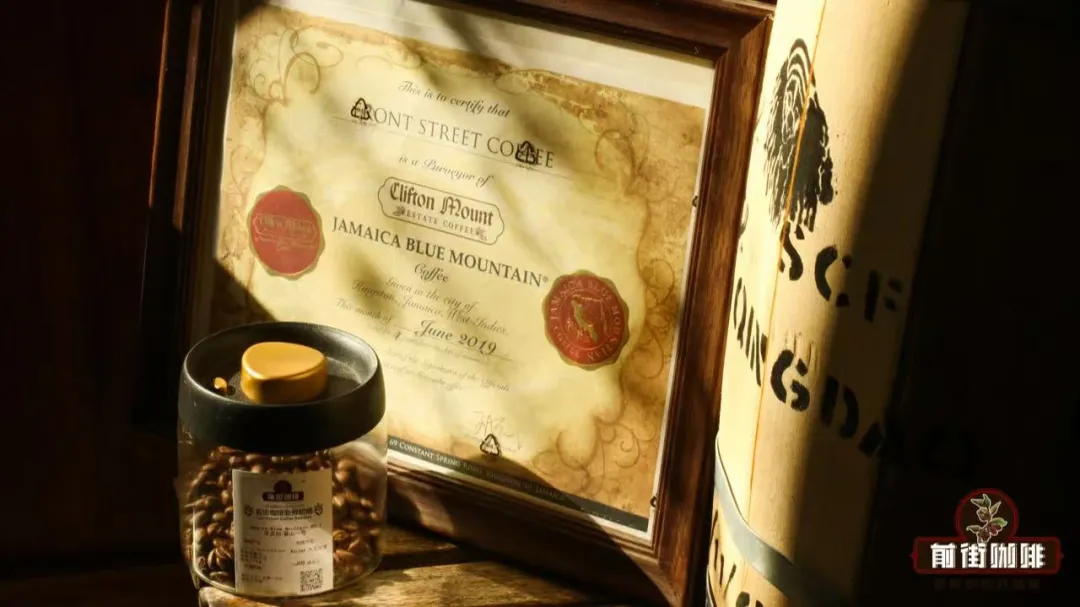
In terms of cultivation and post-harvest processing, Jamaica has consistently adhered to using the Arabica Typica variety, which offers excellent flavor performance despite lower yields, and insisted on the washed processing method to ensure lower defect rates and higher consistency. Notably, while many coffee-growing regions were still focused on yield at the time, such high-standard practices of Blue Mountain coffee far surpassed its peers, laying a remarkable foundation for its exceptional quality.
However, the “limited availability” of Blue Mountain coffee gradually took shape in the late 1960s after Hurricane Gilbert, a Category 5 storm, severely damaged the local industry. With financial aid from Japanese trading companies, the Jamaican coffee industry gradually recovered, and in 1972, it signed a 30-year agreement with the Japanese government stipulating that 90% of Blue Mountain coffee production would be prioritized for the Japanese market, with the remainder allocated to other countries. Already rare in production, coupled with aggressive marketing in Japan, Blue Mountain coffee quickly became a dream luxury item for coffee lovers worldwide, reaching peak prices and exclusivity.

Today, Blue Mountain coffee is no longer exclusive to Japan and has gradually entered more markets, yet its exceptional quality remains unchanged. So where does the unique flavor of Blue Mountain coffee come from? The answer lies in its exceptional “terroir.” As the saying goes: “An orange grown in Huainan is an orange, but an orange grown in Huaibei is a trifoliate orange” — the flavor of coffee is deeply connected to its growing environment.
Blue Mountain coffee is grown in the island nation of Jamaica, not only situated within the “coffee golden belt” but also blessed with fertile volcanic soil, paired with a distinctive island climate — humid, moderately tempered, and cloudy-rainy year-round. These conditions collectively provide a far superior growing environment compared to most continental regions. Even at similar altitudes, Blue Mountain coffee can still showcase richer and more nuanced flavor layers, resulting in its outstanding balance, richly smooth mouthfeel, and delicately enchanting aromatic qualities.
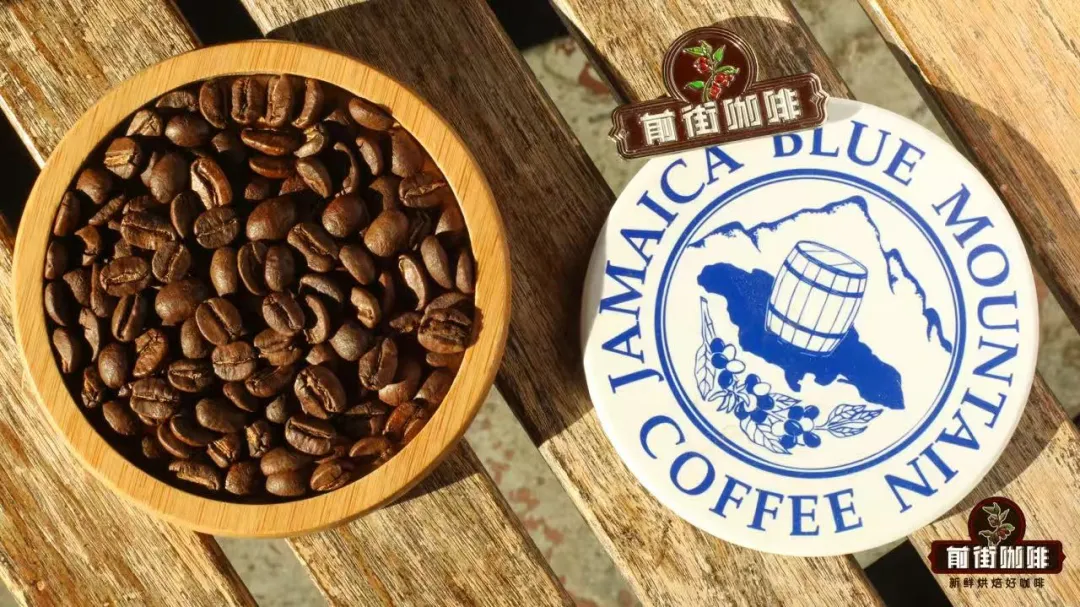
Take the Jamaica Blue Mountain No. 1 from the Clifton Estate as an example — this estate is not only one of the earliest coffee-growing regions in the area but also the only Blue Mountain coffee farm certified by the Rainforest Alliance, with its export packaging bearing the tree frog mark symbolizing environmental sustainability. This Blue Mountain coffee uses the Typica variety, undergoes washed processing, is grown at an altitude of about 1300 meters, and is graded as NO.1, making it a classic example of high-standard specialty coffee.
Recommended pour over parameters are as follows: 15g coffee dose, 1:15 brew ratio, 90°C water temperature, use a 20-mesh sieve to achieve approximately 75% extraction yield, employ a three-stage pour, paired with a Kono filter, with total brew time controlled around 2 minutes. This setup helps fully highlight the delicate flavors of Blue Mountain coffee.
Upon actual tasting, the first impression is the excellent balance among acidity, sweetness, and bitterness — each complements the others without clashing. Soon after, the flavor notes of dark chocolate, nuts, and cream gradually emerge, with a mellow and layered aroma. The mouthfeel is richly smooth and goes down effortlessly. In the aftertaste, you can further savor that faint trace of legendary elegant fragrance. Overall, the experience is highly comfortable, making it a classic choice that specialty coffee enthusiasts shouldn’t miss.
The above content is compiled by CoffeeHunters, a coffee news website.


