







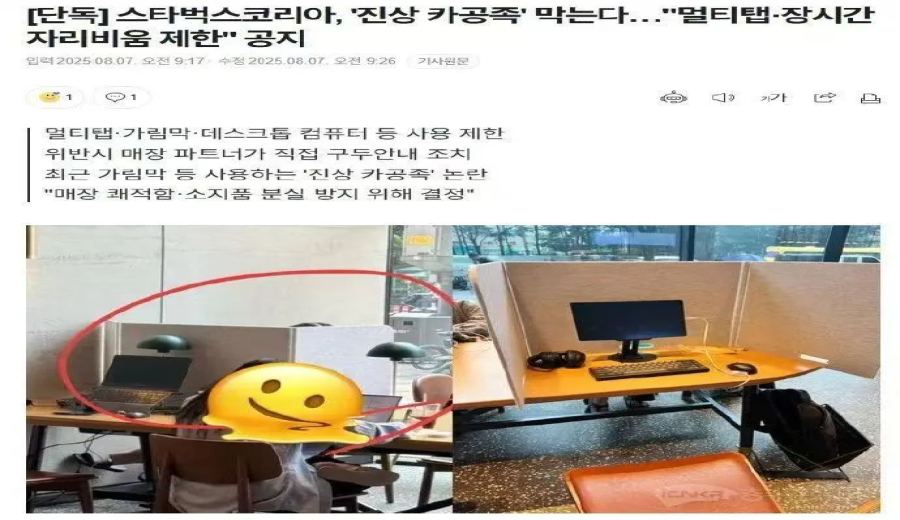
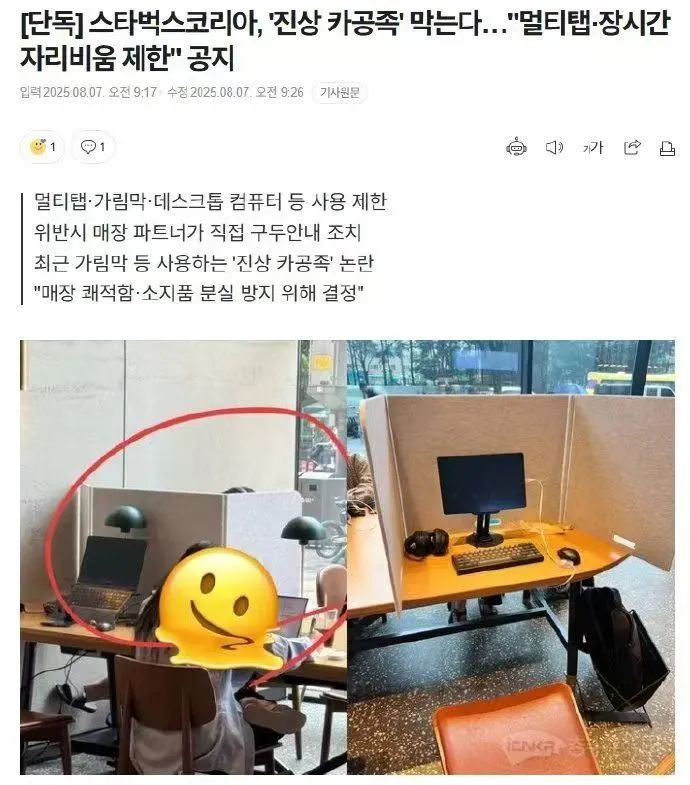
Introduction:In recent years, an increasing number of "cafe students" and "cafe workers" who occupy seats for long periods while working on their laptops have appeared at Starbucks locations in South Korea, causing dissatisfaction among other customers and a continuous rise in related complaints. To improve store environments and user experiences, Starbucks Korea headquarters has recently implemented a series of new regulations across its nationwide outlets. These include restrictions on the use of dividers, multi-outlet power strips, personal computers, and other equipment, as well as management of behaviors such as leaving seats unattended for long periods or occupying multiple tables. This article takes you through the details of the policy and reactions from various stakeholders.
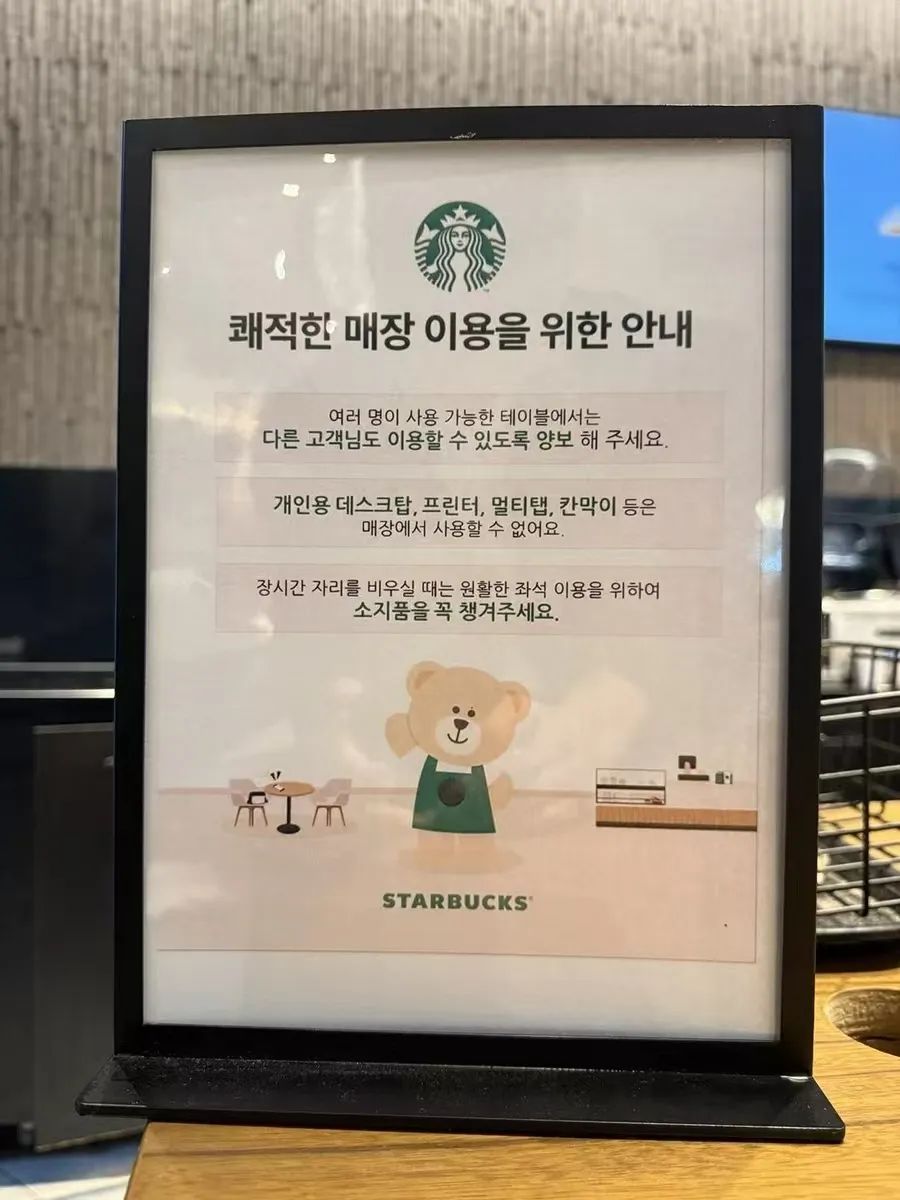
According to reports from South Korean media, Starbucks Korea headquarters has issued updated operational guidelines to all stores nationwide, clearly restricting the use of certain equipment and seat occupancy behaviors by customers. Moving forward, if customers use dividers, personal desktop computers, printers, or connect to multi-outlet power strips for high-load tasks over extended periods, staff will proactively provide verbal reminders. Additionally, customers who leave personal belongings at a seat for long durations without returning, or who occupy multiple tables alone, may also face restrictions.
The background of this policy adjustment is primarily the significant increase in complaints about so-called "cafe students" and "cafe workers." This group typically brings laptops and documents, staying at Starbucks for long periods to work or study—sometimes for several hours—making it difficult for other customers who only wish to rest briefly or enjoy a cup of coffee to find seats, leading to dissatisfaction.
Starbucks Korea officially explained that the purpose of these guidance measures is, on one hand, to enhance the overall experience of every customer visiting the store and ensure a smooth and comfortable environment inside; on the other hand, it's also to reduce the risk of theft or loss of personal belongings when customers are away from their seats for extended periods.A spokesperson for Starbucks Korea stated: "We hope to create a friendly and efficient space where every customer can enjoy the service and respect they deserve."
In fact, as early as May this year, a Starbucks outlet in Seoul sparked heated discussion after posting a sign stating that seats would be cleared if left unattended for more than 30 minutes. The notice indicated that if a customer was away from their seat for over half an hour, staff would clear the table and temporarily store personal belongings in the lost and found. While this move was supported by many consumers who believed it helped improve seat turnover, it also drew criticism from some netizens who were concerned it might affect customers with genuine needs.
Netizens who supported the measure said: "I've encountered people leaving their bags and being gone for ages in cafes before—it's really frustrating," "Starbucks is a coffee shop, not an office, so I can understand their position," "Some customers occupy seats all day, even going out to eat and come back—it’s just too much." Others also observed that in certain stores, a high proportion of seats were being occupied long-term by laptop users, affecting others' willingness to visit.
However, some consumers opposed the measure, arguing that as long as a customer makes a purchase, they should not be discriminated against:"I bought a drink, so I can't step away for a bit?" "What if I have an emergency and need to go out? Coming back and having to order again is unreasonable," "Not everyone occupies seats for long periods—it’s unfair to affect everyone because of a minority."
Although the Starbucks outlet that originally posted the notice clarified that the rule applied only to that specific branch and did not represent Starbucks Korea’s nationwide policy, with similar situations occurring frequently, the brand ultimately decided to expand the related restrictions to all outlets, indicating that the operational challenges brought by "cafe students" and "cafe workers" can no longer be ignored.
It’s worth noting that Starbucks Korea has not completely banned the use of laptops or light work, but rather focuses on behaviors that may negatively affect the experience of other customers—such as leaving seats unattended for long periods, using large dividers to create private spaces, occupying multiple tables, or using high-power devices (like printers) that strain the electrical load. When visiting Starbucks in the future, customers are advised to be mindful of whether their behavior might impact others and to use the space reasonably to help maintain good public order.
The above content is compiled by CoffeeHunters, a coffee news website.


