







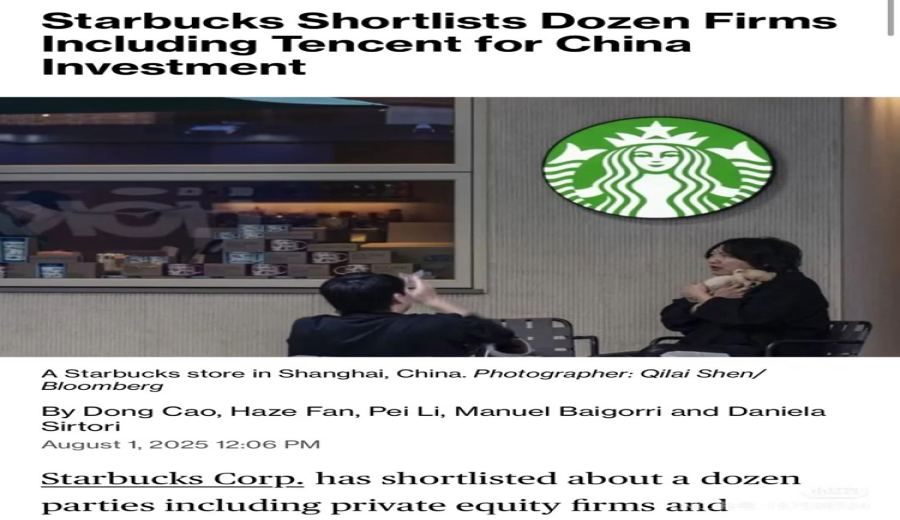
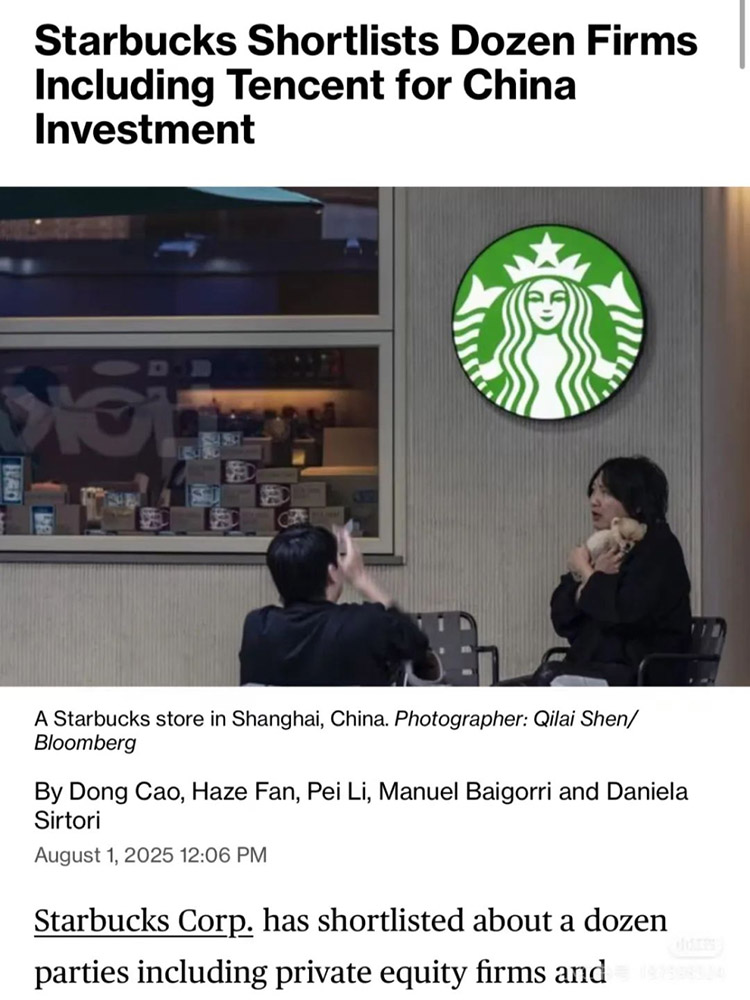
Introduction:The latest developments have emerged in Starbucks' plan to sell its China business stake. Several prominent investment firms and technology companies have now entered the second round of screening, including private equity funds such as Boyu Capital, KKR, and Hillhouse Capital, as well as the surprisingly notable inclusion of JD.com and Tencent. Explore the backgrounds of these potential buyers, as well as the strategic thinking and market challenges behind Starbucks’ pursuit of a partnership in the Chinese market.
There is new progress in Starbucks’ plan to sell its stake in its China business. According to reliable sources, Starbucks has completed an initial selection among numerous potential investors, with dozens of institutions now advancing to the second-round shortlist. These candidates include not only internationally renowned private equity firms such as Boyu Capital, Carlyle Group, KKR, and Hillhouse Capital, but also two major Chinese technology companies—JD.com Group and Tencent Holdings—drawing particular attention.
It is understood that the institutions on the shortlist are diverse in type. In addition to the aforementioned private equity investment firms, EQT AB (EQT Capital), FountainVest Partners, and Primavera Capital are also included. These potential buyers will gain access to detailed financial information about Starbucks’ China business, in preparation for the due diligence and bidding processes in the coming months.
Starbucks CEO Laxman Narasimhan recently stated in an earnings call that more than twenty institutions have expressed interest in investing in the China business, and the brand is carefully evaluating various collaboration models. He emphasized that Starbucks still plans to retain a significant equity stake in the Chinese market in the future. Therefore, the focus in seeking a partner is not on the scale of capital, but on whether the partner can help the brand achieve a more competitive position in the Chinese market.
Narasimhan further explained that Starbucks has two key criteria in choosing a partner: first, sharing common values and long-term missions with the brand; and second, possessing strong localization and operational capabilities that can help Starbucks implement more efficient strategies in the Chinese market. He reiterated that this pursuit of a partnership “is not related to capital-level maneuvers,” but rather focused on the future prospects of the brand in China.
As the second-largest market for Starbucks globally, the Chinese market has seen increasingly fierce competition in recent years, especially with the strong rise of domestic brands such as Luckin Coffee, putting notable pressure on Starbucks. Nevertheless, according to the latest financial report, Starbucks China’s performance has shown signs of recovery, particularly after adjusting its product strategy, launching new offerings such as fruit teas, fruit coffees, and “True Taste Sugar-Free,” as well as reducing prices on some long-standing products. Same-store sales metrics have achieved positive growth for the first time in nearly a year.
To further attract Chinese consumers, Starbucks has also strengthened its marketing strategies, including launching limited-edition products in collaboration with popular celebrities and trending IPs, effectively boosting brand exposure and customer loyalty. These efforts have led to improved performance, which has also renewed some appeal for Starbucks’ China business in the eyes of the capital market, thereby bringing the issue of equity sale back into focus.
However, sources indicate that the current list of potential buyers is not final, and other investors from different industries or financial sectors may join in future in-depth negotiations. It is even possible that no deal will be reached in the end. Starbucks has maintained a low profile on the matter and has not publicly responded to Bloomberg’s report. Meanwhile, related institutions including EQT, FountainVest Capital, Hillhouse Capital, KKR, Primavera Capital, Boyu Capital, Carlyle Group, JD.com, and Tencent have not commented on media inquiries.
The above content is compiled by CoffeeHunters, a coffee news website.


