







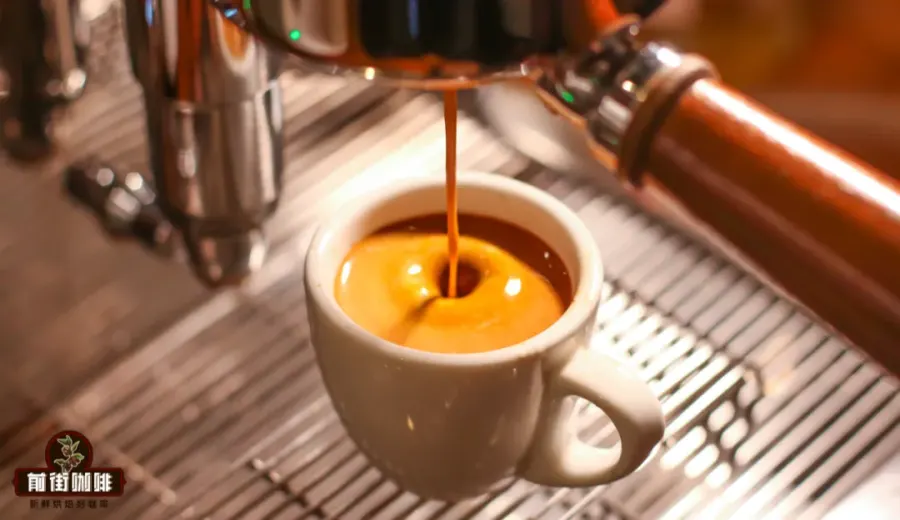
Introduction:Many coffee beginners are puzzled by the standard ratio of "18 grams of coffee grounds to 36 milliliters of extraction." Is this common 1:2 coffee-to-water ratio really an unshakable golden rule? This article delves into the scientific principles behind espresso coffee-to-water ratios, explains why 1:2 has become the mainstream reference, and explores the practical differences in performance across various ratios from 1:1.5 to 1:2.5. It helps you flexibly adjust extraction parameters according to your drinking preferences and master professional-level espresso brewing techniques.
When stepping into the world of espresso, it's common to hear the recommendation of "extracting 36 milliliters of espresso from 18 grams of coffee grounds." This 1:2 coffee-to-water ratio is widely regarded as the standard configuration. But have you ever wondered why it isn't 1:3 or 1:1.8? In fact, this ratio is just one of many viable options, and its importance lies in balancing concentration and extraction efficiency, rather than being an absolute rule.
The coffee-to-water ratio is essentially the relationship between the weight of coffee grounds and the volume of liquid extracted.Taking 1:2 as an example, theoretically, every 1 gram of coffee grounds should yield 2 milliliters of coffee liquid. If you use 18 grams of coffee grounds, you can expect to get 36 milliliters of espresso, which is the most commonly referenced benchmark. However, these numbers are not an ironclad law but rather a practical starting point derived from accumulated experience.

It's often misunderstood that 1:2 is the only correct "golden ratio." In reality, this term stems from its versatility. The coffee extracted at this ratio typically has a concentration of around 10–12%, which can showcase the rich flavors of the coffee while maintaining enough body to support the texture of milk-based drinks. But if you prefer a lighter or more intense profile, there’s plenty of room for adjustment.
The key lies in understandingthat the coffee-to-water ratio directly determines coffee concentration.With a fixed extraction time (usually 25–30 seconds), a higher coffee-to-water ratio (such as 1:4) yields more liquid but results in lower concentration; conversely, a lower ratio increases concentration. Empirical data shows that using 18 grams of coffee at a 1:2 ratio produces about 36 milliliters of coffee with approximately 10.8% concentration, whereas the same conditions at a 1:4 ratio yield 72 milliliters with around 5.4% concentration—both showing clear differences in flavor complexity and body.

So why is 1:2 considered the "standard answer"? This is closely related to the primary application scenarios of espresso. Most consumers don’t drink espresso straight but use it as the base for milk-based drinks like lattes and cappuccinos. These drinks require the espresso to provide sufficient crema and a flavor foundation; too low a concentration can result in a watery taste, disrupting the overall balance.
Professional baristas adjust the ratio based on three dimensions in practice: first isthe final beverage type—pure espresso is suited to high concentrations of 1:1.5–1:2, while milk-based drinks can accommodate 1:2–1:2.5; second iscoffee bean characteristics—lighter roasts usually benefit from slightly lower ratios to highlight acidity, while darker roasts suit higher ratios to balance bitterness; lastly,extraction parameters—grind size, tamping pressure, and water temperature all need to be fine-tuned accordingly.
In practical operation, it’s recommended to start with 1:2 and make minor adjustments:For a richer taste, narrow the ratio to 1:1.8while observing crema thickness and flow rate;for larger-volume milk-based drinks, you can widen the ratio to 1:2.5but ensure the initial extraction is sufficient. The key is to maintain a stable extraction time (usually 25±2 seconds) and verify results with a TDS refractometer (ideal range: 1.15–1.35%).
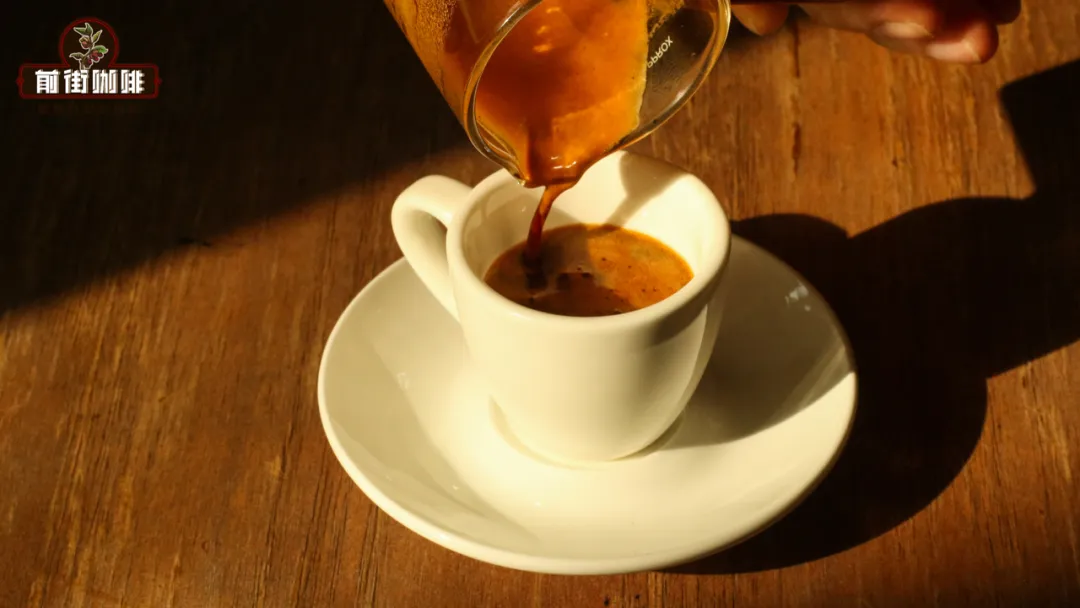
A special reminder for beginners: avoid two extremes—over-pursuing high concentration (e.g., 1:1) may lead to over-extraction and bitterness, while too low a ratio (e.g., 1:3+) can easily result in thin, weak coffee. Remember, 1:2 is just a reference starting point; true professionalism lies in understanding the interplay of all parameters and flexibly adjusting based on actual flavor feedback.
In summary, there’s no absolutely correct answer to the espresso coffee-to-water ratio. The widespread adoption of 1:2 is because it perfectly balances flavor intensity and application flexibility. Once you’ve mastered this foundation, you can freely explore the infinite possibilities between 1:1.5 and 1:2.5 based on different beans, brewing purposes, and personal tastes, finding your own golden ratio in the world of espresso.
The above content is compiled by CoffeeHunters, a coffee news website.


