







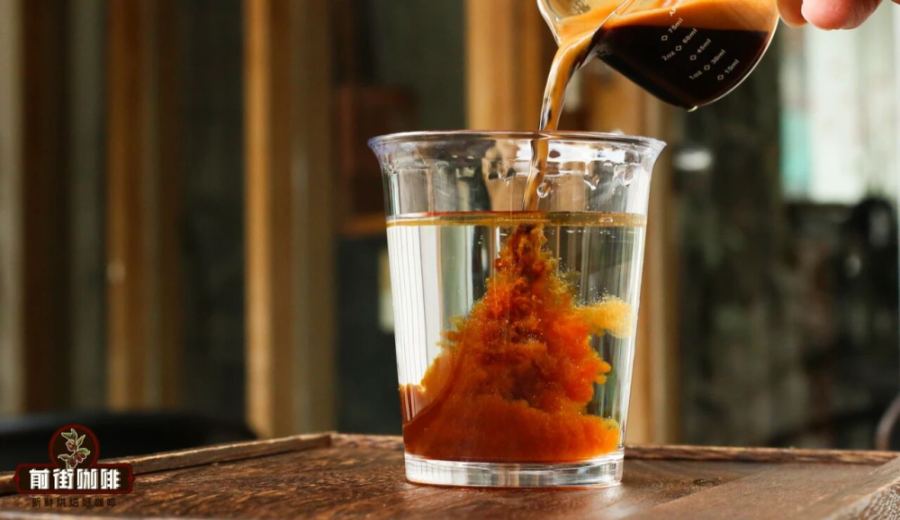
Introduction:What is the difference between a Red Eye coffee and a regular Americano? This caffeine-packed brew, named after the infamous Red Eye flights, is actually a combination of espresso and pour over coffee. Not only does it contain more caffeine, but it also offers a unique flavor profile. This article delves into the origins of Red Eye coffee, how it differs from Black Eye coffee, and provides practical brewing parameters and blend suggestions to help you understand the charm and challenges of this special beverage.
Have you ever heard someone at a coffee shop ask for “espresso mixed with pour over”? At first glance, it might sound confusing—but in fact, that’s an alternative way a customer requested a “Red Eye coffee.” So what exactly is Red Eye coffee? How is it different from a regular Americano? More importantly, the name is closely tied to the aviation industry’s “Red Eye flights.” This article will detail the origin of Red Eye coffee, how it’s made, its relationship with Black Eye and Dead Eye coffees, as well as the blends and precise brewing parameters used in practice—giving you a fuller understanding of this high-caffeine drink.
When a customer at a coffee shop asked, “How can I make espresso mixed with pour over taste good?” the barista was initially quite surprised. It turned out that the customer wanted to try a “Red Eye coffee.” However, mixing two differently brewed coffees isn’t common and doesn’t always guarantee great flavor, so it’s not generally recommended. After all, Red Eye coffee was originally created to deliver a large dose of caffeine quickly for a pick-me-up, rather than to highlight nuanced flavors.

So, what exactly is Red Eye coffee? The most widely circulated story is that it originated in the United States, taking its name from overnight flights that arrive early in the morning—“Red Eye flights.” Because these flights often last less than eight hours, many passengers disembark with bloodshot eyes, hence the nickname. To stay awake during night shifts, crew members needed high doses of caffeine. When a single shot of espresso wasn’t enough to fight off sleepiness, someone came up with the idea of combining one shot of espresso with one cup of drip coffee, creating a higher-caffeine beverage—the original Red Eye coffee.
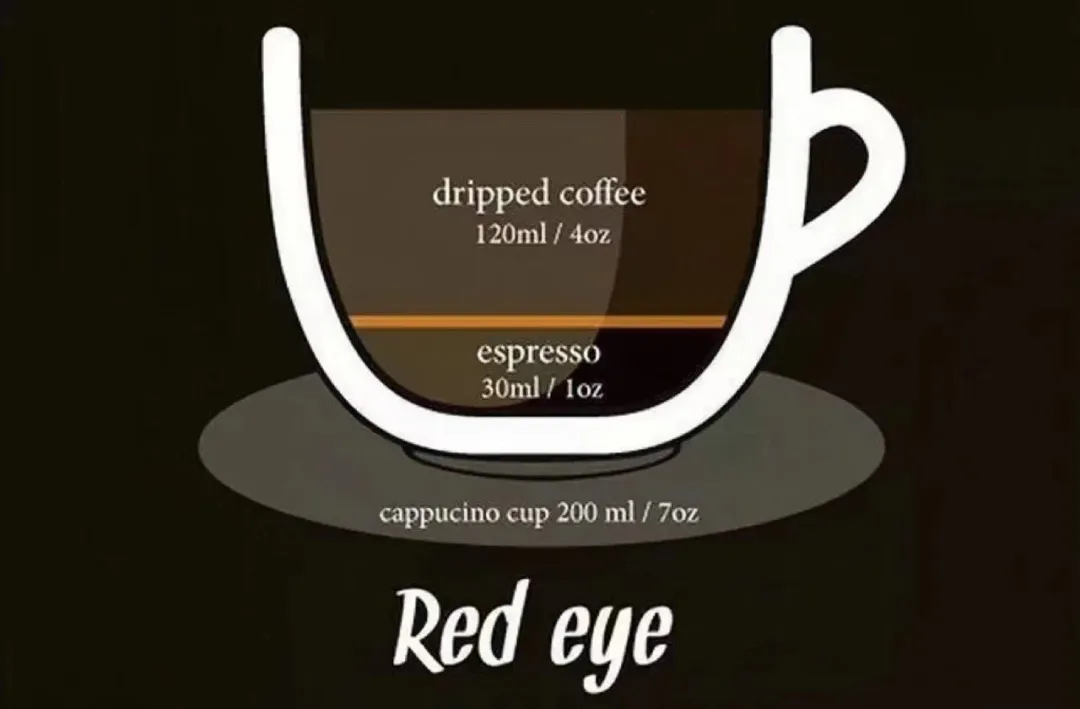
It’s understood that the original Red Eye coffee recipe used about 30ml of a single shot of espresso mixed with 120ml of drip coffee, for a total volume of around 150ml. However, with advancements in modern extraction techniques, today’s espresso is much more concentrated. Using the old ratio might result in a brew that’s overly intense, even approaching the strength of a Black Eye coffee (which is a double shot of espresso plus drip coffee). Therefore, it’s now recommended to adjust the amount of espresso—such as using about 20ml of a double shot—to maintain a more balanced flavor.
In addition to controlling the ratio of espresso to drip, selecting the right coffee beans is crucial. It’s advised to use two coffee beans with similar roast levels—one for the espresso and one for the pour over—so their flavor profiles are more aligned, reducing noticeable clashes when mixed. While it may not achieve perfect harmony, it at least ensures overall balance and avoids extreme mismatches.
As a real-world example, one café used a medium-roasted Strawberry Sugar Geisha blend as the espresso base, offering flavors of white floral notes, strawberry, and berries, with an overall sweet and tangy profile. For the pour over, they chose a similarly medium-roasted Kagoshima SOE, showcasing bright notes of citrus, apricot, and strawberry. The resulting Red Eye coffee was surprisingly harmonious in flavor—balanced between sweet and acidic—with a rich body and a light oolong tea finish.
The suggested specific brewing parameters are as follows: For the espresso, use 20g of coffee grounds, extracted for 30 seconds to yield about 40ml of espresso; for the pour over, use 15g of coffee, with a 1:15 coffee-to-water ratio. The grind size can be around 10 on an EK43 grinder, and sifted through a No. 20 sieve to achieve about 75% extraction yield, using a fine sugar-like grind. Brew with water at 92°C using a V60 dripper, employing a three-stage pouring method over a total of about 2 minutes. Once done, pour 20ml of the espresso into the cup first, then add 120ml of the pour over coffee, stir gently, and enjoy.
Upon tasting, this Red Eye coffee is slightly stronger than a typical pour over in concentration, but still within an acceptable range for those accustomed to espresso drinks. In terms of flavor, since both beans share similar profiles, the blend presents clear layers of white floral notes, strawberry, citrus, and apricot, with a balanced sweetness and acidity, smooth mouthfeel, and a lingering oolong tea-like finish. The overall experience is quite delightful. Of course, this combination remains a high-caffeine beverage—those sensitive to caffeine should consume with caution or consider reducing the espresso ratio, or even drinking the two components separately, which is also a good alternative.

The above content is compiled by CoffeeHunters, a coffee news website.


