







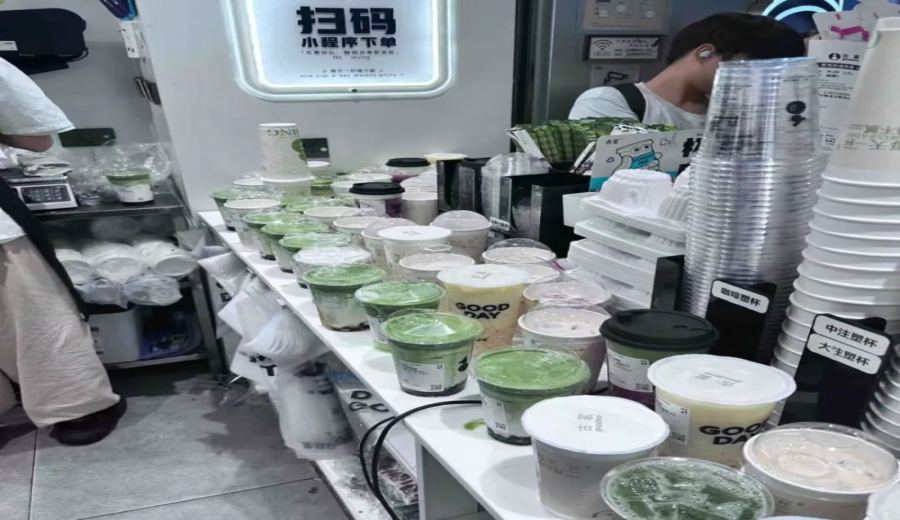
Introduction:Guyiming’s recent “Summer Buy One Get One Free” promotion, while successfully attracting a surge in customer traffic, also plunged its store kitchens into unprecedented chaos. This article delves into how the promotion led to excessive overtime and high workloads for employees, analyzes the practical challenges behind the preparation of eight popular fruit tea items, and dissects the gap between brand initiatives and the actual capacity of individual stores—drawing from frontline staff experiences. It provides practical insights for professionals in the coffee and tea beverage industry.
Guyiming recently launched a “Summer Buy One Get One Free” promotion, covering eight popular products including Super A Cheese Grape, Mango Pomelo Sago, and Apple Golden Pineapple. Customers ordering via the mini-program could opt to add a designated drink or receive a limited-time free drink voucher. While seemingly beneficial for boosting sales, it placed a heavy burden on the stores.
It is understood that many staff members had anticipated an increase in order volume prior to the promotion and had stocked up on ingredients in advance. However, once the campaign officially launched, the actual number of orders far exceeded expectations, with many stores suddenly inundated with a flood of delivery and in-store orders, resulting in a dramatic spike in kitchen workload. Employees were forced to continuously handle tedious tasks such as deseeding grapes, slicing mangoes, and whipping milk foam for extended hours, with almost no time to catch their breath.
One anonymous employee revealed: “I worked from nine in the morning until nine at night without even having a bite to eat—I peeled grapes until my hands cramped.” Other staff reported working 13 to 15.5 hours straight, sustaining themselves on only simple meals and often without any breaks to eat. Not only did the speed of drink preparation fail to meet customer demand, but delivery riders and in-store customers surrounded the store, constantly urging for their orders, further intensifying the already tense working environment.
Among the eight star products involved in this promotion, several required the peeling of fresh fruit on the spot—such as Super A Cheese Grape and Mango Pomelo Sago—as well as drinks that needed freshly whipped milk foam, like the matcha-topped beverages. These items not only consumed significant time but also posed a major challenge in terms of familiarity and proficiency with preparation and production processes. Staff performing the same repetitive motions from morning till night were highly susceptible to hand strain and overall physical and mental exhaustion.
The store’s operational area often descended into chaos during peak hours,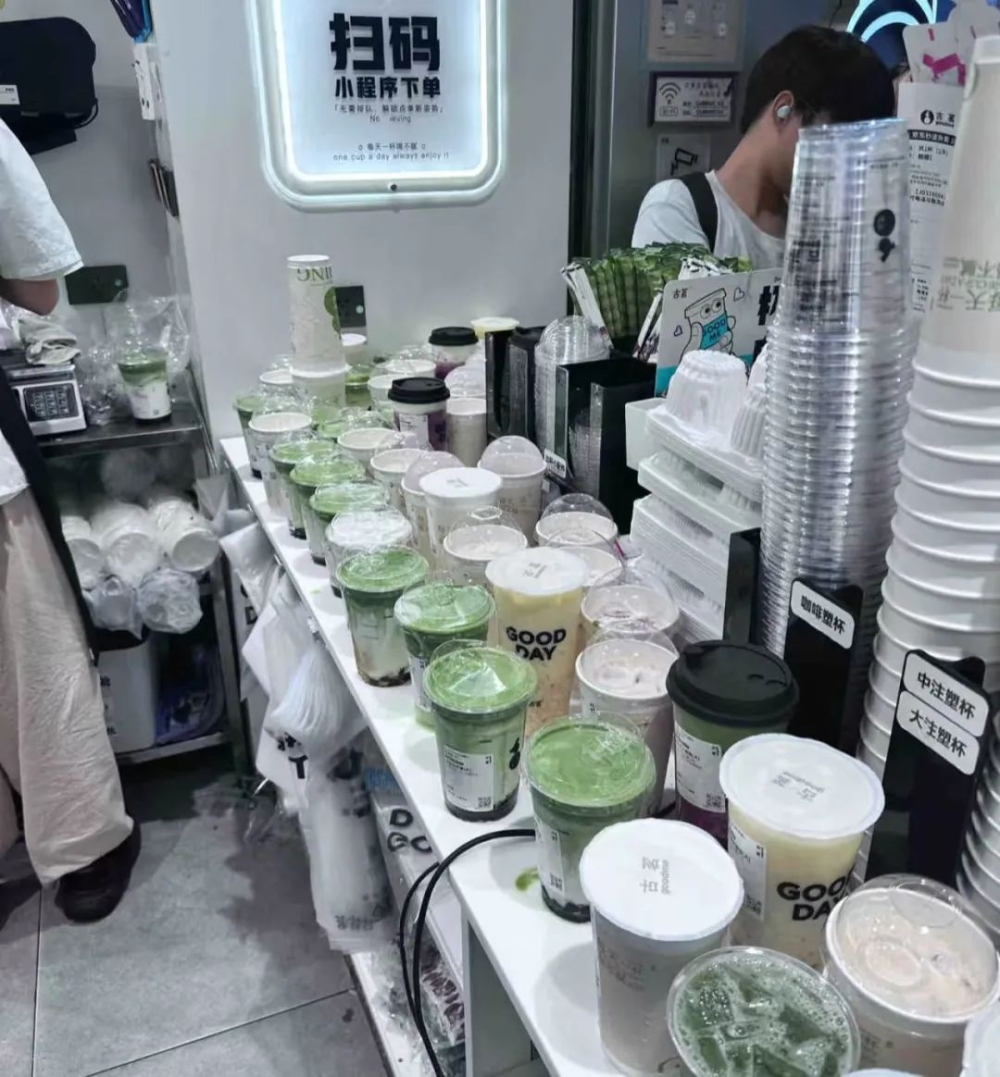 with sinks piled up with uncleared fruit peels, unwashed measuring cups scattered around, trash on the floor, and empty ice sinks left unattended. One employee lamented: “Every peak period feels like fighting a tough battle, and we only have time to clean up after closing.”
Frequent collaboration promotions, intense competition from food delivery platforms, and limited-time discount strategies have left many “Guyiming staff” exhausted and exasperated. They generally feel that although the brand has successfully attracted customers and boosted sales through promotions, it has not proportionally increased staffing or adjusted workflows. The preparation steps for some new products, especially those requiring extensive handling of fresh fruit, are particularly cumbersome, further increasing the workload on employees. This has led to reduced service efficiency and heightened friction between staff, customers, and delivery personnel.
Based on feedback from frontline employees, when planning promotional activities, brands should not only focus on attracting customers and increasing visibility but also take into account the actual operational capacity of the stores and the workload of the staff. Reasonable staffing allocation, simplification of production processes, and even providing clearer customer service expectations during peak times are all crucial directions for improving the current situation.
This incident also serves as a moment of reflection for the industry: how to drive sales through promotions while also taking into consideration employee welfare and store operational stability will be an essential issue that brands cannot afford to overlook for long-term development.
The above content is compiled by CoffeeHunters, a coffee news website.


