







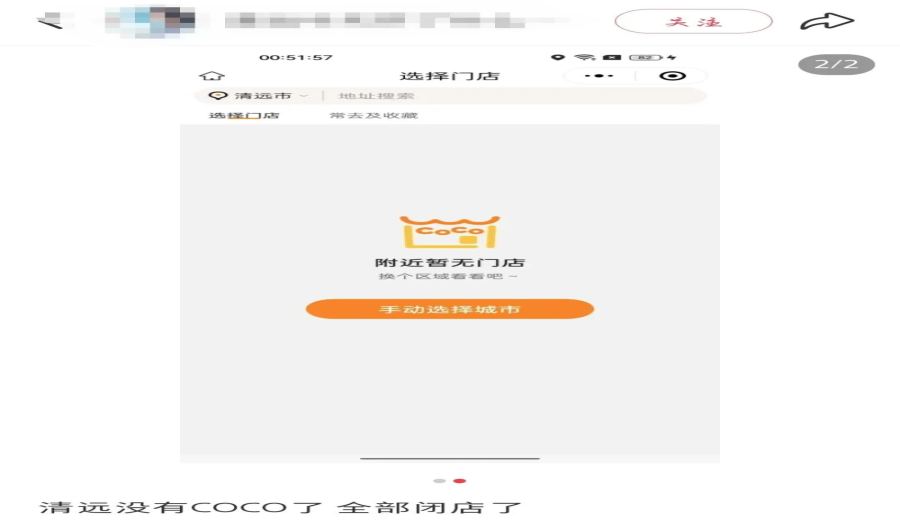
Introduction:Taiwanese legacy beverage chain CoCo has recently withdrawn entirely from the Qingyuan market in Guangdong Province. The brand’s mini-program now shows “no stores available,” drawing public attention. Founded in 1997, this long-standing brand once accompanied an entire generation with classic offerings such as Milk Tea with Tapioca, Pudding & Red Bean, but is now facing a wave of store closures. This article delves into the key factors behind CoCo’s market contraction—including intensified competition, lack of product innovation, rising operational costs, and other practical challenges—while providing insights into the operation of tea beverage brands to help readers understand the shifting trends in the industry.
Recently, consumers in Qingyuan, Guangdong, noticed that the连锁 tea beverage brand CoCo had quietly disappeared from their local market. Upon opening the brand’s mini-program, the Qingyuan area displayed “no stores available,” signifying that this veteran Taiwanese beverage brand has officially exited the city. This change came as a surprise to many loyal customers, especially those who were regular patrons and expressed regret over the disappearance of a familiar brand.
According to posts shared by users on social platforms, after the CoCo store at City Plaza ceased operations on July 1st, all CoCo outlets in Qingyuan were shut down. The once prominent orange-and-white signage has been removed, and the brand’s presence in the locality has completely vanished. In fact, this is not an isolated case in a single city; CoCo has faced store contraction challenges in multiple regions across China in recent years.
Looking back at the brand’s history, CoCo was founded in Taiwan in 1997 and entered the Chinese mainland market in 2007, with its first store located in Shanghai. Before the rise of emerging brands like HEYTEA and Nayuki, CoCo was the go-to tea beverage choice for many young people. Its classic products, such as Milk Tea with Tapioca, Pudding & Red Bean and Fresh Passion Fruit Double Shot, remain memorable to many customers to this day.
However, as competition in the tea beverage industry has intensified, new players such as Chagee and Cha Yan Yue Se have continuously emerged, drastically altering the market landscape. Although CoCo has attempted to enhance its brand influence through co-branding campaigns and overseas expansion, the results appear to have fallen short of expectations.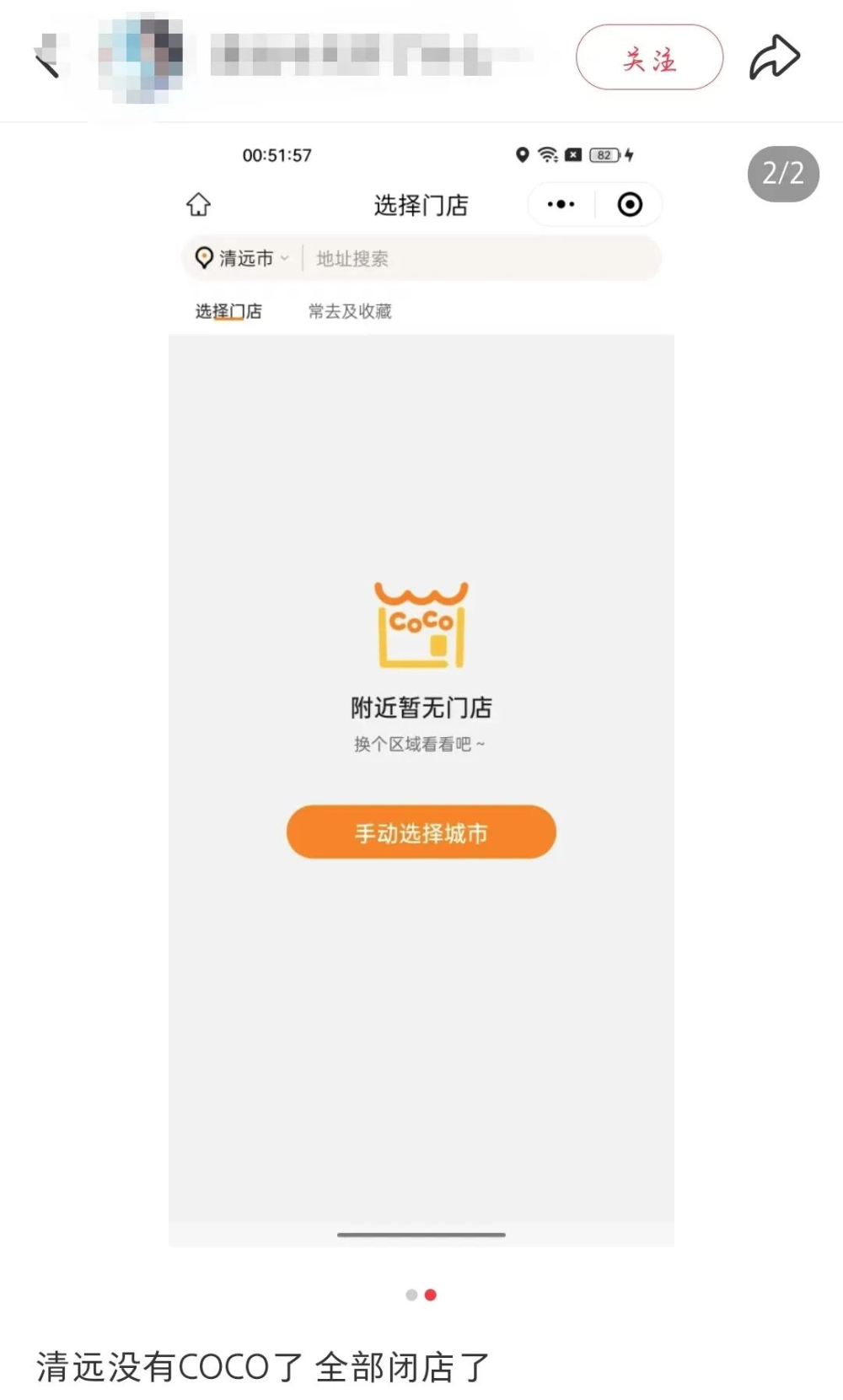
On social platforms, more and more users report that CoCo stores in their neighborhoods have been shutting down one after another, with many long-established outlets being replaced by other brands. According to data from Jihai Brand Monitoring, the number of store closures for this brand in the past 90 days has exceeded the number of newly opened stores, with total closures even surpassing existing ones—an indication of its grim market performance.
Analyzing the challenges CoCo faces, the foremost factor is the intensifying market competition. Emerging tea beverage brands, with their innovative products, refined brand images, and strong community marketing strategies, have quickly captured the hearts of young consumers. In comparison, although CoCo is supported by its classic product lineup, it shows some shortcomings in terms of product innovation and brand engagement.
Secondly, issues with the product structure are also crucial. Aside from a few star products like Milk Tea with Tapioca, Pudding & Red Bean, most of the new flavors launched by CoCo in recent years have failed to generate strong market enthusiasm. Some products have been unpopular due to taste adjustments or pricing strategies that do not align with consumer expectations, prompting customers to turn to alternative brands.
Additionally, rising operational costs are another factor that cannot be ignored. As commercial property rents continue to climb and both labor and raw material costs increase, profit margins for tea beverage shops have been compressed. For a brand like CoCo, which needs to maintain a certain density of stores to sustain brand visibility, the burden of store rents is particularly heavy—leading some loss-making outlets to shut down.
It is worth noting that although brand co-branding campaigns can attract attention in the short term, if the co-branded IP lacks sufficient popularity or the collaboration is not deeply integrated, it often fails to create sustained consumer drive. In the current highly competitive tea beverage market, relying solely on co-branding is hardly enough to reverse the overall downward trend of a brand.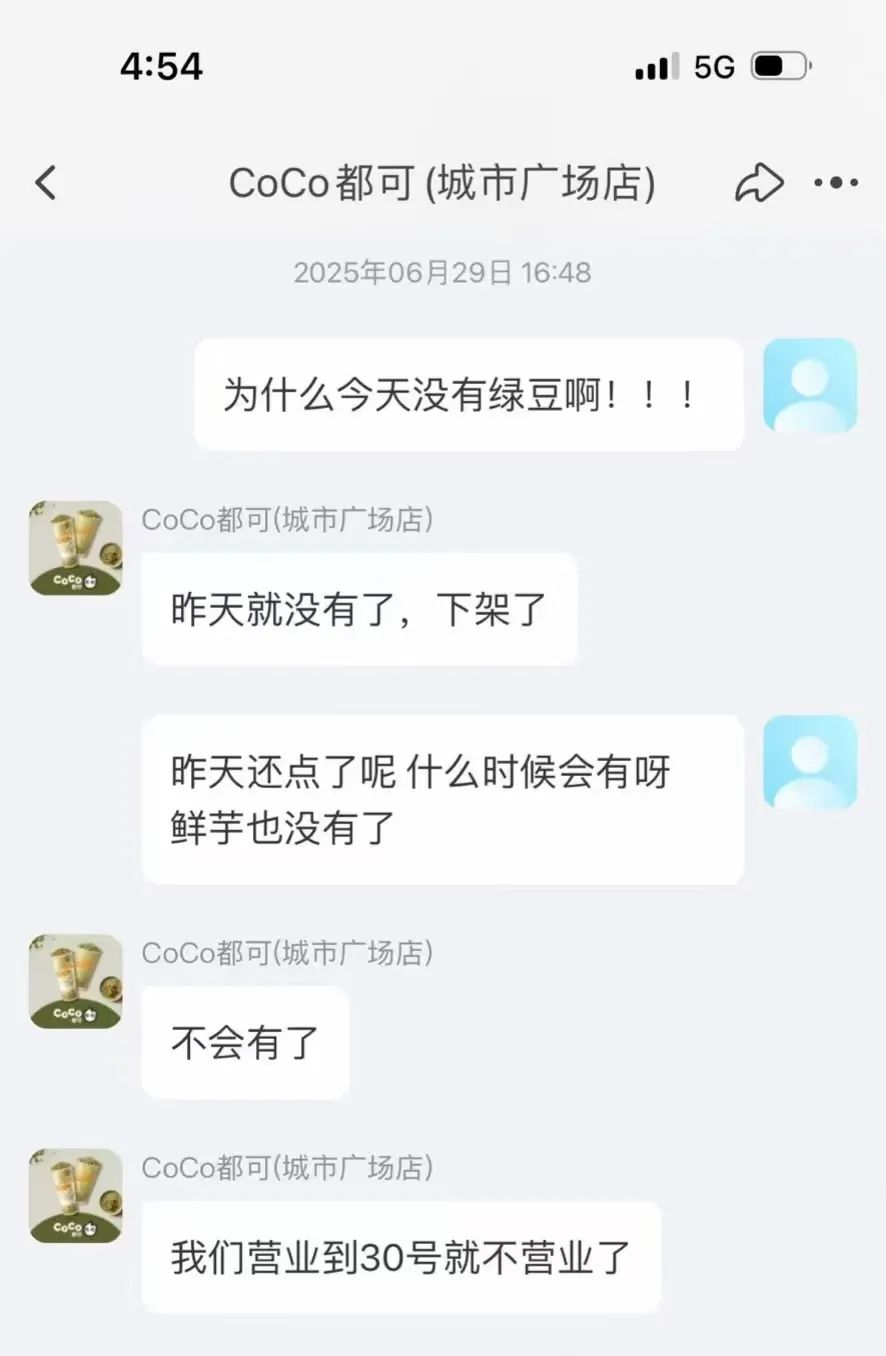
In summary, the store contractions CoCo has experienced in Qingyuan and other locations are the result of multiple factors—intensified market competition, lack of product innovation, and rising operational costs—acting together. For tea beverage brands, maintaining product competitiveness, optimizing cost structures, and building engaging brand images will be key to sustainable development in a rapidly changing market.
The above content is compiled by CoffeeHunters, a coffee news website.


