







Introduction:When consumers at HEYTEA select add-on items for their drinks—such as mango sticky rice with coconut milk and additionally request double the fruit pulp and sago—they often expect to be automatically upgraded to an extra-large cup. However, due to inconsistencies in store execution, this upgrade may not happen. This article delves into the actual operational logic behind HEYTEA’s cup upgrade policy, explains why certain add-on combinations fail to trigger a free upgrade, and offers practical ordering tips to help readers avoid similar issues.
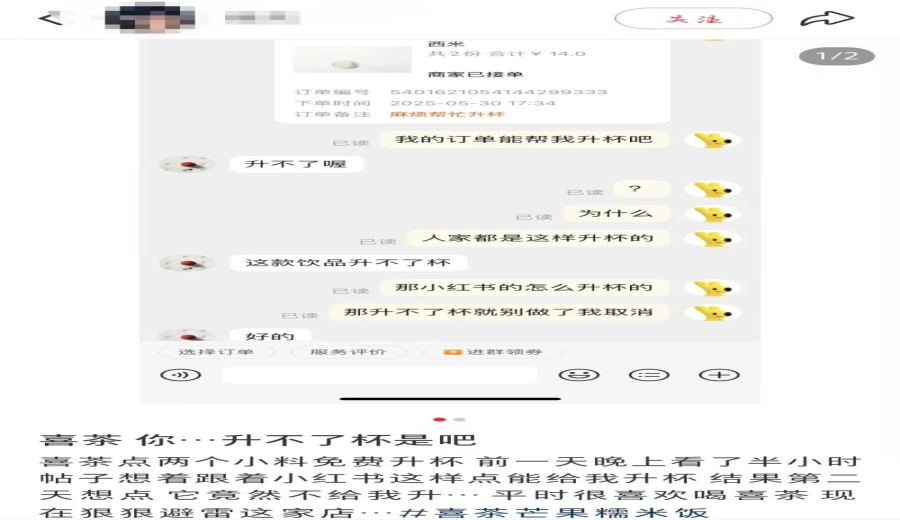
Recently, a customer shared a dispute over a cup upgrade at HEYTEA on a social platform, sparking widespread discussion. Following online tips, the customer ordered a mango sticky rice with coconut milk drink with double fruit pulp and sago, expecting—as other netizens had—to receive an extra-large cup automatically. Instead, they were told an upgrade wasn’t possible. The incident quickly went viral online, with many users sharing similar experiences and questioning whether HEYTEA’s cup upgrade standards are consistent. How exactly are HEYTEA’s cup upgrade rules defined? Why do inconsistencies in store execution occur? This article will carefully examine the incident and analyze the underlying operational logic and possible reasons.
▲ Follow us | Daily premium coffee culture magazineThe original poster stated that she followed an online ordering tip and purchased a mango sticky rice with coconut milk drink at a HEYTEA store, adding double fruit pulp and sago. Based on other users’ experiences, simply adding multiple add-ons would usually prompt staff to automatically upgrade a large cup to an extra-large one. However, when she inquired with store customer service, she was told “an upgrade isn’t possible.” This refusal left her very confused: why could other customers get an upgrade so smoothly? She also began to doubt the brand’s claim of a “free upgrade for adding two add-ons” rule.
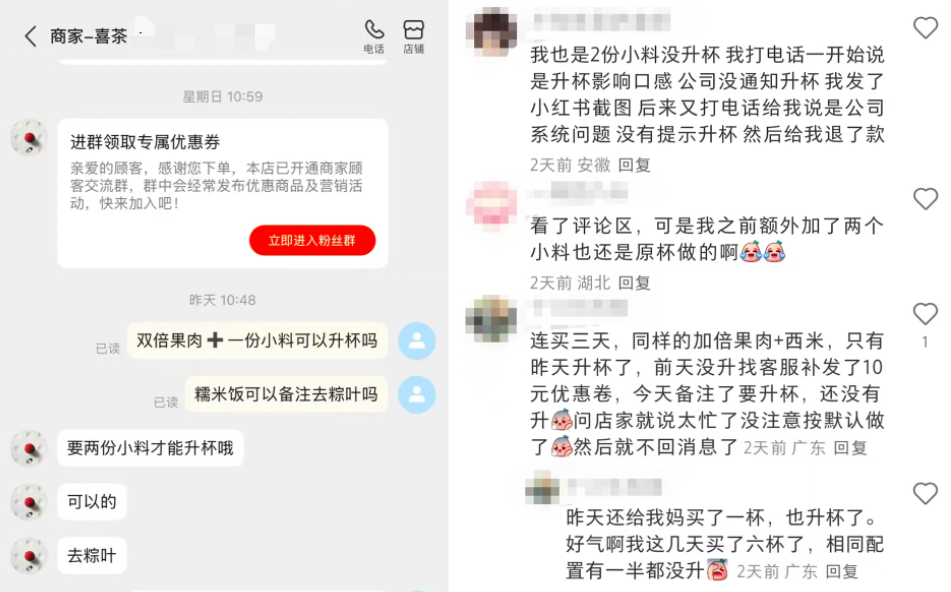
After the post went up, many netizens who had also been denied an upgrade shared their own experiences in the comments, expressing similar confusion and believing the brand’s upgrade conditions weren’t uniform. However, many users who had purchased the same drink also posted photos showing they had received an extra-large cup, telling the original poster that the store should have upgraded the drink for having two add-ons.
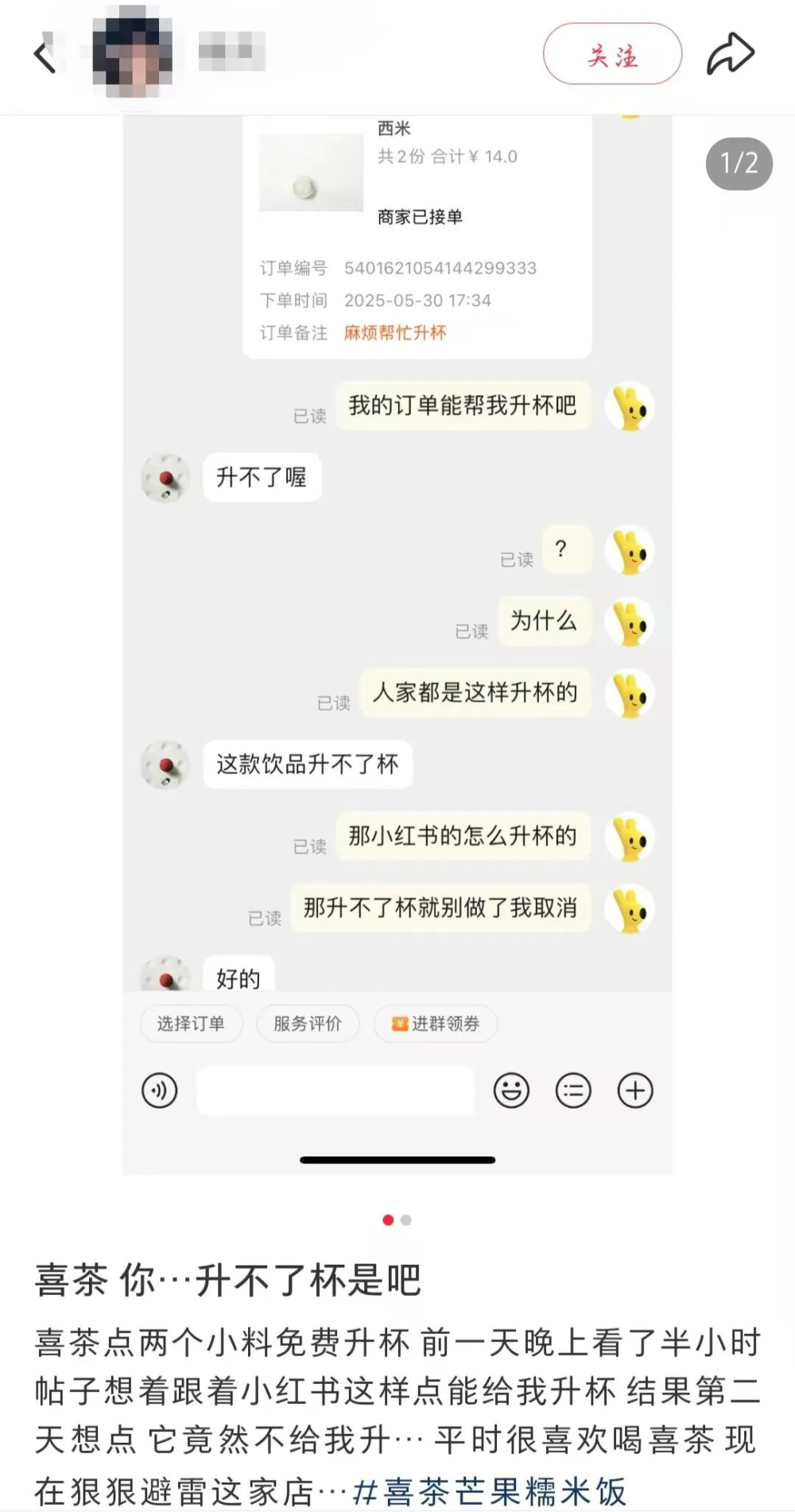
While HEYTEA customers debated whether an upgrade should be given, some onlookers expressed confusion: “An upgrade is just made to the same proportions, not more volume—why insist on it?” They admitted they couldn’t understand the customer’s persistence and even suspected they might be trying to take advantage. In response, many commented to explain: when additional add-ons are placed in the takeaway cup, the space left for the liquid is reduced. If the cup size isn’t upgraded to a larger extra-large one, the entire drink could end up being a thick “add-on porridge” with too few liquids and too many add-ons.
Therefore, to ensure drinking texture and portion size, HEYTEA stores choose an appropriate cup type based on the customer’s add-on choices. Aside from a few special cup types, if a customer adds two or more add-ons to the original 500ml tea drink, the “cup upgrade mechanism” is automatically triggered, and staff will use a 650ml takeaway cup during preparation.
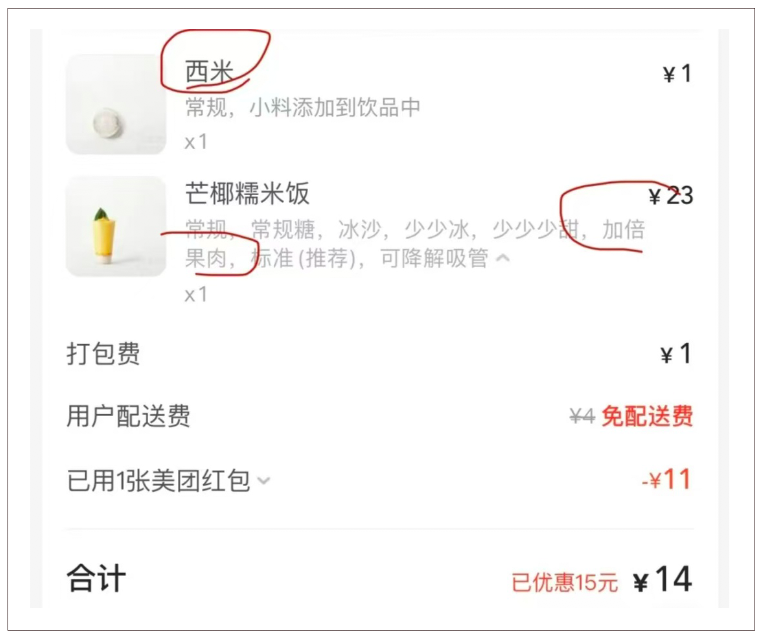
From this perspective, the original poster’s order of “mango sticky rice with coconut milk with double fruit pulp and sago” actually meets the condition of adding two or more add-ons. A netizen in the comments who claimed to be a HEYTEA employee also confirmed that if they received such an order, they would usually default to upgrading the cup type, using a 650ml cup for a drink with so many add-ons. As for why the original poster’s situation occurred, the staff speculated that the store’s customer service might not have been familiar with the upgrade rules or might not have noticed the customer selected “double fruit pulp.”
They explained that “double fruit pulp” counts as one additional add-on in the official upgrade rules. However, this option doesn’t generate a separate, prominent add-on tag in the system backend, but is instead marked in bold black text on the original drink tag. Some staff might overlook this small line of text before making the drink, leading to the oversight.
The above content is compiled by CoffeeHunters, a coffee news website.


