







Introduction:While beverage brand collaborations are in full swing, a Gu Ming campus store suddenly shut down after the conclusion of its collaboration with 《Honkai: Star Rail》, sparking heated discussion online. Did the collaboration lead to the closure, or is there more to the story? This article delves into the incident to explore the business realities and potential risks behind beverage collaborations, helping readers understand the real challenges behind the hype.
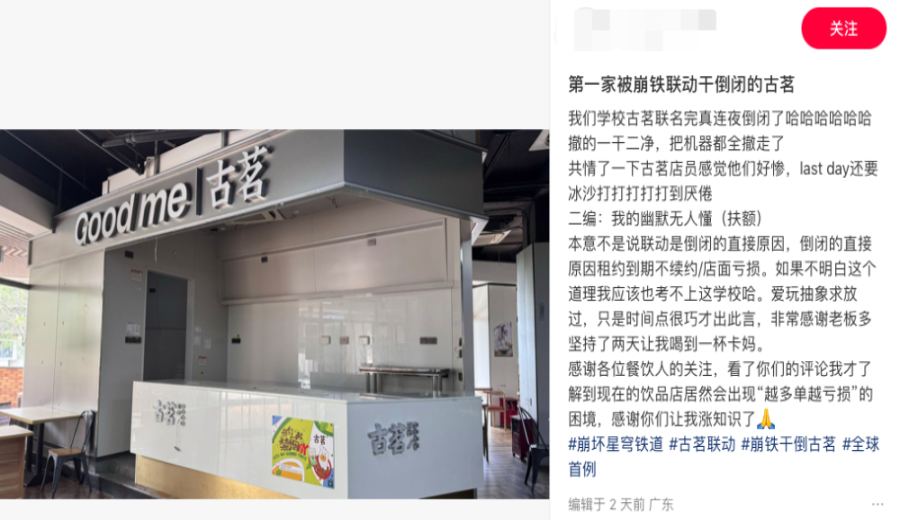
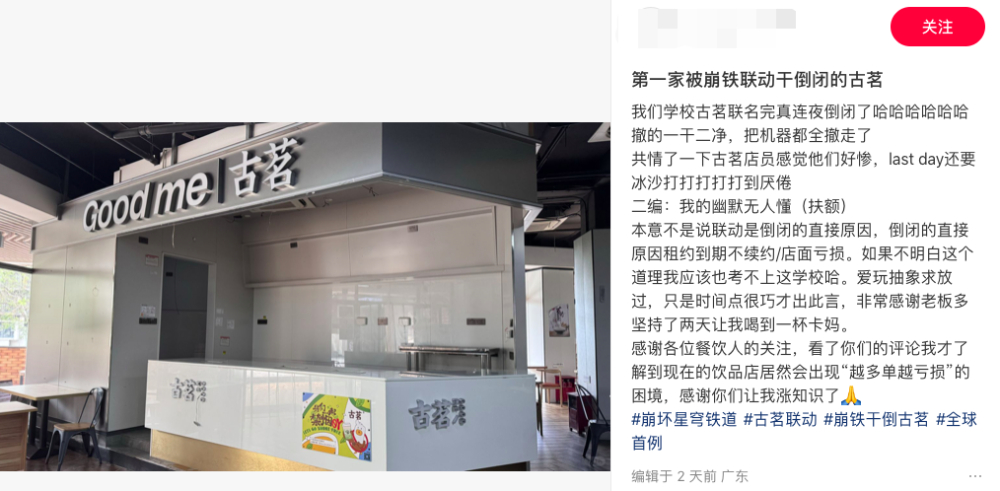
Recently, a post circulating on social platforms about a Gu Ming campus store abruptly vacating its location right after the 《Honkai: Star Rail》 collaboration event quickly went viral. According to the original poster, the store was located inside the school cafeteria and was operating normally during the collaboration period — they had even purchased a collaboration drink themselves. However, shortly after the event ended, they were shocked to find that all the machines, equipment, and promotional materials had vanished overnight, with only the signboard still in place, creating the eerie impression of an "overnight closure."
This situation reminded the poster of how Gu Ming had recently gained significant attention due to its collaborations, with stores bustling with customers, even experiencing product shortages and staff shortages. As a result, many netizens speculated that perhaps the staff and equipment had been reassigned to other high-demand stores, suggesting that talk of a “closure” might be an overstatement. However, the poster later clarified that the actual reason for the shutdown was either the expiration of the lease or operational losses, with no direct connection to the collaboration.
Students from the school also confirmed that this Gu Ming outlet did not merely suspend operations temporarily, but had completely pulled out. One student shared screenshots from the campus forum, pointing out that the store may have been removed from the official mini-program due to financial disputes and had vacated the premises overnight several days prior.
Even though the collaboration was not the direct cause of the store’s closure, many netizens remain puzzled: if collaborations can drive a surge in orders, why couldn’t the store avoid shutting down? In fact, many industry insiders note that while collaborations with popular IPs can create short-term sales spikes, they often come with high costs and staffing pressures — sometimes even resulting in “more orders, more losses.” Once the buzz dies down, stores with weak operational foundations may find it even harder to survive in their regular operations.
Notably, this is not an isolated case. One netizen shared their own experience: “The Gu Ming at our school also closed down after collaborating with an IP,” and another said, “There’s one here too — it shut down right after the Love and Deep Space collaboration.” These incidents reveal how beverage brands, in their pursuit of short-term exposure and traffic, may overlook the importance of long-term operational stability.
For beverage businesses, collaborations are indeed an effective way to attract consumers and enhance brand image, but balancing short-term popularity with long-term profitability remains a critical challenge. For consumers, understanding the multiple factors behind store closures can also lead to a more rational view of market trends, avoiding the assumption that a popular collaboration equates to successful store management.
In summary, although the timing of the Gu Ming campus store’s withdrawal coincided with the end of the collaboration, the key reasons were the lease expiration or poor management. This incident serves as a reminder to the industry that a sales surge does not guarantee profitability — solid business strategies and long-term planning are the true cornerstones for sustainable growth in the beverage sector.
The above content is compiled by CoffeeHunters, a coffee news website.


