







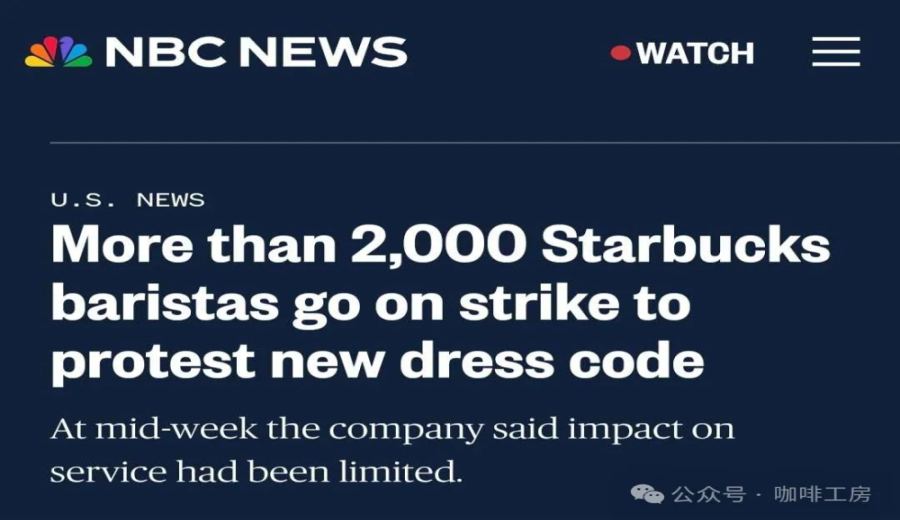
Introduction:Over 2,000 Starbucks baristas in the United States have gone on a large-scale strike since May 11, protesting the company's newly enforced uniform policy. The controversy stems from the first tightening of dress code regulations in nearly a decade, which now requires employees to wear black tops paired with specific color schemes of pants. What considerations lie behind this new policy? And what is the real reason behind the staff backlash? This article takes you deep into the ins and outs of this labor-management conflict.
Since May 11, more than 2,000 baristas across 120 Starbucks stores in the U.S. have collectively gone on strike to protest the company’s new dress code. This policy, implemented starting May 12, mandates that employees must wear black tops (short-sleeved, long-sleeved, or shirts) paired with khaki, black, or blue jeans. Starbucks officially explained that the move aims to simplify clothing choices and strengthen the brand recognition of the green apron, allowing customers to focus more on the coffee and service.
However, this first tightening of the dress code in nearly a decade has triggered strong resistance from most employees. It is understood that the last time Starbucks adjusted its uniform policy was in 2016, when it relaxed several restrictions—including removing rules such as “only natural hair colors allowed” and “no visible tattoos”—and permitted more diverse clothing colors and accessories. The sudden return to strict, unified requirements has made it difficult for employees who are already accustomed to expressing their personal style to adapt.
Many employees have expressed dissatisfaction on social media, believing that the company does not value the opinions of frontline baristas.One employee bluntly stated: “Cups can still have smiley faces and personalized designs, but we have to become mass-produced people in our clothes?”Other employees criticized that while Starbucks sells branded apparel featuring the company logo on its internal website, it prohibits employees from wearing such items, which seems like a double standard. In response, Starbucks stated that it has provided each employee with two free black T-shirts.
The Starbucks Workers Union pointed out that this strike is a direct response to the company’s unilateral enforcement of the new uniform policy without consultation. The union emphasized that employees believe the brand should listen more to frontline voices rather than obsessing over trivial clothing restrictions.Most customers actually care more about coffee quality and service efficiency than the color of the staff’s uniforms.
Starbucks, on its part, has stated that the impact of the strike is limited. Out of approximately 10,000 company-operated stores across the U.S., over 99% remain open as usual, and most strikes lasted less than an hour with participation rates under 1%. In a statement, the company called on the union to refocus its energy back to the negotiation table rather than protesting over uniform issues.
Despite this, the union has not given up the fight and has filed a complaint with the National Labor Relations Board (NLRB), accusing Starbucks of unilaterally changing the dress code without consultation, allegedly in violation of labor laws. This labor dispute highlights the balancing challenge between brand standardization and employee autonomy, and whether further adjustments will be made in the future is worth continued attention.
The above content is compiled by CoffeeHunters, a coffee news website.


