







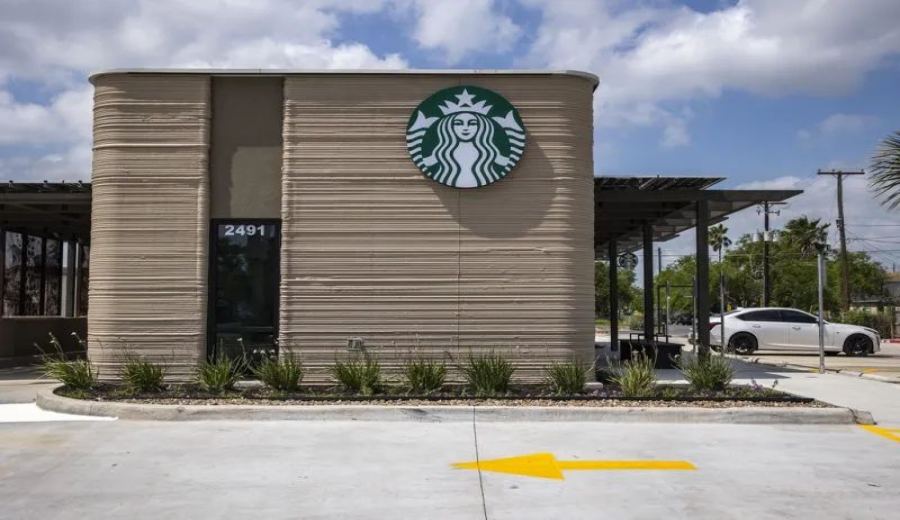
Introduction:A brand-new Starbucks store constructed using 3D printing technology has recently appeared in Brownsville, Texas, USA. The construction took just six days from groundbreaking to completion, with an investment of nearly $1.1 million. This unique outlet was designed by Germany’s Peri 3D team, utilizing concrete layer-by-layer stacking technology. It features a wavy, tubular structure and offers only drive-thru and takeaway services, with no seating provided. This article will delve into its architectural features, technological highlights, and possible considerations behind Starbucks’ attempt at this innovative model.
Starbucks has opened the world’s first 3D-printed store in Brownsville, Texas, located on Boca Chica Boulevard. The entire project was executed by Germany’s Peri 3D team, taking just six days from start to finish, with a total investment of approximately $1.1 million. The most notable feature of this store is its exterior shell, which is entirely constructed from concrete using 3D printing technology, forming a distinctive wavy, tubular structure. This not only gives it a unique appearance but also showcases new possibilities in building technology.
The store is situated on the busy Boca Chica Boulevard, where traffic volume is high, so the design is entirely service-efficiency-oriented,with no indoor or outdoor seating provided,offering only drive-thru and takeaway services. This setup aligns with the driving-centered lifestyle common among Texas residents, allowing customers to quickly obtain their coffee without leaving their vehicles, significantly improving service efficiency.
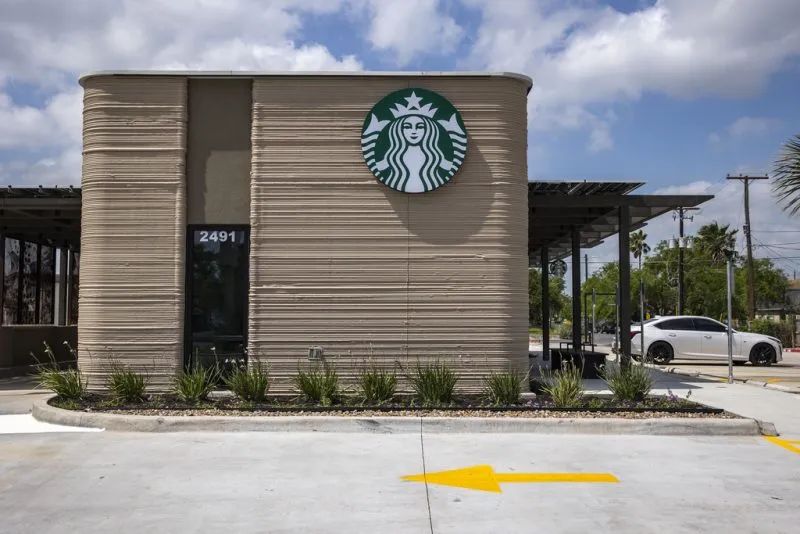
From the outside, although the rectangular building may not look much different from a typical Starbucks from afar, a closer look reveals obvious wavy textures on the walls, formed by layers of concrete tubular structures, andit retains the layered texture unique to 3D printing.Windows, the brand logo, and the drive-thru pickup facilities have all been installed. Although the overall look is less refined than traditional buildings, it is full of a sense of technology and experimentation.
This 3D-printed store covers a total area of 1,400 square feet (approximately 40 pyeong), with the entire structure made entirely of concrete walls,eschewing traditional cement walls and beam designs,resulting in a more rugged and direct architectural style. This is a stark contrast to Starbucks’ previously common design style that incorporated greenery, wooden elements, and local cultural elements. This time, the focus is more on functionality and architectural innovation.
It is worth noting that Starbucks has not publicly stated whether it will continue to promote such 3D-printed stores in the future, nor has it explained why it chose Brownsville, a city with a population of about 190,000, as the first pilot site—especially since the area already has at least four traditional Starbucks outlets. This move could be an experiment with emerging construction technology, or it might be an attempt at service optimization targeting the consumer behavior of a specific region.
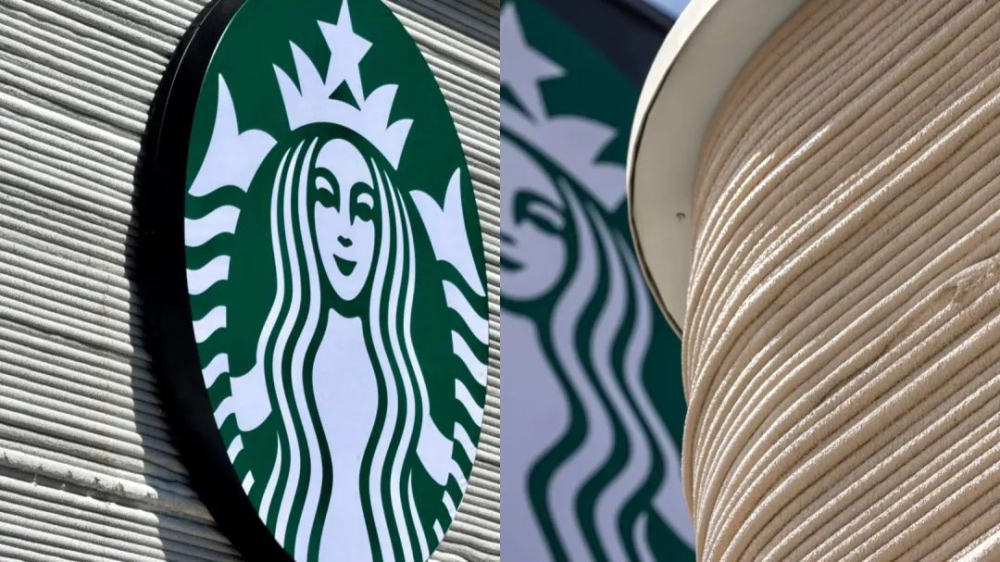
The 3D printing construction utilized a gantry-style 3D printer developed by Denmark’s COBOD company, operated by Germany’s Peri 3D team. As a leading global supplier of construction 3D printing technology, COBOD’s equipment has been widely used in various innovative architectural projects. In fact, the Peri 3D team has successfully built several social housing units and public facilities in Germany since 2020 using this technology, proving the feasibility and potential of 3D printing in actual construction.
It is understood that the design process of this store also incorporated AI technology to plan area layouts, select materials, control costs, and calculate carbon footprints,with the entire design process being completed in just a few seconds,greatly improving design efficiency and accuracy. Professor Andrew McCoy from Virginia Tech pointed out that although 3D-printed buildings currently generally cost more than those built with traditional methods, this technology can effectively alleviate the labor shortage in the construction industry and significantly reduce construction time.
In summary, Starbucks’ 3D-printed store is not only an innovative experiment in building technology but also reflects the brand’s exploration of different consumption scenarios and service models. For coffee enthusiasts who love trying new things and those interested in construction technology, such a store undoubtedly provides a fresh perspective, and it makes one look forward to whether more tech-coffee innovations will emerge in the future.
The above content is compiled by CoffeeHunters, a coffee news website.


