







Introduction:Luckin Coffee recently relaunched its lemon tea series, updating the recipe to feature freshly brewed jasmine tea paired with fresh lemon juice, along with added lemon pulp and half a yellow lemon. However, due to employee errors during preparation, the yellow lemon—which was meant solely for the light coffee lemon tea—was mistakenly added to the grape lemon tea, negatively affecting customer experience. Staff also faced challenges due to the complexity of the new recipes and the pressures of peak-hour operations. This article delves into the operational hurdles behind this reformulation and explores the consensus among consumers and baristas regarding the inclusion or removal of the yellow lemon.
Luckin Coffee’s lemon tea series, which had been temporarily removed from the menu, has made a comeback with notable adjustments to its formulation. The new version is based on freshly brewed jasmine tea, combined with fresh batches of lemon juice, and additionally features lemon pulp and half a yellow lemon. Compared to the previous version, the new formula brings significant changes in both flavor and texture, attracting many customers eager to try the updated drink.
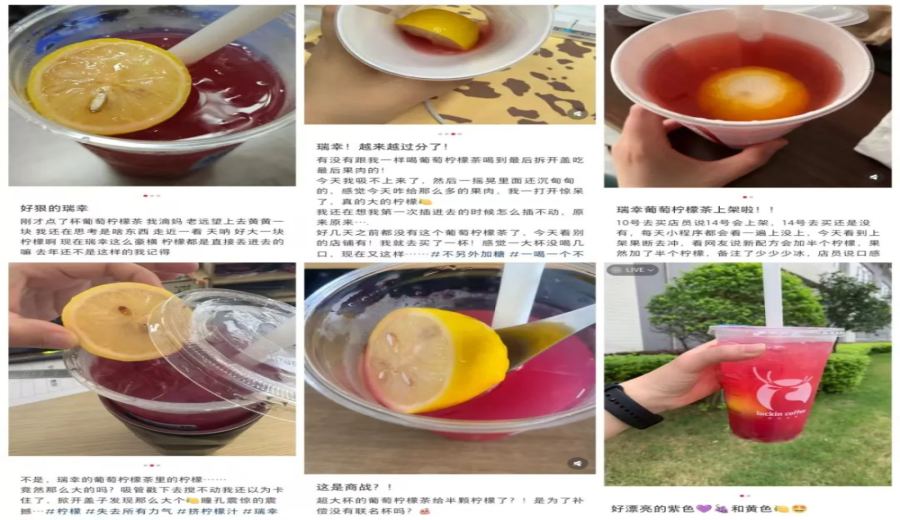
However, this formula upgrade has not been without issues. According to customer feedback, some patrons who ordered the grape lemon tea discovered that their drink—which should have been a light purple color—included half a yellow lemon. While some found it an appealing visual addition, many users reported that the yellow lemon interfered with straw insertion and overall detracted from the drinking experience.
In fact, this half yellow lemon was only supposed to be used as a garnish for the light coffee lemon tea, but due to staff mistakes during busy peak periods, it was erroneously added to the grape lemon tea. Numerous customers shared photos on social media platforms showing these “extra-filled” light purple drinks, sparking widespread discussion and putting significant pressure on frontline employees.
According to an internally leaked preparation procedure, the half yellow lemon is designated only for the light coffee lemon tea, and is not required for the grape lemon tea. However, in actual practice, some baristas—either unfamiliar with the new recipes or overwhelmed during peak hours—made a large number of incorrect additions. Although customers could report the issue with photos and receive a free remade drink as compensation, the frequent recurrence of such mistakes has severely impacted store operational efficiency and service quality.
Many baristas admitted that on the first day of the new formula launch, due to unfamiliarity with the procedures, they accidentally added yellow lemons to all grape lemon tea orders. This not only led to ingredient waste but also triggered customer complaints, directly affecting store performance evaluations. In addition, as yellow lemons are supplied frozen and are hard in texture, they take up space inside the cup, further reducing drinking comfort—an additional common point of customer dissatisfaction.
Faced with the complexity of the new formulas and the stress of high-volume periods, many employees have privately called on customers to provide feedback directly to the brand, hoping that collective voices will prompt the company to reassess the necessity of the yellow lemon. Some even suggest its removal to simplify the preparation process and enhance overall service quality.
In summary, while Luckin’s return of lemon tea has brought adjustments in ingredients and flavor, the operational difficulties and gap in customer experience resulting from the new formula have sparked dissatisfaction on both sides. Whether to adjust the strategy for using yellow lemons in the future will become a key issue for the brand in balancing flavor innovation with operational efficiency.

The above content is compiled by CoffeeHunters, a coffee news website.


