







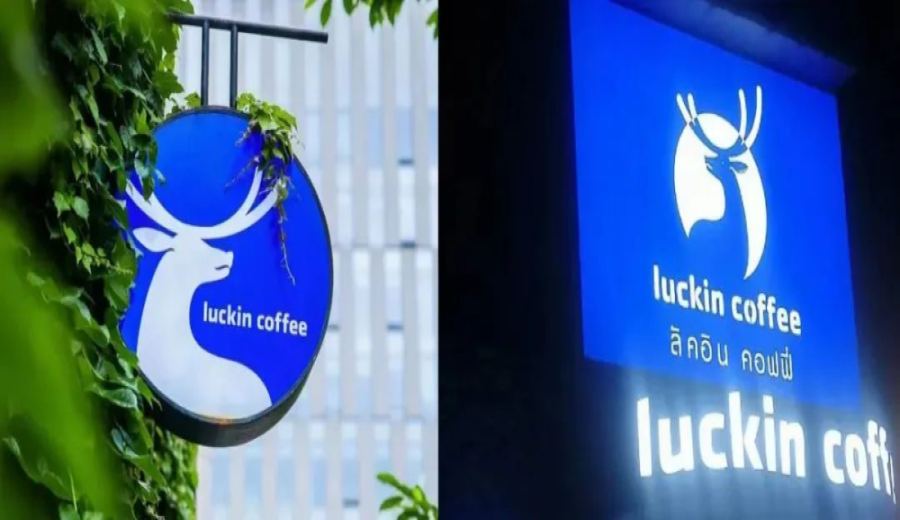
Introduction:The three-year trademark battle of Chinese coffee brand Luckin in Thailand has finally concluded. The latest court ruling affirmed Luckin’s prior rights to the trademark, ordering counterfeit stores to cease using the logo and awarding compensation exceeding 10 million Thai baht. This case exposes the rampant issue of trademark squatting in Thailand and provides important lessons for brands going global.
Luckin Coffee’s trademark dispute in Thailand has been a long and winding journey, but it recently achieved a pivotal victory. The case began in early 2022 when Chinese tourists spotted “counterfeit stores” in Bangkok that closely resembled Luckin, prompting the brand to take legal action.
However, the road to justice was not smooth. The first-instance ruling at the end of 2023 unexpectedly went against Luckin, briefly making headlines. After persistent legal battles, the Thai court ultimately recognized Luckin’sprior rightsto the trademark in question, marking a landmark decision.
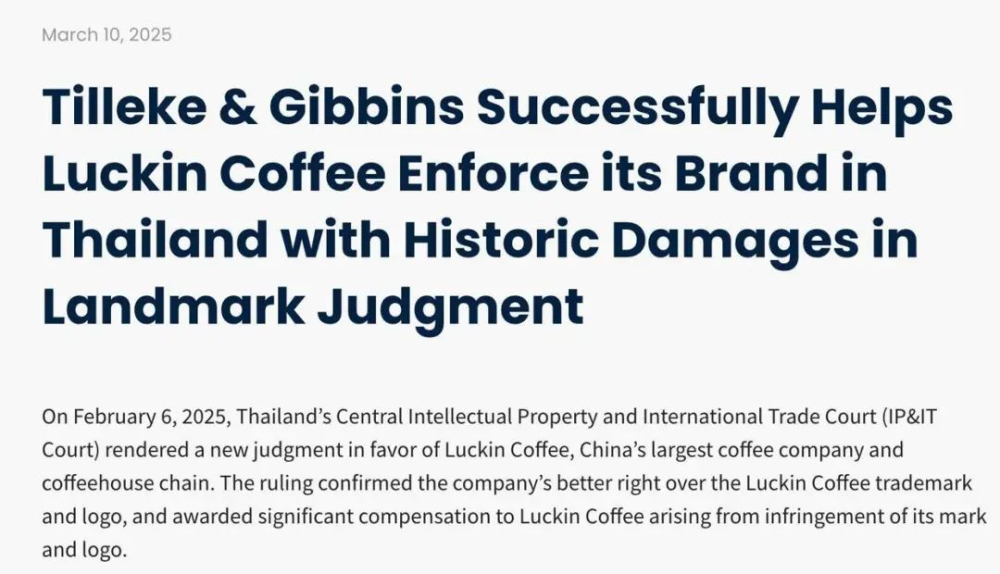
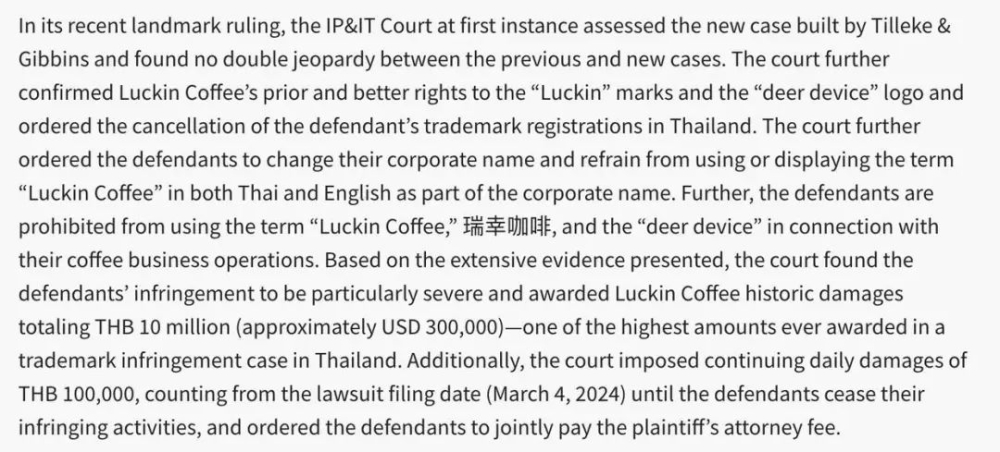
According to details disclosed by the law firm, the court ordered the counterfeit party to immediately cease using all trademarks and logos associated with Luckin and to pay substantial compensation. This includesa one-time payment of 10 million Thai baht (approximately 8 million New Taiwan dollars), as well asdaily compensation of 100,000 Thai bahtfrom the filing date (March 4, 2024). As of press time, the cumulative compensation has exceeded 46 million Thai baht (approximately 10 million RMB).
The defendant in this case, Thailand’s Royal 50R Group, has an intriguing background. Investigations revealed that despite its “Royal” name, the group is actually a China-Thailand joint venture, with49% of shares held by Chinese investors and 51% by Thai investors. Even more surprising, the group has been found to have squatted on as many as 191 well-known Chinese brand trademarks, including popular brands like Fengchao, Three Squirrels, and Tesla, as well as personal trademarks of internet celebrities such as Li Jiaqi and Viya.
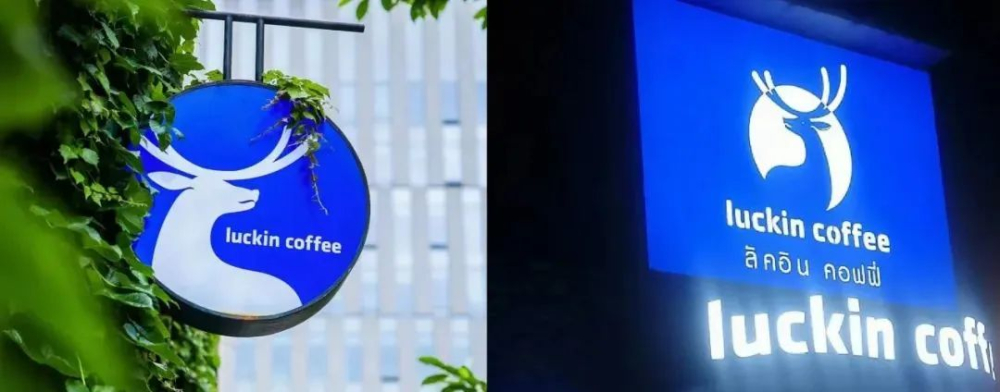
The timeline of the case shows that the Royal 50R Group had already registered and established “Siam Northern Group” back in 2019, renamed it to “Luckin Coffee Thailand” in May of the same year, and successfully registered a “left-facing deer head” trademark highly similar to Luckin’s (the authentic Luckin deer head faces right) in July. Since China and Thailand had not yet signed a trademark cooperation agreement, under Thailand’s “first-to-file, first-to-use” principle, the 50R Group leveraged its timing advantage and complete legal procedures to gain the upper hand in the lawsuit.
Notably, the 50R Group used this trademark advantage to open dozens of “fake Luckin” stores in Bangkok and other areas. These stores operated normally for an extended period, which became a key factor in Luckin’s initial first-instance loss. This situation serves as a reminder to Chinese brands planning to expand into Southeast Asia to proactively plan for international trademark registration.
This victory clears a major obstacle for Luckin’s overseas expansion and also offers a valuable precedent for other Chinese brands seeking intellectual property protection in Thailand. Experts recommend that brands conduct comprehensive trademark due diligence before going global and consider defensive registrations in target markets to avoid similar legal risks.
The above content is compiled by CoffeeHunters, a coffee news website.


