







Introduction:A recent food safety incident at a beverage shop has drawn public attention. A customer received what was supposed to be a cream puff drink, only to find it contained white powder, suspected to be a cleaning agent. From the mistaken delivery and subsequent dispute to the final resolution, the incident not only exposed operational oversights by the store but also sparked widespread discussion on food safety responsibilities and compensation methods. This article details the sequence of events and provides an overview of common ingredient management practices in the tea beverage industry, helping readers understand how to avoid similar issues.
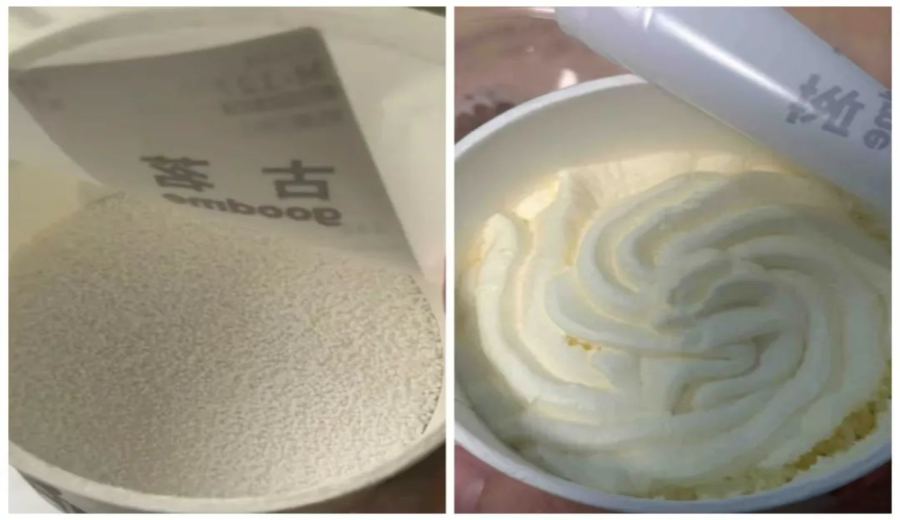
Recently, a customer shared an experience on social media, stating that they purchased a cream puff product from the well-known tea brand "Guming," only to find that instead of the expected cream packet, there was a box of white powder inside. After opening the sealing film, the customer noticed that the substance inside was visibly different from typical cream puff ingredients and gave off an unusual smell when brewed, leading them to suspect it might be a cleaning product.
According to the customer’s description, the white powder did not dissolve in cold water and had a smell reminiscent of laundry detergent, clearly not resembling the sweet, creamy flavor one would expect from a cream puff. Initially thinking it might be an ingredient used in production, the customer attempted to dissolve it in water and took a small sip. They immediately spat it out due to the strange taste and, fortunately, did not suffer any serious discomfort.
The customer then contacted the shop through a third-party food delivery platform. While waiting for a response, the staff initially denied having any white powder of that sort in the store and only offered to send another cream puff as compensation. Later, after the store manager learned of the situation, they proactively reached out to the customer, admitted to a mix-up in the ingredient packaging, and confirmed that a cleaning product had been mistakenly given to the customer instead of the intended cream puff ingredient. The manager proposed compensating the customer with 10 discount vouchers and promised to cover any medical expenses should the customer experience health issues.
As the customer did not feel any significant physical discomfort at the time, they chose to accept the store’s compensation offer and did not seek further medical examination. In addition, the customer requested that the shop send two more cream puffs and asked the involved staff member to apologize by singing — a gesture that seemed to resolve the matter. However, the incident subsequently sparked heated discussion online.
Many netizens expressed confusion over the customer’s decision to accept only discount vouchers and a singing apology, believing the store’s approach to handling the food safety issue was overly casual and lacked the necessary sincerity and seriousness. Some professionals in the food and beverage industry pointed out that the white powder the customer received was very likely a descaling or stain-removing cleaning agent, which typically contains strong acids or alkalis. Even minimal contact or ingestion could potentially irritate or cause harm to the mouth, esophagus, or digestive tract.
Industry experts advise that if individuals accidentally come into contact with or ingest a substance suspected to be a cleaning product, they should seek medical attention as soon as possible, even if no immediate symptoms appear. This is especially important if symptoms such as throat discomfort, stomach burning, or lingering unusual tastes occur.
As for how such a serious operational mistake occurred in this case, experienced bubble tea industry workers speculated that a staff member may have brought a cleaning powder into the work area for personal use, but it was mistakenly identified as a pre-packaged cream puff ingredient and subsequently given to the customer. Although this theory has not been officially confirmed, it highlights potential gaps in ingredient management, portioning procedures, and employee training at tea beverage shops.
Though the incident ended with the offer of 10 discount vouchers and a singing apology, many netizens believe that the store should have provided more tangible compensation — such as cash refunds, additional store credit, or health check-ups — rather than simply resorting to vouchers. One netizen bluntly stated: “It’s fortunate the customer wasn’t harmed, but that doesn’t mean the store’s response was correct or sufficient.”
This incident also serves as a reminder to consumers to check whether the contents of takeout beverages or food items match what was ordered. If anything seems unusual, consumption should be paused immediately, and the store should be contacted to investigate. For tea beverage brands, such food safety incidents not only damage brand reputation but may also raise broader consumer concerns about drink safety. Therefore, strengthening internal management and staff education is key to long-term business success.
The above content is compiled by CoffeeHunters, a coffee news website.


