







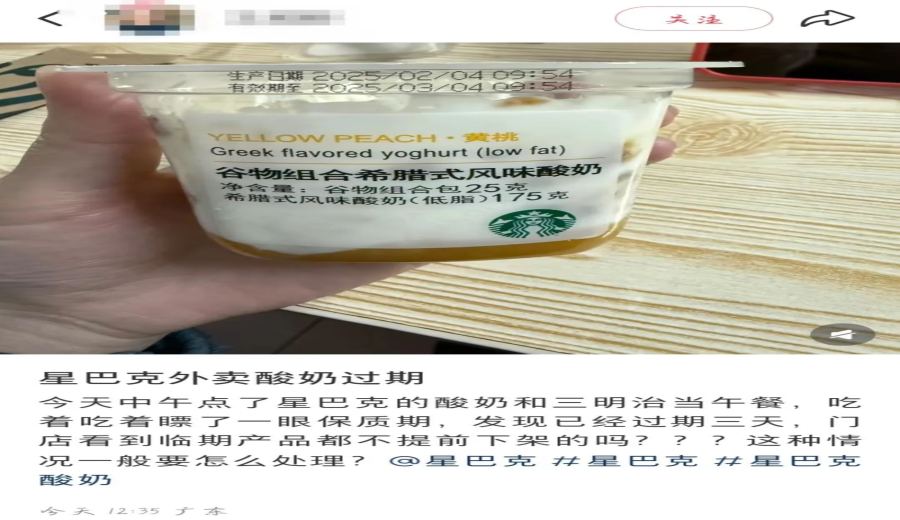
Introduction:Recently, a consumer ordered Starbucks food items via a delivery platform and unexpectedly received Greek-style yogurt with yellow peach flavor that had expired three days prior. This incident has sparked discussions about store management and food safety. This article details the event, the brand’s response to the controversy, and offers advice on consumer rights protection and food safety precautions to help you avoid similar risks.
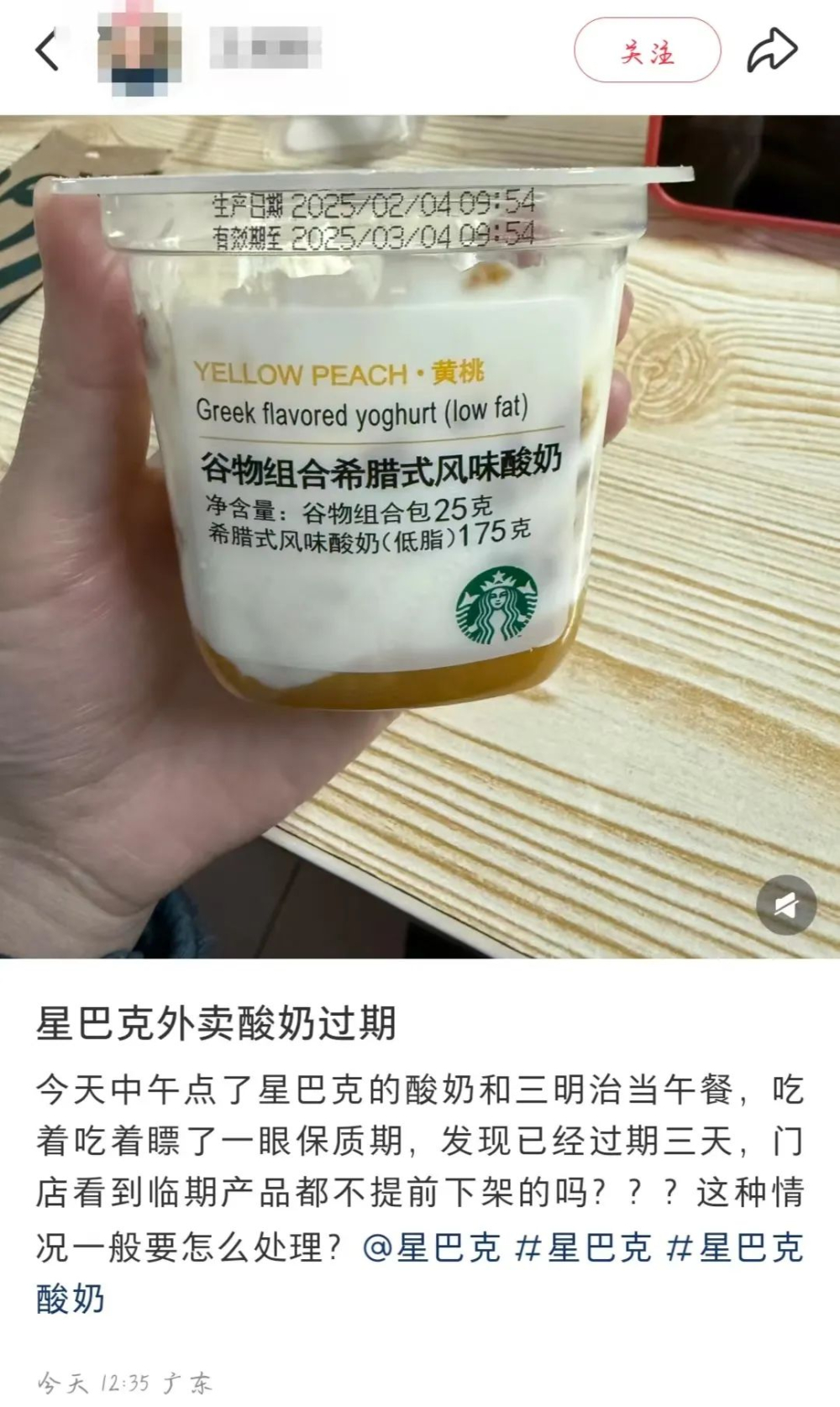
Recently, a consumer ordering Starbucks food through a delivery platform discovered that the yellow peach-flavored cereal blend Greek-style yogurt they received had expired three days earlier. According to order information and packaging inkjet codes, the yogurt's expiration date was March 4th, yet the consumer did not receive the product until March 7th — a clear discrepancy.
While consuming the product, the consumer noticed the date markings on the packaging and immediately questioned the product's condition, sharing their experience on social media. The incident quickly drew public attention, with many pointing out that as a well-known chain brand, Starbucks should have stricter food safety management, expressing disappointment over the oversight.
After the incident came to light, many netizens advised the individual to retain evidence and file a complaint through the purchasing channel or official avenues. Some users familiar with Starbucks’ complaint process mentioned that one could try to report the issue via the official app or customer service hotline, and request a reasonable explanation and compensation.
However, Starbucks customer service responded that since the order was placed through a third-party platform, the refund should be handled by that platform. Although the consumer did receive a refund for the yogurt from the delivery platform, they were dissatisfied with Starbucks’ stance of resolving the matter solely through the platform.
Further investigation revealed that Starbucks stores’ daily operations should include checking the shelf life of products such as yogurt and bottled drinks displayed in showcases, and removing items nearing expiration in advance. This incident suggests that employees at the involved store may not have strictly followed this basic procedure, resulting in expired products being served to customers.
Industry insiders pointed out that according to Starbucks’ internal management regulations, if a serious mistake such as selling expired products to customers occurs, the on-duty staff may face penalties or even dismissal, and store management may also be held accountable. However, in this case, Starbucks’ official response emphasized only the responsibility of the third-party platform, without further explanation regarding any management negligence at the store.
Faced with consumer complaints, Starbucks customer service reiterated that refunds must be processed through the delivery platform. This response sparked dissatisfaction among netizens, who felt the brand did not place enough emphasis on food safety and customer rights. Many encouraged the individual to report the issue to the 12315 Consumer Complaint Platform or the local market supervision administration to protect their own rights.
As of press time, the individual had filed a complaint with the 12315 platform as advised, but the outcome has not yet been announced. This incident serves as a reminder for consumers to pay attention to the expiration dates on takeout or delivery food packaging and to keep orders and receipts as evidence for any future rights claims.
The above content is compiled by CoffeeHunters, a coffee news website.


