







Introduction:Heytea’s newly launched “Galangal & Licorice Guava Bottle” draws inspiration from Chaoshan’s iconic licorice fruit snack, but has sparked discussions due to flavor discrepancies and foreign objects in the packaging. This article delves into the R&D philosophy behind this new product, market feedback, and the issue of foreign materials caused by the packaging design, helping readers understand the challenges and areas for improvement faced by Chaoshan-flavored beverages in the modern tea drink market.
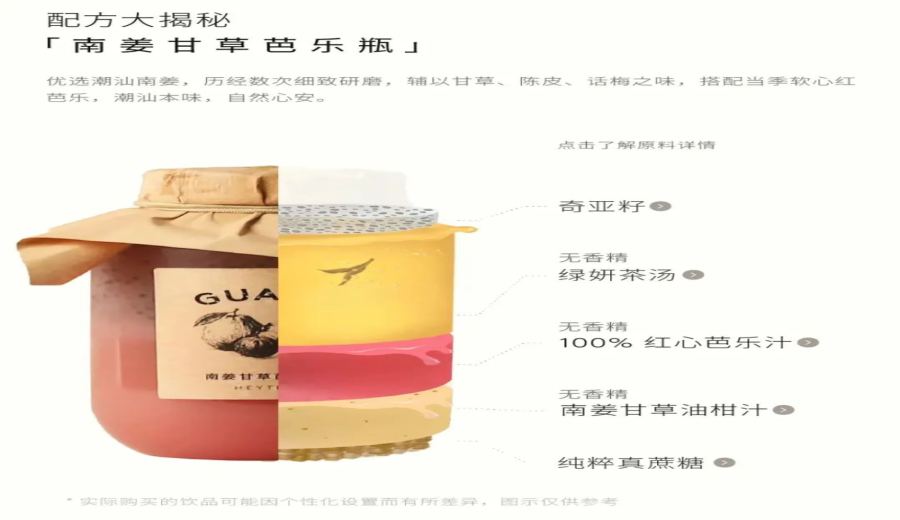
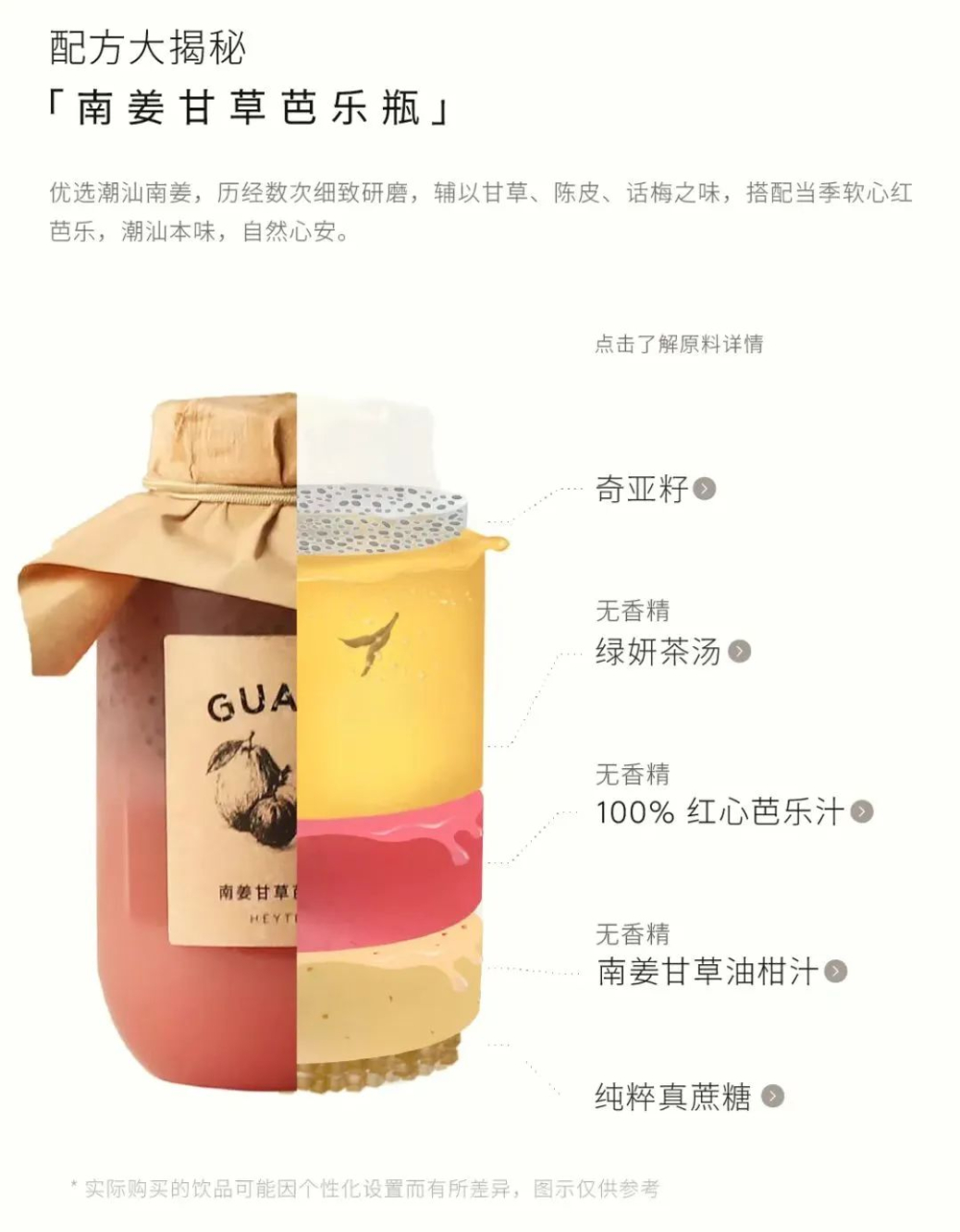
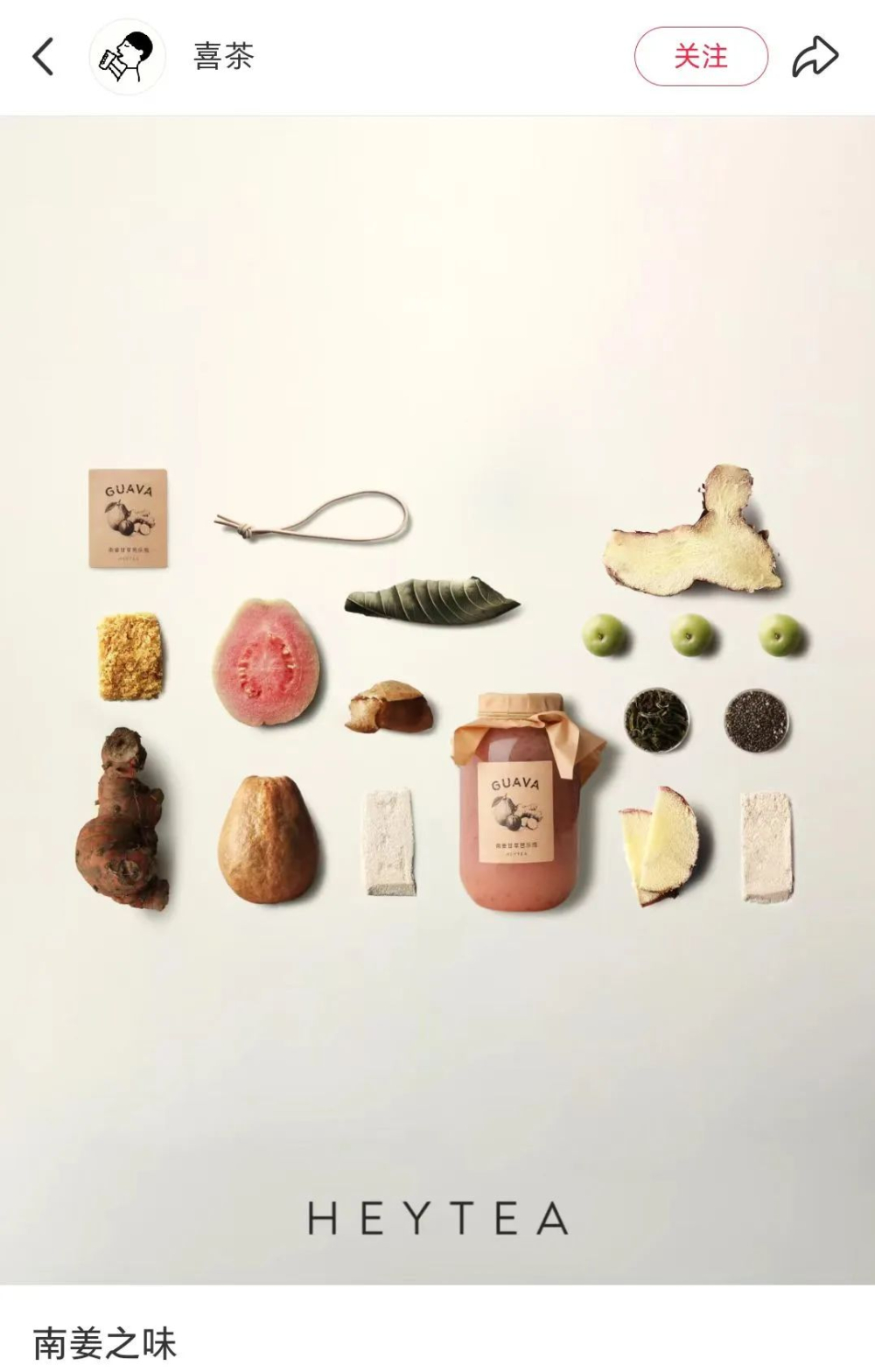
In late February, Heytea introduced a new product called the “Galangal & Licorice Guava Bottle,” inspired by the classic Chaoshan street snack—licorice fruit. This beverage combines guava juice with galangal plum powder, licorice powder, dried tangerine peel powder, and preserved plum powder, paired with a refreshing tea base and wax apple juice, aiming to recreate the unique flavor of street-style licorice fruit. The product was launched nationwide simultaneously and quickly garnered consumer attention.
In the Chaoshan region, licorice fruit is a highly distinctive street snack where fresh fruit chunks are mixed with spices such as galangal and licorice, enhancing both flavor and adding a refreshing taste. Heytea’s new drink follows a similar flavoring logic, using ripe guava juice as the base, then adding the spicy-sweet galangal plum powder, complemented by licorice powder, dried tangerine peel powder, and preserved plum powder, along with a tea base and wax apple juice, striving to create a “drinkable version of licorice fruit.”
However, this drink, which highlights Chaoshan flavors, has stirred up considerable controversy since its launch. Many local Chaoshan consumers noted that they couldn’t detect the familiar aroma of galangal in the beverage—even when specifically requesting a stronger galangal flavor, they still couldn’t recapture the taste they remembered. For consumers outside the Chaoshan region, many were unfamiliar with galangal as a spice, raising questions at the point of ordering such as “Will the ginger flavor be too strong?” or “Does it contain ginger slices?”, with some even mistaking it for fresh ginger flavor, leading to misunderstandings and widespread discussion.
In terms of packaging design, Heytea adopted a rather ingenious visual presentation, drawing inspiration from the kraft paper wrapping commonly used in Chaoshan gongfu tea. The bottle opening is secured with a rubber band around a paper wrapper, paired with a matching color-themed exclusive cup sticker. The overall look carries a strong local flavor, attracting many consumers who value aesthetic design. However, this carefully crafted packaging design also led to a series of complaints about foreign objects.
Multiple consumers reported finding intact circular sealing paper pieces inside the Galangal & Licorice Guava Bottle while drinking. These paper pieces were usually only discovered when almost all the beverage had been consumed, which came as a surprise. Online videos and images show that these foreign objects are the circular sealing gaskets used during the packaging process—hard in texture and clearly not part of the drink itself.
Such cases are not isolated incidents; multiple consumers have shared similar experiences, stating that they also found the same circular paper pieces in their drinks. In response to the large volume of consumer feedback, Heytea customer service explained that the paper piece is made of food-grade contact material, poses no health risks, and does not affect normal consumption. However, what concerns consumers more is the quality control of the drink and the rationality of the packaging design.
According to store employees, the packaging for this new product features a double-layer sealing structure. During the preparation process, staff first place a circular plastic foam gasket into the bottle, then screw on the cap, and finally cover it with a layer of kraft paper secured by a rubber band. The issue arises because the bottle cap already comes with a circular sealing paper attached. When customers insert the straw with too much force, it can easily push the underlying sealing paper into the beverage, causing these paper pieces to mix into the drink—creating an awkward situation of “adding ingredients to your own drink.”
Although this foreign object incident has not yet caused widespread health issues, it highlights that modern tea drink brands, while pursuing innovation and visual design, still need to be more cautious about packaging details and quality management. For consumers, if you discover any foreign objects while drinking, it is recommended to stop consumption immediately and contact the store to provide feedback, in order to protect your own rights.
In summary, Heytea’s Galangal & Licorice Guava Bottle, in its attempt to blend traditional Chaoshan flavors with modern tea drink innovation, has received certain acclaim in concept and appearance, but still has room for improvement in flavor replication and packaging details. For tea drink enthusiasts, especially those interested in Chaoshan culture and flavors, this incident also provides an opportunity to gain a deeper understanding of regional beverage characteristics and the challenges of modernization.
The above content is compiled by CoffeeHunters, a coffee news website.


