







Introduction:Recently, the use of laboratory pipettes by staff at a ChaYanYueSe tea shop to prepare milk tea has sparked heated discussions on social media. As precision instruments, pipettes can accurately measure liquids, but improper handling may lead to food safety issues. This article delves into their operational standards, potential risks, and whether disposable tips meet food contact standards to uncover the truth behind the practice.
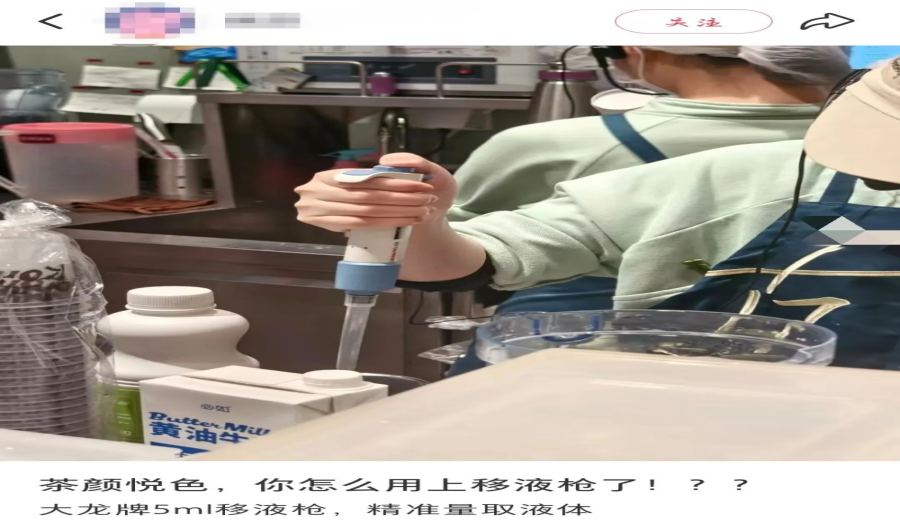
Recently, a customer purchasing milk tea at a ChaYanYueSe store noticed an unusually rare tool being used by the staff. This peculiar scene was captured and shared on social media, quickly drawing widespread attention and discussion from netizens.
Clear photos reveal that the staff member was using a 5ml pipette. Such tools are commonly found in laboratories and are primarily designed for the precise transfer of small or trace amounts of liquid. Compared to ordinary measuring cups, pipettes offer superior accuracy in liquid measurement. Therefore, when people saw tea shop employees using this professional lab instrument to measure ingredients and prepare drinks, most were quite shocked.
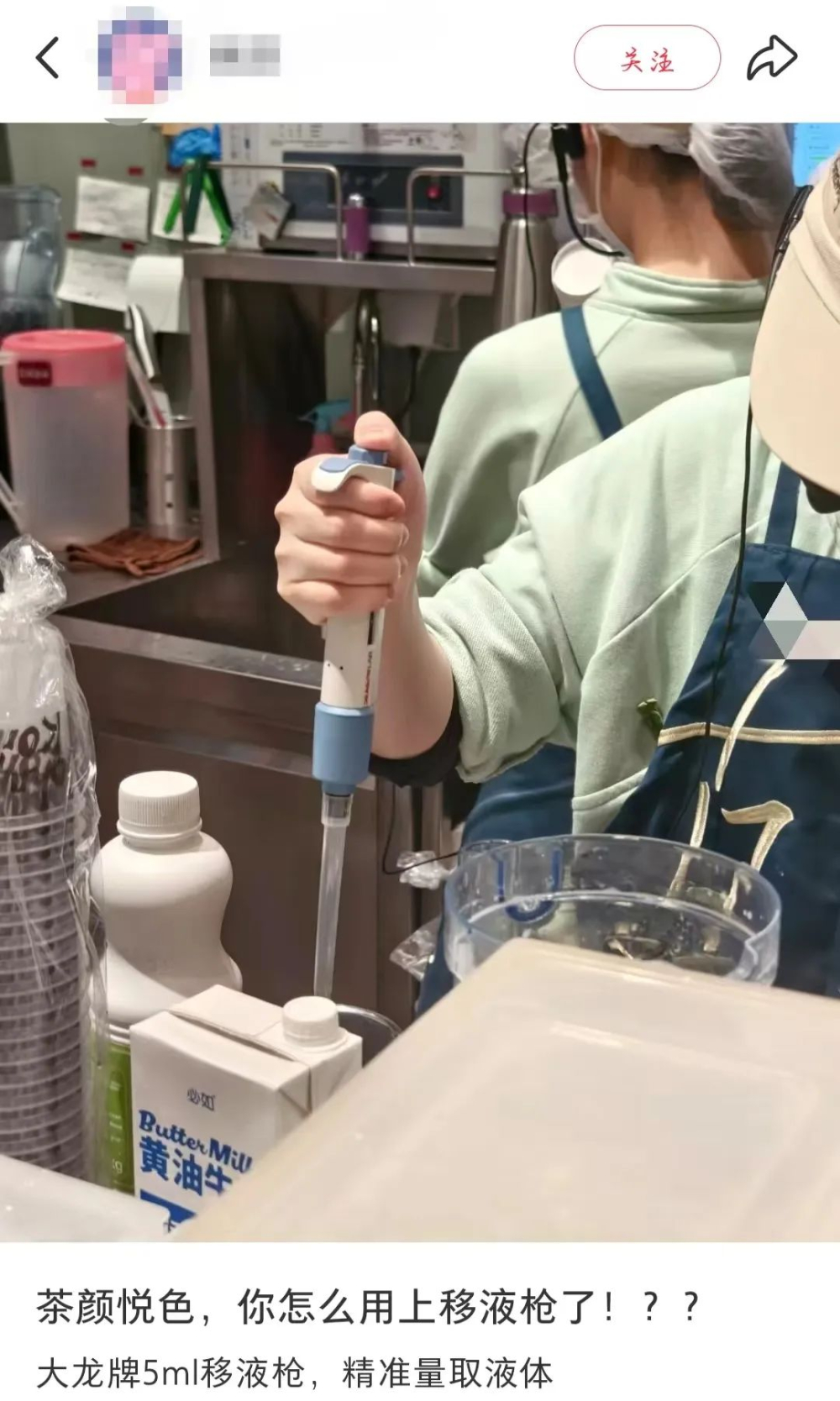
The incident triggered an enthusiastic response from netizens. Some who had experience in university laboratories couldn't help but recall their own days handling pipettes for experiments, even joking that students majoring in biology and related fields might now have an additional career path—using lab equipment to make milk tea at beverage shops.
However, beneath the jokes, those with experience operating pipettes expressed concern. They pointed out that the brand’s decision to equip stores with pipettes could potentially pose food safety risks.
According to Baidu Baike and explanations from laboratory professionals, pipettes are precision instruments used in labs and come with numerous usage precautions. For example, after use, pipettes should not be placed horizontally or upside down but must be stored vertically on a pipette stand. Used disposable tips must also be replaced promptly to avoid contaminating other liquids.
Yet, in the photos taken by netizens, we can only see the staff using the pipette to measure liquid—we cannot confirm whether the employee properly returned the used pipette vertically to its dedicated holder or if the tips were changed in time.
In addition, some netizens noted that pipettes require gentle handling when drawing liquid and strict adherence to operational protocols. Improper operation may cause the liquid to be sucked back into the pipette body. Without timely disassembly and cleaning, residual liquid can remain inside the pipette, potentially fostering bacterial growth over time and creating hidden food safety and hygiene hazards during use.
Experienced lab personnel stated that even with repeated use of pipettes, mishandling leading to back-suction of liquid is not uncommon. For milk tea shop staff without relevant training, the likelihood of non-standard operation and contamination of the equipment when using such lab instruments is even higher.
Furthermore, even assuming the staff have adequate experience and strictly follow pipette operation protocols, netizens questioned whether the disposable tips provided are made of food-contact-grade plastic. One netizen remarked, “Lab-grade cleanliness and sterility are entirely different concepts from being clean enough to eat.”
Taking all these concerns into account, many in the scientific community believe that using precision lab instruments for making milk tea is somewhat overkill.
The discussion sparked by this incident highlights the need to carefully consider operational standards and food safety when introducing lab equipment into the food and beverage industry. For tea shops, while pursuing precise preparation, ensuring consumer health and safety remains paramount.
The above content is compiled by CoffeeHunters, a coffee news website.


