








Introduction:Although both Norwegian egg coffee and Vietnamese egg coffee use eggs and coffee powder, their flavors and preparation methods are completely different. This article delves into the historical origins, actual brewing process, and flavor characteristics of Norwegian egg coffee, while also comparing it with the Vietnamese version to help you understand their core differences and master the brewing techniques and taste highlights of this Nordic specialty coffee.
In recent years, Norwegian egg coffee has once again become a hot topic online. This creative coffee originating from Northern Europe has sparked curiosity among many coffee enthusiasts due to its unique preparation method and distinctive flavor. Although it shares the use of eggs as an ingredient with Vietnamese egg coffee, the two differ greatly in terms of production logic and final taste. This article will take you through the historical background, ingredient preparation, steps, and flavor analysis to fully uncover the mysteries of Norwegian egg coffee, and compare its key differences with the Vietnamese version.
The origins of Norwegian egg coffee can be traced back to the 19th century, when unstable coffee bean supplies and high prices led many households to switch to cheaper coffee powder. However, over-extraction and poor filtration methods often resulted in coffee with strong bitterness and lots of sediment. To address these issues, some began experimenting with adding raw eggs to the coffee powder and unexpectedly discovered that this not only reduced impurities but also softened the taste, making the coffee smoother and more aromatic.
In the traditional method, a whole egg (including the shell) is mixed with the coffee powder. The calcium in the eggshell and the adhesive properties of the egg mixture effectively trap impurities and balance the bitterness. However, the modern method usually omits the eggshell and uses only the egg mixture with the coffee powder, achieving the same dual effects of clarification and flavor enhancement.
If you’d like to try it at home, you only need coffee powder, hot water, an egg, and simple brewing equipment. To get closer to the original flavor, it’s recommended to use a dark roast bean, such as Sumatra Golden Mandheling, whose rich chocolate notes and egg aroma create a wonderful balance. For this demonstration, 25 grams of dark roast coffee powder are used with 250 milliliters of hot water, at a coffee-to-water ratio of 1:10. The grind size is around the 10th mark on the EK43 grinder (equivalent to 85% extraction rate through a No. 20 sieve), suitable for short extraction times.
To prepare, first place the coffee powder in a container, then add one egg and stir until the egg mixture evenly coats each coffee particle until the mixture no longer appears sticky or stringy.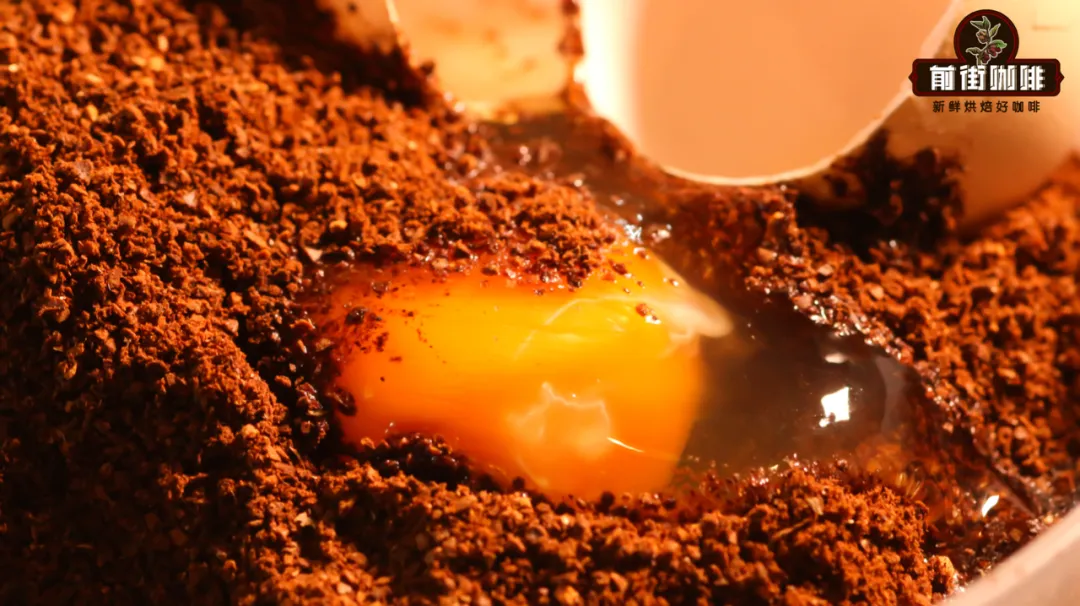
 Next, bring the water to a boil, then reduce to low heat. Add the stirred coffee-egg mixture, start timing for two minutes, and gently stir about 10 times during this period to aid even extraction.
Once the time is up, turn off the heat. You’ll notice the coffee grounds coagulate into a solid mass floating on the surface. At this point, simply pour carefully, and you’ll have a cup of nearly sediment-free, crystal-clear coffee.
 Upon first sip, the coffee has a smooth and mellow mouthfeel, with intense chocolate notes and subtle sweetness. Especially, the fusion of egg aroma and Mandheling flavors creates a surprising taste reminiscent of chocolate cake—perfect for enjoying while hot.
However, it’s worth noting that as the coffee cools, the eggy smell may gradually emerge, which could be off-putting to those with a sensitive sense of smell. Therefore, it’s best enjoyed hot for the optimal experience. This is also why Norwegian egg coffee was traditionally consumed more in winter or indoors—not only for warmth but also closely related to how its flavor performs.
From a scientific perspective, the proteins in the egg rapidly coagulate under high temperatures, effectively “trapping” fine particles in the coffee powder, achieving a natural filtration effect. Meanwhile, the emulsifying action of the egg mixture also softens the acidity and astringency of the coffee, enhancing overall smoothness. This combination of physical and chemical actions is one of the reasons why Norwegian egg coffee became so popular during times of material scarcity.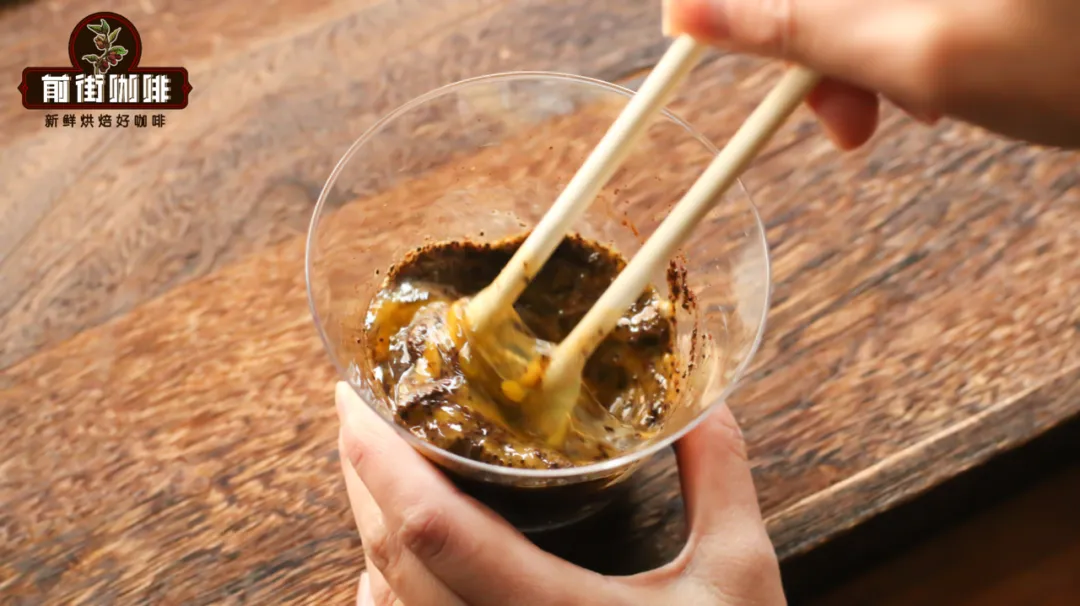
Looking back at history, during World War II when Norway was occupied by German forces and coffee bean imports were difficult, this brewing method—which saved on coffee beans while enhancing flavor—became popular once again, even spreading to other Nordic regions such as Sweden. In some areas, a small amount of cold water would be added after brewing to quickly cool it down, but it’s generally agreed that the taste is inferior when cooled. As coffee supply recovered after the war and paper filters became widespread, this technique gradually declined. Today, it is preserved mostly by some elders or rural families, making it hard to find even within Norway.
In summary, although both Norwegian egg coffee and Vietnamese egg coffee ingeniously use eggs to enhance coffee flavor, the former focuses on utilizing the egg’s coagulation and filtration properties to create a smooth, sediment-free dark roast coffee experience, while the latter often involves whipping the egg yolk to add layers of foam and sweetness. Understanding these differences not only deepens your appreciation of coffee culture but also helps you choose or try different egg coffee brewing methods based on your taste preferences.
The above content is compiled by CoffeeHunters, a coffee news website.


