








Introduction:Peet’s Coffee’s first Guangzhou branch at Tianhe City is set to officially close on March 31, marking the second high-profile store closure by the brand within a month. Following the closure of its Hangzhou West Lake store, back-to-back shutdowns of two flagship locations in prime areas have drawn market attention. This article will delve into the possible reasons behind Peet’s Coffee’s store adjustments, including challenges posed by high rents, table turnover issues, as well as the brand’s business strategies and future layout under a premium positioning.
According to user-shared information, the Peet’s Coffee outlet located on the first floor of Guangzhou Tianhe City Shopping Mall will cease operations on March 31. This store was the brand’s first in Guangzhou after officially entering the market in late 2021, and also the second location in southern China. Notably, since its opening, the store maintained steady foot traffic, with almost daily full occupancy. The sudden closure news has therefore come as a surprise and disappointment to many loyal customers.
Meanwhile, earlier this month, Peet’s Coffee also closed another popular branch—the Hangzhou West Lake store—situated along the bustling Hubin Pedestrian Street. Known for its elegant glasshouse exterior and distinctive interior design, it had attracted numerous tourists and photography enthusiasts. The consecutive closures of two high-popularity stores within just one month not only saddened fans but also sparked widespread speculation about the brand’s future direction.

Some regular customers of the Guangzhou flagship store noted that although the shop appeared busy on most days, not all seated patrons actually made purchases. Some would simply come in to rest or chat, and there were even cases where customers occupied seats for long periods after ordering. As a result, the overall table turnover rate remained low. Moreover, given the store’s location in a high-rent commercial district, even if it seemed bustling on the surface, actual revenue might not be sufficient to cover the steep rent and operational costs, making closure an unfortunate yet inevitable decision.
On the other hand, some consumers also mentioned that due to the high volume of visitors, the interior of the store could occasionally feel chaotic. For those who prefer a quieter environment, such an atmosphere may have discouraged repeat visits. Against this backdrop, even as the brand’s inaugural location in Guangzhou, the store couldn’t escape the fate of operational adjustments.
It is worth noting that besides the Guangzhou Tianhe City store, Peet’s Coffee also ended operations at its Hangzhou West Lake branch earlier this month. This store was located in the heavily touristed Lakeside area of West Lake, and its iconic architecture and scenic views had long become a must-visit photo spot for many travelers. Following the closure announcement, many locals who had created cherished memories there visited the site to take photos in commemoration of this long-standing coffee space.
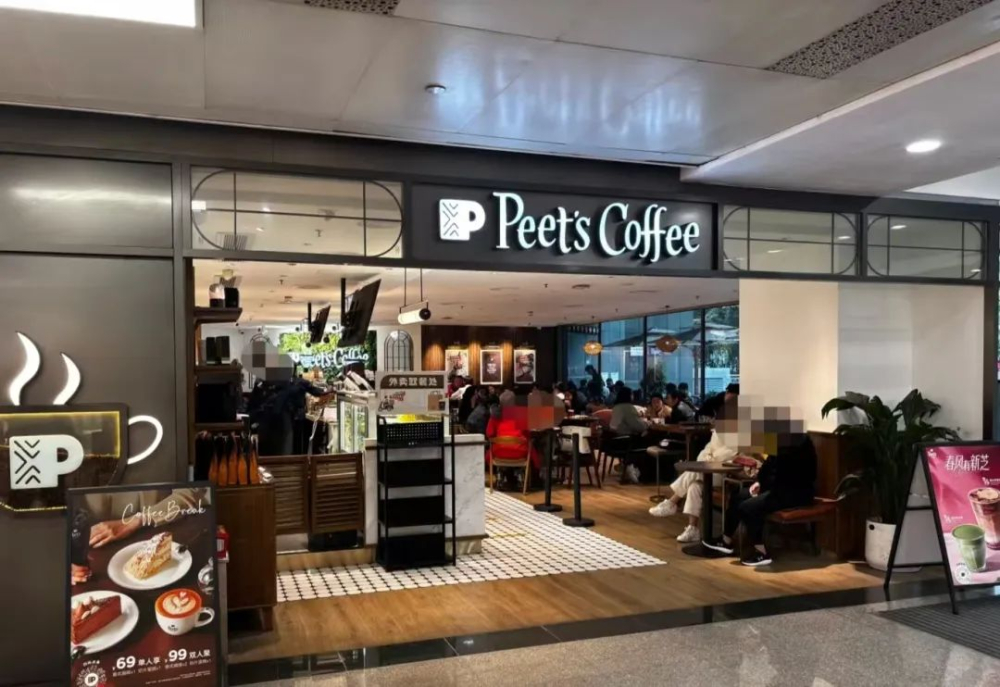
Regarding Peet’s Coffee’s recent closures of two high-profile outlets, some netizens believe this may be related to the brand’s positioning in the Chinese market. Since entering China in 2017, Peet’s Coffee has consistently maintained a mid-to-high-end market stance, with relatively higher product pricing and a focus on prime locations in first- and second-tier cities—such as bustling commercial districts and upscale office areas. Although these areas see heavy foot traffic, they also come with considerable rental pressures.
In addition, as consumer awareness of cost-performance in coffee products increases, some customers may lean toward more affordable and convenient brands, further affecting the performance of premium brand outlets. Faced with such market trends, even a brand like Peet’s Coffee—with a stable base of loyal customers—must re-evaluate its store distribution and business model.
Despite the recent spate of closure news, observers also point out that Peet’s Coffee has not halted its expansion. The brand has recently opened its first stores in inland cities such as Zhengzhou, Wuhan, and Changsha, actively broadening its market presence. Furthermore, the brand has launched a more accessible sub-brand, Ora Coffee, which has already established three outlets, demonstrating potential for diversified development.
Overall, the closures of the Guangzhou Tianhe City and Hangzhou West Lake stores may more reflect strategic adjustments in specific commercial zone operations rather than an impediment to the brand’s overall growth. For consumers concerned about Peet’s Coffee’s future trajectory, monitoring the brand’s expansion into new first-tier cities and feedback on its sub-brand’s market performance will be key indicators of its development trends.

The above content is compiled by CoffeeHunters, a coffee news website.


