







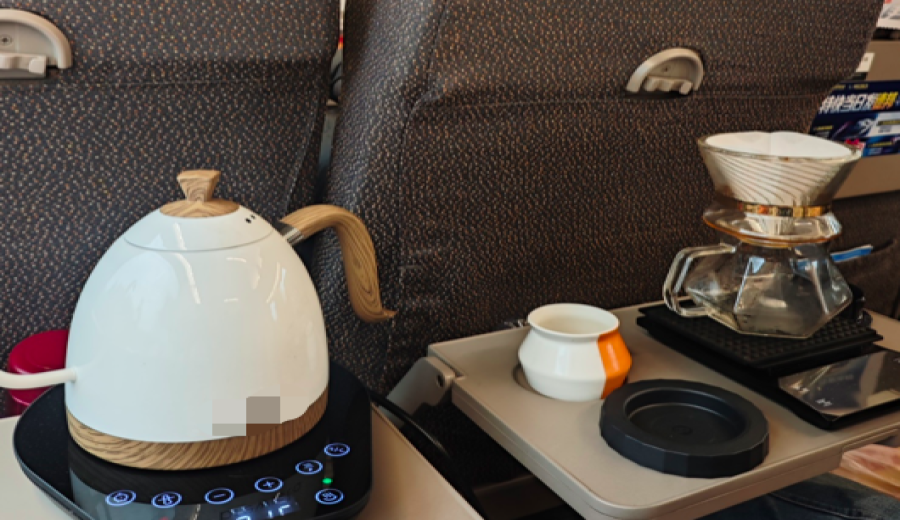
Introduction:On a high-speed train ride back from the Spring Festival holiday, one passenger struck up a conversation with their seatmate by making pour over coffee — a romantic gesture that sparked widespread discussion online. However, power outlets on trains have limited capacity, and using electric kettles to boil water can pose serious safety risks. This article analyzes the potential dangers of making pour over coffee in a high-speed rail environment, including issues like electrical load and unstable voltage, and offers practical alternatives so you can safely enjoy the aroma of coffee during your journey.
During the peak of Spring Festival return travel, a romantic story unfolding on a high-speed train went viral online. A passenger was approached by a fellow traveler who took out a full set of pour over coffee equipment from his backpack, borrowed the tray table, and proceeded to boil water and brew coffee on the spot. Netizens jokingly dubbed this encounter a “high-speed rail romance drama,” and the story quickly spread across social media platforms.
Yet behind this lighthearted episode, many netizens raised concerns about actual safety issues. The power outlets inside high-speed train carriages have limited capacity, and using high-wattage electric kettles may overload the circuit and trigger protective mechanisms. Moreover, power supply is unstable while the train is in motion, with frequent fluctuations in voltage and current that could damage coffee equipment. There’s also the risk of hot water being spilled due to sudden seat adjustments by passengers in front, leading to burns.
It is understood that the electricity on high-speed trains is supplied via pantographs on the roof, drawing power from the grid. After being processed by transformers, it is converted into single-phase alternating current at 220V and 50Hz for use in the carriages. However, the total rated power per carriage is approximately 3200 watts, with each individual outlet typically receiving only about 100 watts. Using an electric kettle with a rated power exceeding 1000 watts is very likely to exceed the carriage’s load capacity, potentially causing power outages or equipment malfunctions.
Even more notably, the power supply lines on high-speed trains are equipped with traction substations approximately every 50 kilometers. To prevent short circuits, there are no-power zones between adjacent substations, resulting in intermittent power supply to the outlets. This unstable current and voltage environment already poses potential threats to low-power devices such as mobile phones and laptops, let alone high-power electric kettles.
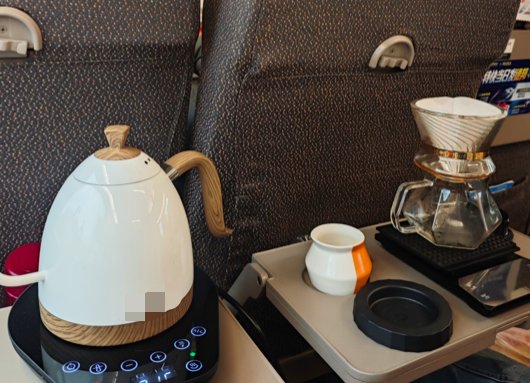
Beyond electrical hazards, there are also practical risks in use. Although high-speed trains are generally smooth, sudden adjustments to the backrest by the passenger in front could accidentally knock over a kettle or coffee equipment on the table, spilling hot water and causing burns. Experienced travelers recommend using the hot water provided by the train or bringing a thermos flask filled with hot water in advance, rather than carrying high-power electric kettles onboard.
For travelers who enjoy making pour over coffee while on the go or using their mobile devices, experts suggest the following safer alternatives: bring instant coffee or cold brew coffee concentrate for convenience and safety; use an electric thermos to preheat water and then manually brew the coffee; if insisting on using a kettle, opt for a low-power (under 100 watts) travel electric kettle and ensure the carriage outlet can handle the load, avoiding simultaneous use of multiple electrical devices.
While pour over coffee can add flavor to a long journey, safety must always be the top priority in the high-speed rail environment. Understanding the power limitations and potential risks of the carriage, and choosing the appropriate coffee brewing method, will help ensure your trip is both enjoyable and worry-free.
The above content is compiled by CoffeeHunters, a coffee news website.


