







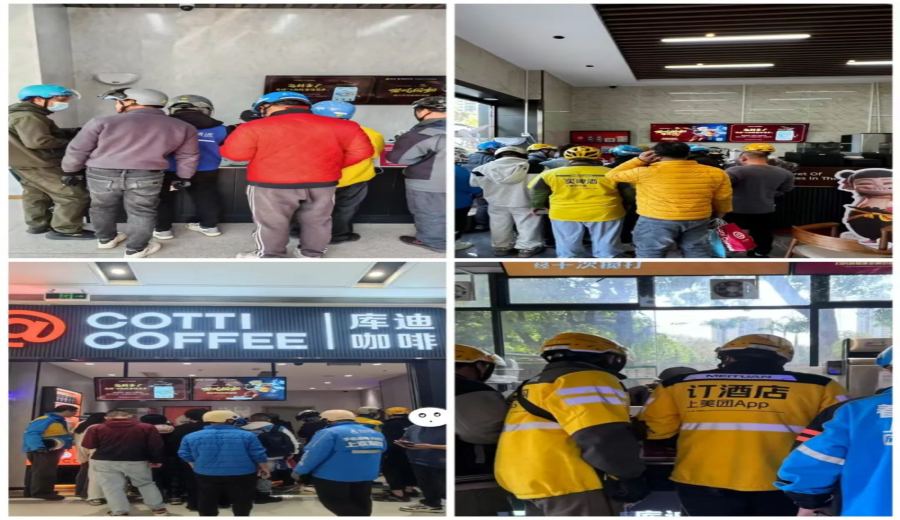
Introduction:When the partnership with "Ne Zha 2" meets JD.com’s high-value delivery subsidies, Kudi Coffee stores fell into unprecedented chaos. This article delves into the operational shortcomings behind the surge in orders—covering everything from staffing to supply preparation—and reveals the key mistakes chain brands make when handling sudden traffic spikes, along with practical emergency management suggestions for stores.
Recently, the coffee industry has been swept up in a wave of "Ne Zha 2" collaborations, with Kudi Coffee’s themed drinks and limited-edition merchandise successfully attracting a large number of consumers. However, just three days into the campaign, multiple stores experienced operational crises—pickup areas were packed with food delivery riders, themed merchandise sold out early, and staff struggled to cope with the surge in orders.
The root of the problem lies in the subsidy policy simultaneously launched by JD.com Instant Delivery, where users only need to pay 1–3 yuan to get a delivered coffee, leading to an exponential increase in Kudi order volumes. On-site observations showed that some stores were relying on just 1–2 employees to process nearly 100 orders per hour, with coffee machines running non-stop for over 3 hours yet still unable to clear the backlog.
There was a stark contrast between the expectations set by the collaboration and the reality. Although the brand launched themed drinks and merchandise, it did not proportionally increase store staffing.Under normal circumstances, major chain brand collaborations should be supported by a 30% increase in additional staff.Yet, in reality, it is common to see single-person cash registers and customers waiting in line for over 40 minutes.
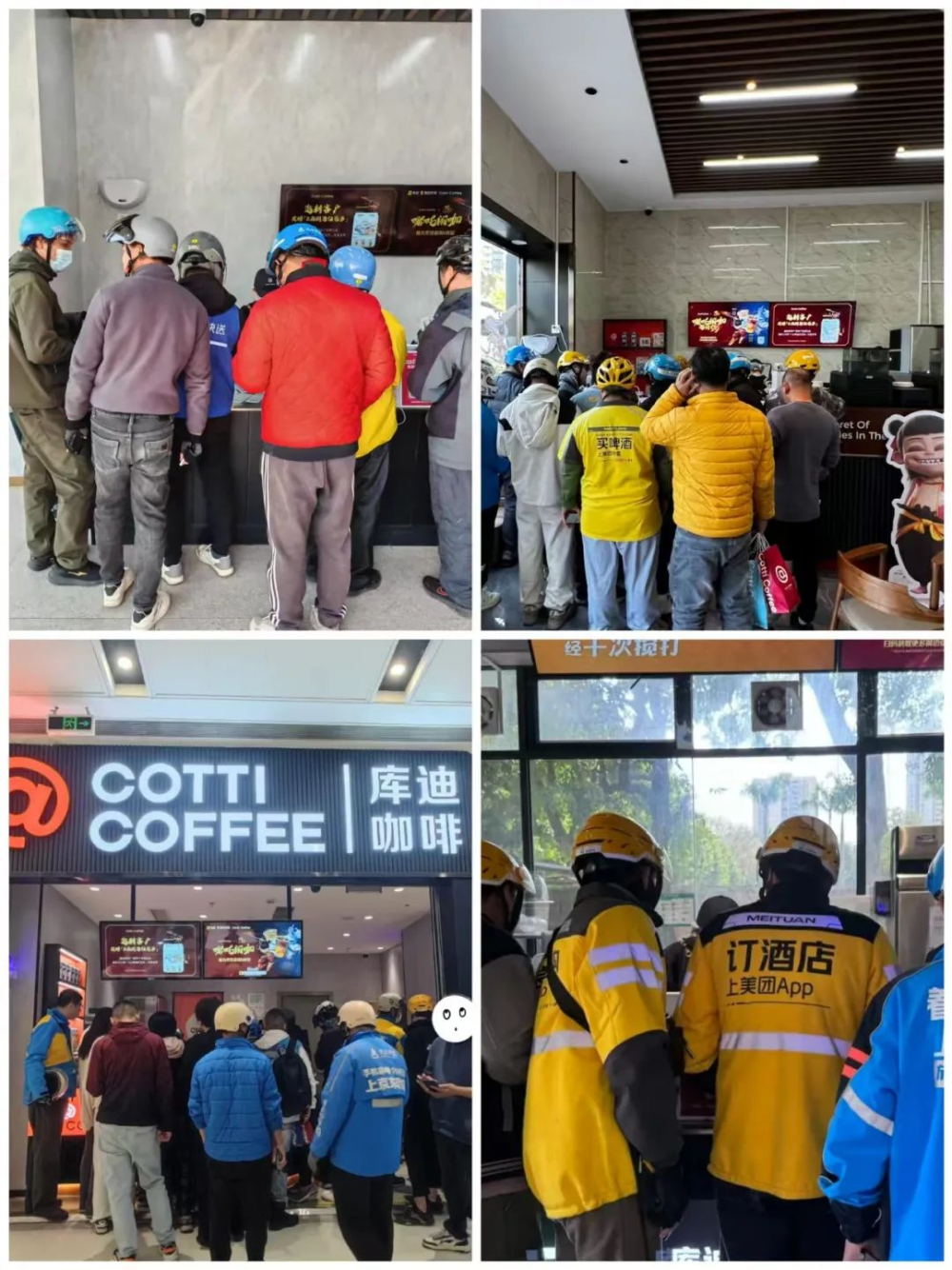
The delivery platform’s subsidy mechanism further strained the system. Following JD.com’s subsidies, some Kudi drinks were actually sold below cost, attracting a flood of “deal hunters.” Industry insiders revealed that such subsidized orders typically accounted for 40–60% of total orders, yet no advance coordination with stores was made regarding ingredient preparation or staff scheduling.
Three major operational failures were exposed during this incident: first, insufficient supply preparation—limited-edition merchandise ran out within three days without timely restocking; second, flawed layout design—mixing the delivery pickup area with in-store customers led to efficiency drops; and most critically, rigid staffing allocation—failure to implement flexible scheduling based on real-time order volumes.
For consumers, when encountering similar order surges, it is recommended to: prioritize in-store pickup to reduce wait times, check merchandise inventory status via the official app before redemption, and consider ordering regular drinks during peak hours. Store management, on the other hand, needs to establish a “surge order emergency manual,” including preset safe stock levels for supplies and a monitoring mechanism for delivery platform traffic.
This incident serves as an important warning for the coffee industry: collaboration marketing must be paired with comprehensive operational contingency plans, especially when working with third-party platforms, where clear rules for order distribution and subsidy caps are essential. Only by balancing marketing hype with service quality can true win-win outcomes for both brands and customers be achieved.
The above content is compiled by CoffeeHunters, a coffee news website.


