








Introduction:Bialetti, an Italian national coffee appliance brand with nearly a century of history, has recently been reported to be fully acquired by Nuo Capital, a private equity fund under Hong Kong’s Pao Chuang Group, in partnership with the founding family of Hermès. This deal not only involves the future direction of the brand but also raises concerns about the continuity of its culture and quality. This article delves into the background of the acquisition, the brand’s rise and fall, and its potential impact.
Bialetti, a household name in Italy for its iconic moka pot, has recently seen surprising major changes in its shareholding structure — Nuo Capital, the private equity fund under Hong Kong’s Pao Chuang Group, is in talks with the founding family of Hermès to acquire full ownership of Bialetti’s parent company, Moka. If this deal goes through, Bialetti will become yet another classic Italian brand to come under the ownership of a Chinese-backed consortium.
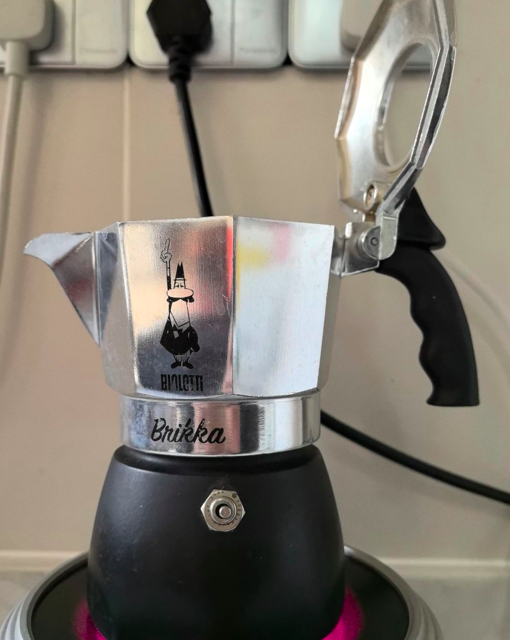
Bialetti’s most representative product, the moka pot, was born in 1933. With its simple operation that allows users to brew coffee at home similar to espresso, it has long been loved by coffee enthusiasts around the world and has become a common fixture in Italian kitchens. However, as more convenient appliances such as fully automatic coffee machines and capsule coffee makers have become widespread, the slightly more complex-to-use moka pot has gradually lost its market appeal.

Changes in market trends have posed serious challenges for Bialetti. In the first half of 2018, the company recorded losses exceeding €15.3 million, and it also owed tens of millions of euros in taxes and employee salaries, eventually leading to the initiation of bankruptcy liquidation proceedings. Although sales have rebounded somewhat in recent years through cross-industry collaborations and other marketing strategies, with annual revenue recovering to €104.7 million in 2024, the brand still faces a high net debt of €91.9 million, and its path to recovery remains uncertain.
Details of the acquisition have not yet been fully disclosed, and Bialetti’s official stance remains silent, but according to insiders, Nuo Capital is highly likely to complete the transaction through a full acquisition. The fund was established in 2016 with its headquarters in Milan, and its founder and chairman is the grandson of Hong Kong’s legendary industrialist Sir Y.K. Pao, who founded the World-Wide Shipping Group (the predecessor of BW Group) and was one of the world’s eight shipping magnates, with a strong background.
In recent years, Nuo Capital has been actively investing in traditional Italian brands, particularly focusing on luxury and artisanal sectors, showing a clear preference for acquisitions. It has previously brought under its wing well-known Italian chocolate brand Venchi, fashion brand Slowear, and Ludovico Martelli, the parent company of Marvis, known as the “Hermès of toothpaste,” demonstrating a strategic intent for systematic expansion.
The industry generally believes that the primary goal of this acquisition will be to help parent company Moka repay its upcoming debts, and to leverage Nuo Capital’s resources and network in the Asia-Pacific region to strengthen Bialetti’s visibility and distribution channels in the international market, especially in Asia. For Bialetti, which has long focused primarily on the European market, this may be a key opportunity to reopen growth potential.
However, this deal has also sparked considerable discussion. Some observers are concerned that Bialetti, as a symbol of Italian coffee culture, may see its unique brand culture and craftsmanship affected after being acquired by a Chinese-backed group. After all, the cultural backgrounds of the two regions are vastly different, and there may be integration challenges in terms of brand positioning, product design, and market communication.
Nevertheless, some industry insiders hold a positive view, believing that Chinese capital can not only provide stable financial support, but also inject new development momentum into Bialetti through its vast market channels and consumer potential, helping the brand thrive once again. Whether Bialetti can retain its traditional essence while successfully tapping into emerging markets will be a key focus going forward.
The above content is compiled by CoffeeHunters, a coffee news website.


