







Introduction:What if you forget to bring your scale or your tools suddenly malfunction — does that mean you can’t brew a good cup of coffee? In fact, by mastering visual judgment of coffee bed height and applying scientific pouring techniques in stages, you can still consistently extract a well-balanced 210ml pour over even without precise instruments. This article breaks down practical experience from a certain coffee brand, teaching you how to estimate 15 to 20 grams of coffee grounds by sight, adjust filter vessel water levels according to roast level, and follow a three-stage 1:14 to 1:16 brew ratio pouring process even without a scale — ensuring extraction stability despite missing equipment.
The quality of a pour over often hinges on control over details, with the electronic scale playing a key role in accurately managing brew ratios. But what if your scale malfunctions, you forget to bring it, or you can’t find a replacement at hand? Does that mean you have to give up on brewing a balanced, rich pour over? The answer is no. As long as you master proper visual estimation skills and logical pouring techniques, you can still consistently produce well-balanced coffee even without a digital scale.
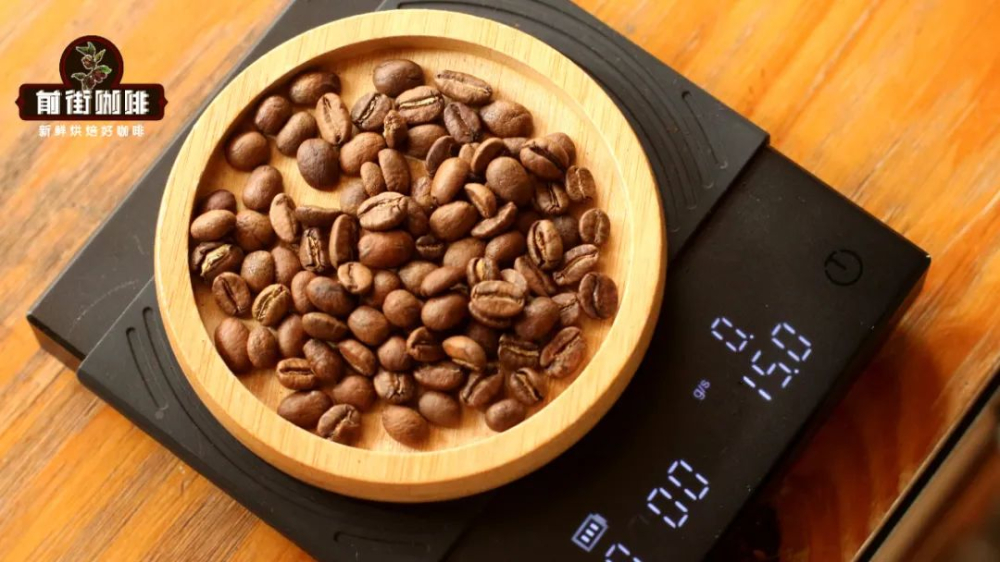
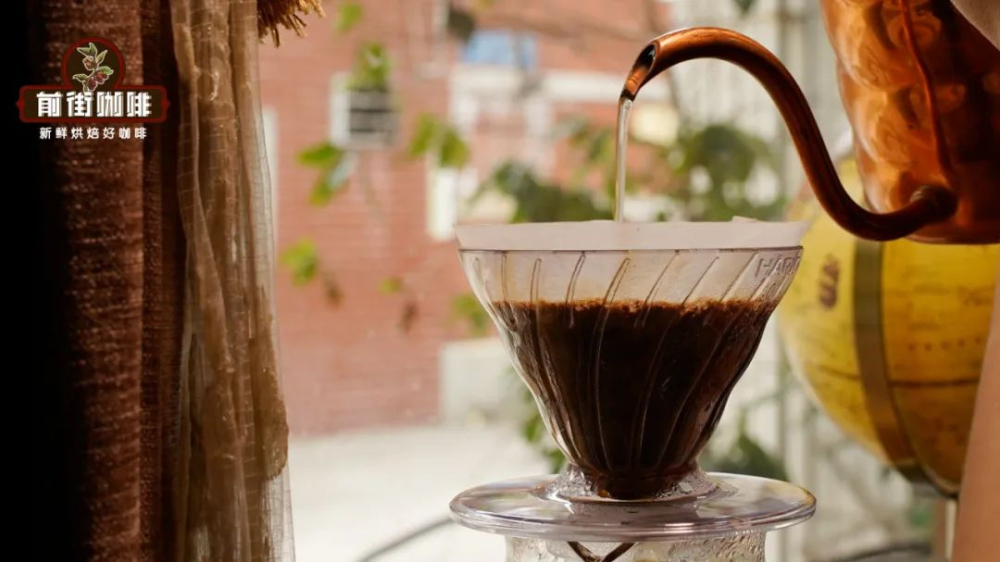
Take the common example of 15 grams of coffee grounds for a single serving — beans of different roast levels will show noticeably different bed heights.For medium-light roasted, fruit-acid-forward beans, when poured into a number 01 conical filter (like V60 or KOKO), the coffee bed height is roughly 3 to 3.5 centimeters, about 2/5 of the total height of the filter; whilefor medium-dark roasted, body-rich beans, the same amount of grounds will stack up to 4 to 4.5 centimeters, nearing half the height of the filter.If you’re brewing for multiple people using 20 grams of grounds, the bed for light-roasted beans will be around 3.5 to 4 centimeters, while for dark-roasted beans it reaches 4.5 to 5 centimeters (aerobic-fermented or similar medium-roast beans usually fall somewhere between the two). By observing the visual reference of the coffee bed’s stacking, you can quickly estimate the actual amount of grounds.
Water volume control is also a core factor influencing flavor. Generally speaking, if you prefer a rich and full-bodied taste, you can go with a 1:14 brew ratio; for a balanced and harmonious flavor, 1:15 is the ideal range; if you enjoy a softer and sweeter profile, then a higher water-to-grounds ratio such as 1:16 is recommended. Even without a scale, frequent pour-over brewers can rely on muscle memory to estimate approximate water amounts — for instance, using a number 01 V60 filter with 15 grams of medium-roasted beans, a 1:16 ratio would require around 240 grams of hot water (after deducting about 30 grams for the bloom, the actual staged pouring total is around 210 grams).
In practice, the key to blind brewing without a scale lies in stable, staged pouring.The first step is the bloom: use a small amount of hot water (about 20–30 grams) to evenly saturate all the coffee grounds, making sure not to pour repeatedly in the same spot. This step activates the coffee particles and releases aromas, lasting about 30 seconds.The second pourswitches to a finer stream, poured in a circular motion, adding 70 grams over approximately 40–45 seconds. At this point, the coffee bed will rise to about two-thirds of the filter’s height, so it's important to control the flow rate to avoid excessive bed expansion.When the water level in the filter is about to run out, proceed with the third pour of 70 grams, to be completed within 1 minute and 15 seconds to 1 minute and 20 seconds, keeping the liquid level roughly even with the coffee bed wall.The final 70-gram pouris added just as the coffee liquid is about to finish dripping through, concluding the entire pouring process at 1 minute and 50 seconds. The total water used is about 230–240 grams (after accounting for absorption by the grounds, the actual brewed coffee yield is around 210ml).

A special reminder: although filter vessels typically don’t have marked measurements, users familiar with their tools can perceive changes in water level through muscle memory.The choice of brew ratio should be adjusted according to roast level: medium-light roasted beans suit slightly higher ratios (such as 1:15 or 1:16) to highlight bright acidity, whereas medium-dark roasts can use lower ratios (like 1:14) to enhance body. Also, make sure the bloom water evenly covers all the grounds to avoid localized over-extraction or channeling.
In summary, even when facing unexpected tool shortages, as long as you can visually judge coffee bed height, adjust pouring water levels based on roast degree, and strictly follow the timing and volume control of a three-stage pour, you can reliably brew a balanced pour over with pleasant acidity, moderate sweetness, and appropriate body — even without a scale. These practical techniques are not only useful in emergencies but also serve as excellent exercises for deepening your understanding of coffee extraction fundamentals.
The above content is compiled by CoffeeHunters, a coffee news website.


