







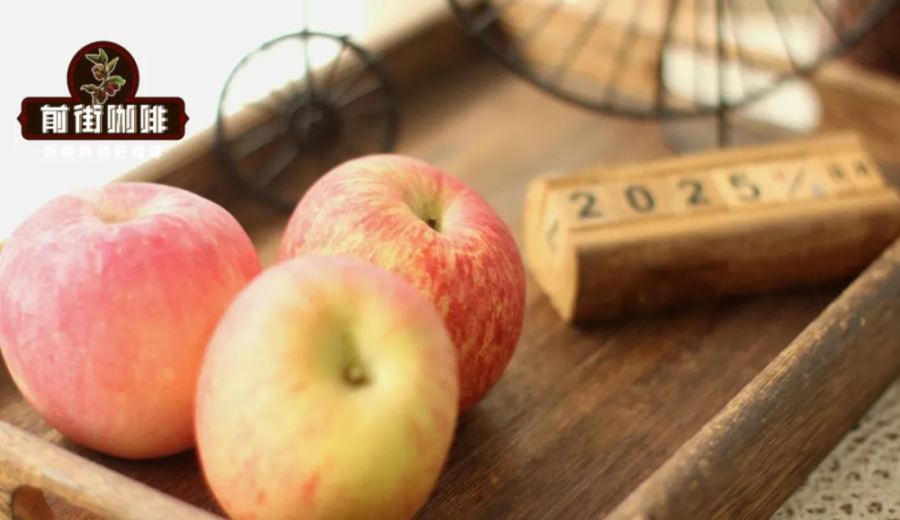
Introduction:In recent years, many coffee enthusiasts have started experimenting with using apple water instead of tap or mineral water to brew coffee. This innovative approach has sparked discussions within the community. Some practitioners have conducted systematic experiments comparing the flavor differences of Sidamo·Santa Vini, washed Yirgacheffe, and Panamanian Geisha beans brewed with apple water versus Nongfu Spring, providing complete pour over parameters and step-by-step brewing analysis. This article delves into how the mild acidity of apple water affects extraction, and offers adjustment suggestions for beans of different roast levels — suitable for both beginner and advanced coffee lovers looking to explore new brewing methods or enhance flavor performance.
In recent times, using apple water as a substitute for regular water in coffee brewing has gradually become an experimental practice among some coffee aficionados. This innovative attempt has sparked significant discussion within the community, with many reporting that apple water can bring out unexpected layers of flavor. To further investigate its feasibility, we conducted pour over tests using three representative coffee beans — Sidamo·Santa Vini, washed Yirgacheffe, and Panamanian Geisha — comparing results brewed with apple water and Nongfu Spring. We meticulously recorded parameter settings, brewing procedures, and flavor differences to provide a reference for readers interested in experimentation and extraction research.
Apples themselves carry a fresh fruity aroma and a mildly sweet taste. The water released after boiling exhibits a mildly acidic yet sweet character, with a light texture. If you wish to preserve the delicate layers of coffee flavor, it is recommended to prioritize beans with lighter roasts, as these tend to showcase more prominent fruit notes and interact better with the acidity in apple water, resulting in a more balanced and harmonious overall extraction.
In our first round of experiments, we selected Sidamo·Santa Vini from Ethiopia, a medium-light roast bean that typically exhibits tropical fruit notes such as guava, dried mango, and citrus. The experiment setup included: one apple, 300ml of room temperature drinking water, 15 grams of Santa Vini coffee beans, using a V60 filter and an EK43s grinder set to grind size 10, with a water temperature of 90°C and a 1:15 powder-to-water ratio. This combination was primarily designed to observe the impact of apple water on medium-light roast coffee.
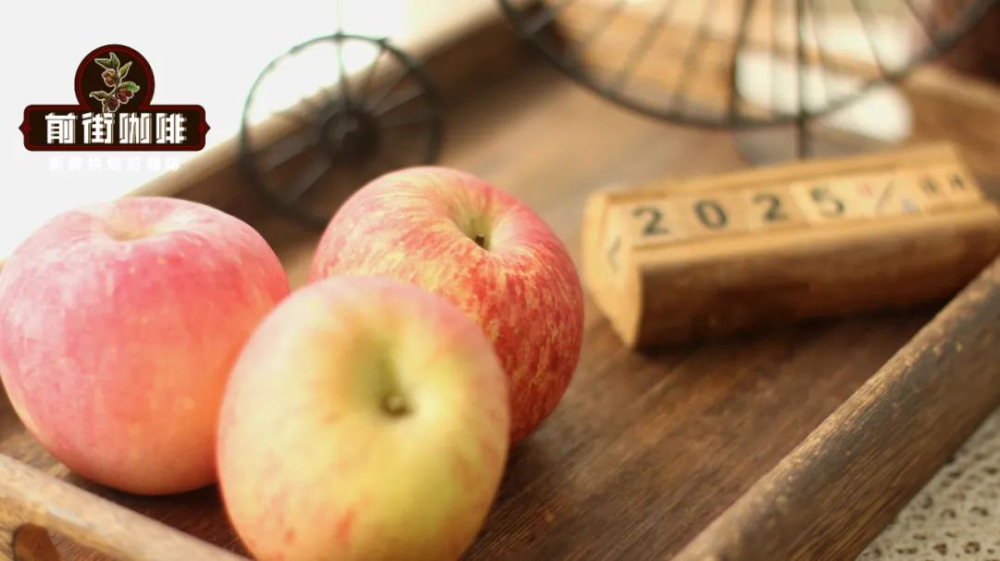
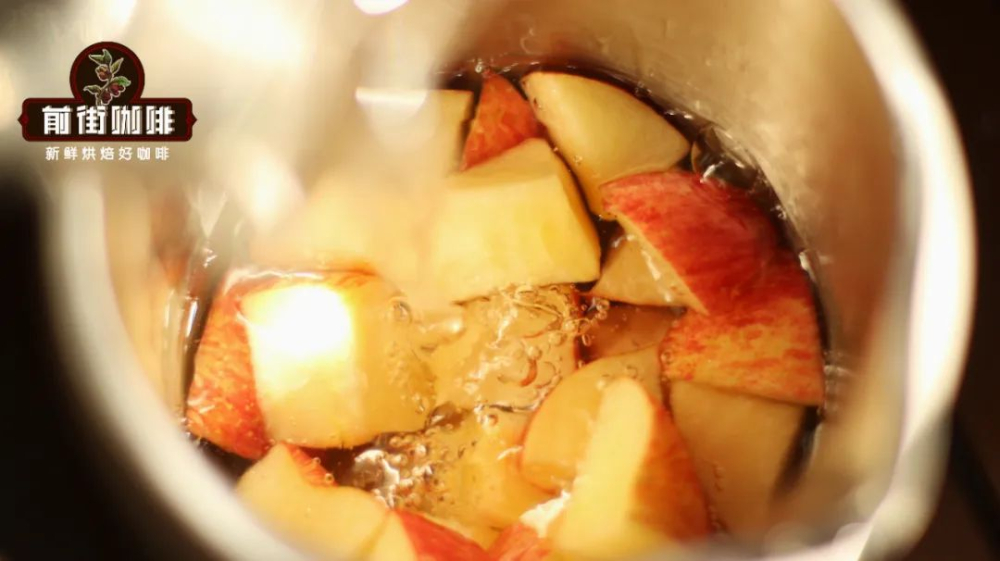
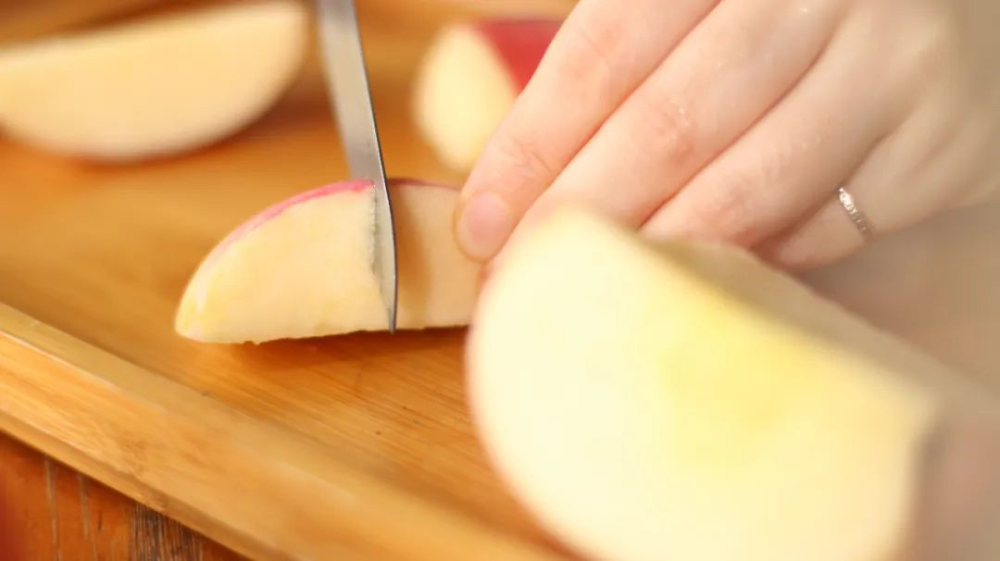
For the brewing process, first, the apple was cut into small pieces and placed in 300ml of water, then heated using a health kettle or saucepan. Once the water reached boiling, it was simmered for about 5 minutes. It’s worth noting that apples absorb water during boiling, so it’s advisable to prepare slightly more water than needed. This boiling duration is recommended to be kept within 5 minutes to avoid over-extraction, which could lead to excessive wateriness or astringency. After boiling, the apple water was filtered and slightly cooled to 90°C before beginning the pour over.
Next, 15 grams of coffee beans were weighed and ground, the filter paper was rinsed with hot water to remove any paper taste and then placed in the filter. The pour over process followed a three-stage pouring method: the first stage involved pouring 30g of apple water for a 30-second bloom; the second stage used a medium and steady stream in a large circular motion to pour 100g of water, aiming to lift the coffee bed, reaching a cumulative water volume of 130g; the third stage switched to a smaller stream and narrower circular pouring to slowly add 95g, evening the liquid level with the coffee bed, with a total extraction time of approximately 2 minutes and 5 seconds. These parameters help balance flavor release and impurity control.
For comparison, we also used the same coffee beans and identical parameters, except replacing the brewing water with commonly available Nongfu Spring. The results showed that the coffee brewed with apple water had a slightly cloudy appearance, with aromas of apple peel and subtle sugarcane sweetness upon sniffing; in contrast, the Nongfu Spring version appeared clearer, darker in color, and emitted distinct caramel, floral, and sweet orange notes.
In terms of taste, the Nongfu Spring version delivered multi-layered fruit flavors upon entry, including lemon, blueberry, guava, and a fruity wine-like profile, with moderate body and slight fermentation notes. As the temperature dropped, the acidity became brighter, reminiscent of lemon, accompanied by a nutty aftertaste, offering a rich overall layering. On the other hand, the apple water version had an upfront, pronounced sweet-and-sour juice sensation, akin to passionfruit or mango, but the overall impression was somewhat one-dimensional. As the temperature decreased, the acidity became more pronounced, the original coffee aromas were not fully expressed, and the richness felt somewhat lacking.
The analysis suggests that the mild acidity of apple water inhibits the release of certain flavor compounds, particularly affecting the expression of aromas in the mid-to-late stages of extraction. Therefore, when brewing beans with prominent mid-to-late aroma profiles, such as Santa Vini, it’s advised to carefully adjust the boiling time and concentration of the apple water to prevent the main flavors from being masked.
To further validate the compatibility of different roast levels with apple water, in our second round we selected washed Yirgacheffe, a light roast bean known for its white floral notes, tea-like qualities, and distinct lemon-citrus profile. This time, we adjusted the apple water boiling time to about 3 minutes after boiling, and changed the pour over method to a four-stage pour, adding 30g + 65g + 65g + 65g, totaling 225g, to more precisely control extraction rhythm and flavor expression.
For brewing, 30g of apple water was poured for a 30-second bloom, bringing out fresh aromas of apple and citrus. The second stage involved pouring 65g with a slightly stronger and straighter stream to lift the coffee bed, taking about 45 seconds; the following two stages each added 65g with intervals to allow the flow rate to stabilize. The whole process emphasized stable water flow and coffee bed control, aiming to fully express Yirgacheffe’s citrus and tea-like flavors.
The results of this round of experiments showed that coffee brewed with apple water clearly achieved better flavor harmony. The flavors upon entry presented a blend of apple freshness with orange, blueberry, nuts, and green tea, with moderate strength, bright sweet-and-sour notes, and an overall sensation akin to a refreshing mixed fruit juice — a notable improvement compared to the single-note fruitiness of the previous brew.
Finally, to test the possibility of iced pour over, we used Panamanian Boquete Geisha, a premium bean renowned for its citrus acidity and delicate floral notes. The brewing parameters followed the café’s standard: 15 grams of coffee beans, a powder-to-ice-to-water ratio of 1:10:5, water temperature at 91°C, and EK43s grind size 9.5, using the same three-stage pouring method. During actual tasting, it was found that this “special edition” Geisha, enhanced by ice, had a more pronounced sweetness from the apple water. The entry featured a clear sugary sensation paired with the Geisha’s inherent citrus acidity and subtle floral notes, resulting in a refreshing, juicy mouthfeel — a performance that was truly impressive.
In summary, apple water, as a novel brewing water choice, can indeed deliver a distinctive flavor experience, especially when paired with light roasts and fruit-forward beans, potentially showcasing unique layers of freshness. However, its mild acidity may also suppress certain mid-to-late stage aromas. It is recommended to flexibly adjust the boiling time, pouring technique, and grind size based on the characteristics of the beans in order to achieve optimal extraction results and flavor balance.
The above content is compiled by CoffeeHunters, a coffee news website.


