







Introduction:A Japanese-style café in Chengdu sparked widespread discussion after the owner used phrases such as "unfriendly to lower-class people" on social media. Originally intended to express rules about photography and store operations, the wording caused misunderstandings and backlash. After the incident spread online, the menu on review platforms was collectively parodied by netizens, with names like "Lower-Class Coffee" and "Lower-Class People Latte" becoming the focus. This article delves into the full story of the incident and explores the boundaries of business rule-setting and the balance of customer service.
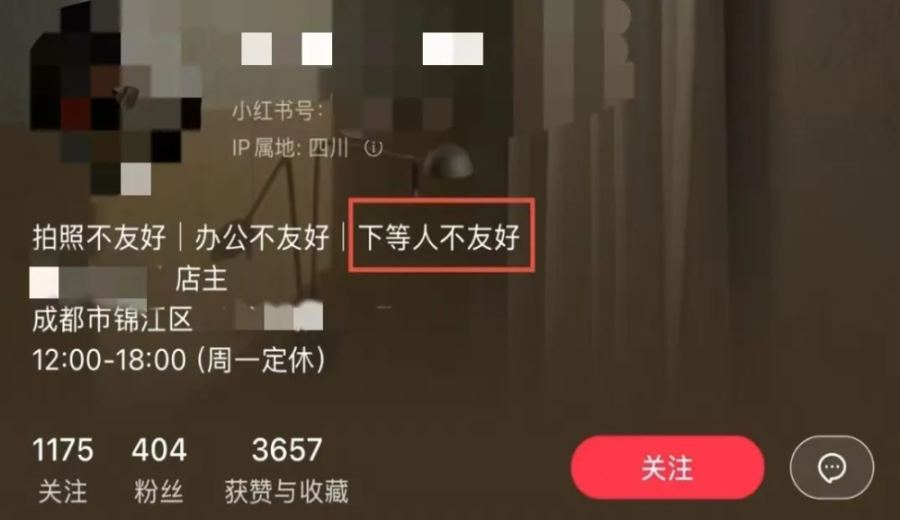
In Chengdu’s Jinjiang District, a Japanese-style café instantly became a hot topic online after the owner used phrases such as "unfriendly to photography | unfriendly to office work | unfriendly to lower-class people" in the bio of their personal social media account. Originally, these phrases were meant to convey that certain behaviors were not welcome in the café—such as standing to take photos, switching seats to shoot, using flash, or working inside the café—but the phrase "unfriendly to lower-class people" was seen as overly direct and derogatory, triggering extensive debate and dissatisfaction.
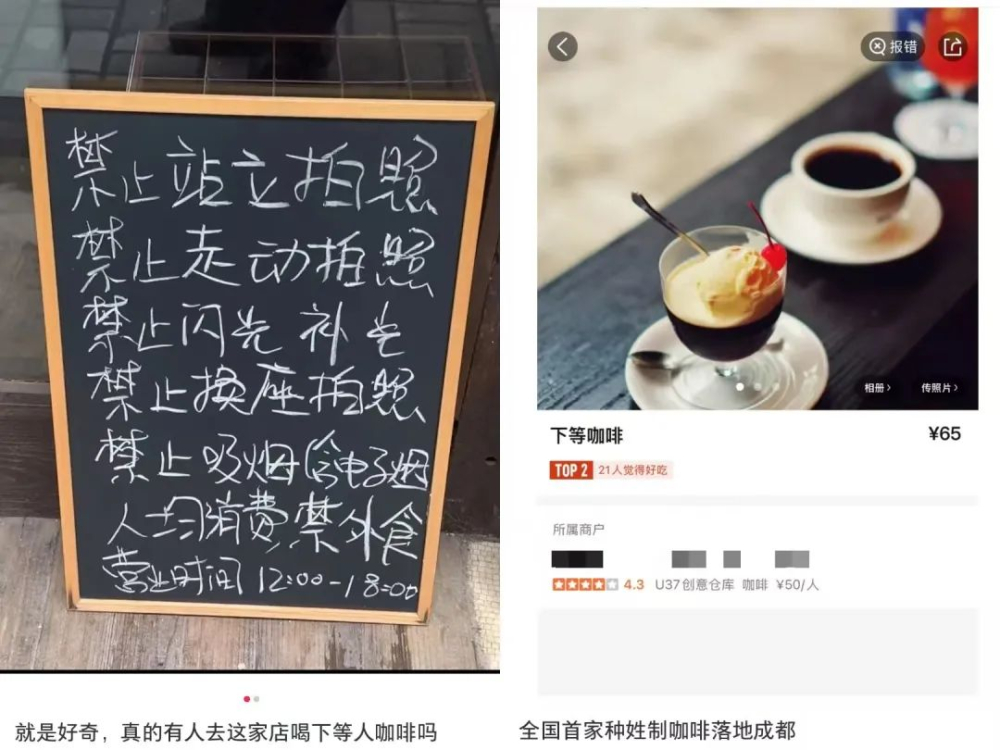
It is understood that since its opening, the café has displayed a series of store regulations in prominent places, such as on a small blackboard and on table prompt cards. These include prohibiting customers from taking standing photos, walking around while shooting, using flash, or freely changing seats to take pictures—all aimed at maintaining the café's ambiance and customer experience. However, recently, some customers insisted on taking photos despite being clearly informed of the rules, leading to arguments with staff and becoming the trigger for this incident.
To prevent similar situations from recurring, the owner later updated their social media bio to include phrases like "unfriendly to photography | unfriendly to office work | unfriendly to lower-class people" and posted an article titled "Who Are the Lower-Class People," attempting to further clarify their stance. In the post, the owner tried to define what constitutes the so-called "lower-class people" and hinted at possibly introducing stricter store management rules in the future. However, these bios and posts have since been deleted.
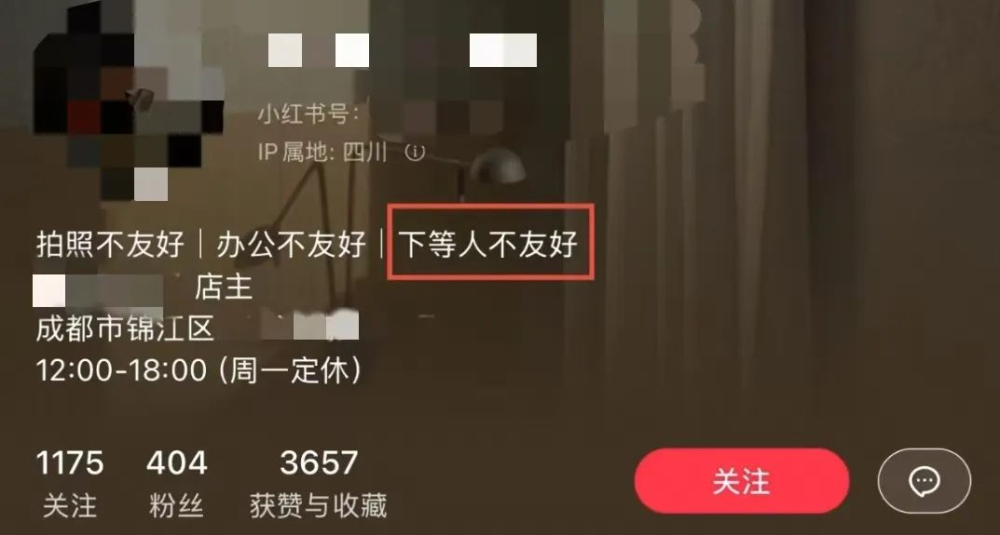
While some netizens saw this move as the owner’s self-protection to maintain a good business environment, the use of the term "lower-class people" was widely regarded as having clear connotations of contempt and discrimination, making many consumers uncomfortable. Most netizens believe that businesses have the right to set store rules, such as refusing photography or restricting certain behaviors, but these should be communicated in a more polite and professional manner, rather than using offensive language. Such language not only easily leads to misunderstandings but can also damage the brand image and customer relationships.
As the incident continued to ferment on social media, many netizens flocked to the café’s pages on various review platforms to engage in "fan fiction" of its recommended menu, parodying original item names into sarcastic ones like "Lower-Class Coffee" and "Lower-Class People Latte." What was originally meant to showcase the café’s signature drinks was instantly rewritten with the humor and dissatisfaction of netizens, becoming part of the public discourse. Currently, apart from "Coffee Jelly" remaining unchanged, almost all other top-ranked items have been replaced by netizens' "creations."
This incident has also prompted industry professionals and consumers to reflect on the "boundaries of business rules." How to maintain a good operating environment while also considering the feelings and dignity of customers is a question every café operator needs to carefully consider. Especially in today’s era of highly developed social media, an inappropriate comment or word choice can quickly trigger large-scale negative effects and cause irreparable damage to a brand’s image.
For café operators, it is entirely reasonable to establish clear and reasonable in-store regulations—for example, restricting photography, maintaining a quiet space, or avoiding excessive commercial use are all common and sensible practices. But the key lies in ensuring that the communication of these rules remains neutral and professional, avoiding vocabulary that might lead to misunderstanding or emotional conflict. At the same time, it is recommended that cafés post clear regulatory explanations in visible areas within the store and remind customers politely, rather than issuing "advance warnings" through social media bios, which are more likely to spark unnecessary controversy.
In summary, the "unfriendly to lower-class people" signage controversy is not just a single case of friction between a business and its customers, but also highlights the challenges and responsibilities faced by modern service industries when dealing with social media and public opinion. For consumers, it is equally important to express demands and feedback rationally. Only when both parties proceed with respect and understanding can a more friendly consumption environment be jointly created.
The above content is compiled by CoffeeHunters, a coffee news website.


