







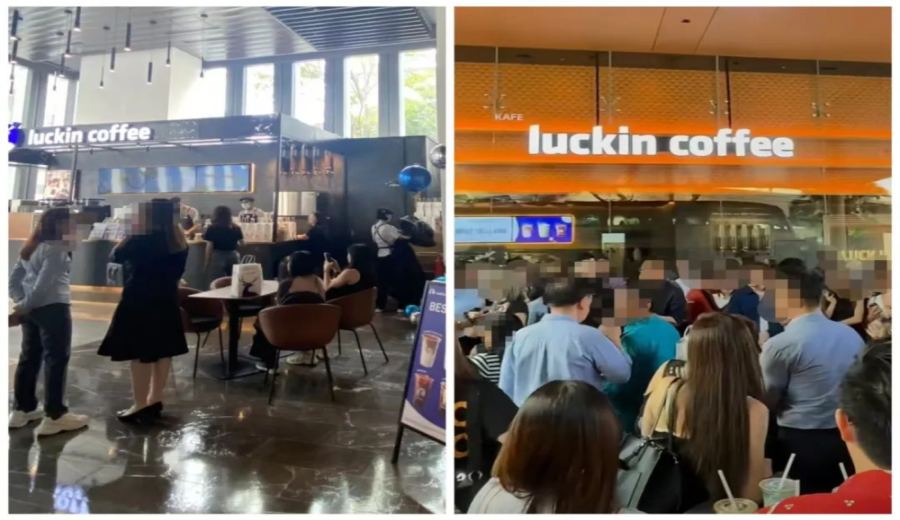
Introduction:Luckin Coffee has officially launched in Malaysia, opening its first stores simultaneously at Sunway Pyramid and Kuala Lumpur’s Menara Greenhill, marking its entry into the Southeast Asian market following its expansion into Singapore. Facing fierce competition from CouD, Starbucks, and local brand Zus, its pricing strategy of 8 to 17 Malaysian Ringgit (approximately RMB 13 to 27) and streamlined menu have sparked widespread discussion. This article provides an in-depth analysis of Luckin’s market strategy, pricing advantages, and challenges in Malaysia, exploring whether it can successfully replicate its expansion model abroad.
Luckin Coffee has recently made its official entry into the Malaysian market, with its first two outlets located at Sunway Pyramid Shopping Mall and Kuala Lumpur’s Menara Greenhill. The simultaneous openings mark the brand’s further expansion into Southeast Asia after Singapore. On their first day, the stores attracted large crowds eager to try the brand, offering prices ranging from 8 to 17 MYR (about RMB 13 to 27) per cup, along with a first-purchase discount of 2.99 MYR (about RMB 4.89) for new users—continuing the low-price customer acquisition strategy that has proven successful domestically.
However, despite the seemingly competitive pricing, many local Malaysian netizens have questioned Luckin’s cost-performance value after trying the products. Especially without using coupons, Luckin’s prices were not seen as significantly better than those of CouD, Starbucks, or local brand Zus. Some users commented, “Isn’t it better to just drink coffee bean zus at the original price?” and “Even Starbucks promotions are more attractive than this,” indicating that in a price-sensitive market, relying solely on discounts to attract customers is difficult to sustain long-term.
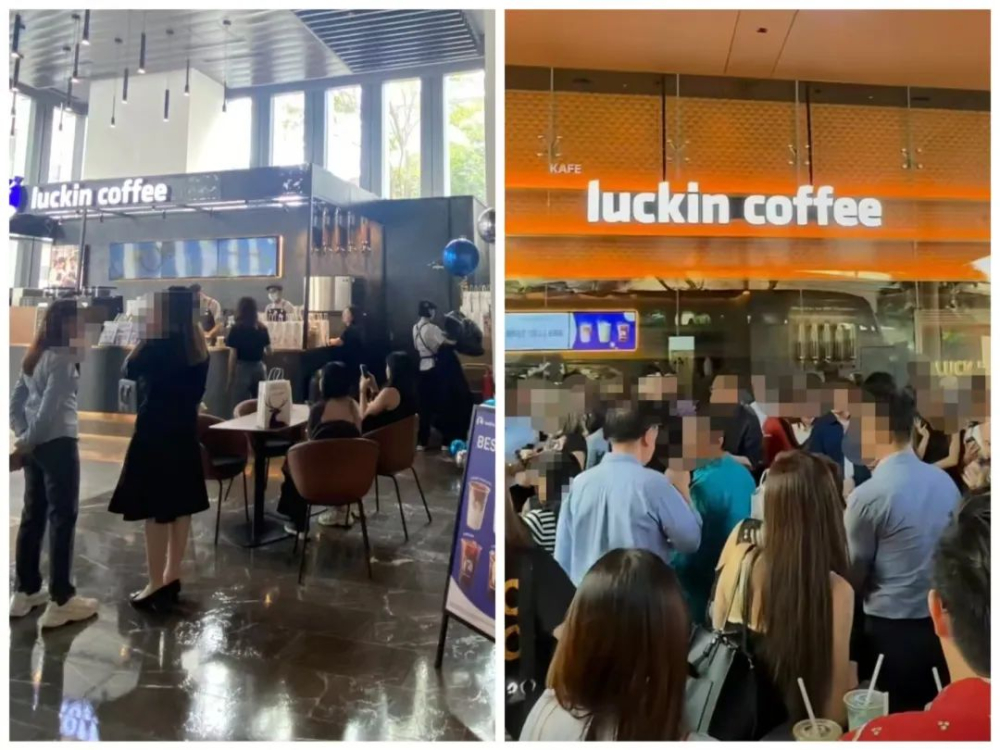
Market observers have pointed out that before Luckin’s arrival, CouD had already secured a certain market share through its low-price strategy, while Starbucks frequently runs various promotional campaigns to attract consumers. Additionally, Zus, a brand deeply favored by locals, has long established a solid position in consumers’ minds. Therefore, if Luckin hopes to gain a firm foothold in Malaysia, it may need to consistently offer a large number of coupons over the long term to encourage repeat purchases.
Notably, many users have found that Luckin’s menu in Malaysia does not include some of its most popular domestic bestsellers such as Orange C Americano or Meteor Latte, resulting in a relatively limited selection that has disappointed fans hoping to try these drinks. Analysts suggest this may be because Luckin has not yet fully grasped local taste preferences, and thus adopted a more conservative product strategy initially. It is expected that adjustments will be made gradually based on market feedback, with more locally relevant beverages added over time.
Furthermore, Luckin currently has a limited number of outlets in Malaysia, which significantly affects convenience for consumers accustomed to grabbing coffee on a daily basis. One customer bluntly stated, “I wouldn’t go out of my way to buy it—zus is everywhere and more convenient,” reflecting how store density plays a crucial role in brand acceptance within a highly competitive market.
Overall, although Luckin faces multiple challenges in its initial phase in Malaysia, its low-price strategy and brand recognition have still garnered a degree of attention. Whether it can establish itself in the Malaysian coffee market will depend on its ability to maintain ongoing promotions, expand its store network, and introduce localized products tailored to local preferences. Observers generally believe that if Luckin can continue optimizing its product mix and pricing strategy, its development in Malaysia remains promising.
The above content is compiled by CoffeeHunters, a coffee news website.


