







Introduction:Sumatra Mandheling is renowned for its distinctive herbal, spicy, and chocolatey flavor profile, but behind these tasting notes lies a sophisticated interplay of geography, variety, and processing methods. This article explores the growing environment, coffee genetics, and wet-hulling process to uncover how Mandheling from the Lintong region develops its signature bold, herbal character — helping you better appreciate the charm and brewing essentials of this classic Indonesian bean.
On the volcanic slopes of Indonesia’s Sumatra Island, at elevations between 1,100 and 1,600 meters, grows a coffee famed for its herbal aroma and rich, full-bodied taste — Mandheling. Often mistakenly thought to be the name of its origin, this coffee actually derives its name from the local ethnic group “Mandailing,” and has since become synonymous with Sumatran coffee. Its main producing areas are concentrated in the “Two Lakes, Two Mandhelings”: the Gayo and Tawar regions of Aceh, as well as the areas around Lake Toba in North Sumatra Province. Each of these regions boasts fertile volcanic soil and abundant water sources, providing ideal growing conditions for Arabica coffee.
However, the unique herbal character of Mandheling isn’t shaped by environment alone. Looking back at its history, Indonesia introduced traditional Arabica varieties such as Typica and Bourbon as early as the 18th century. But following the outbreak of coffee leaf rust, the government introduced more disease-resistant new varieties to stabilize production — including Robusta, which laid the groundwork for the later flavor traits of Mandheling.
The most commonly cultivated varieties in Sumatra today are Ateng and TimTim. Ateng is the local name for Catimor, while TimTim refers to the Timor variety. Notably, the Timor variety originates from the natural hybrid Timor Hybrid in East Timor, combining Arabica and Robusta genetics — although classified as an Arabica plant, it inherits Robusta’s disease resistance. Catimor, on the other hand, is an F1 first-generation hybrid of Timor and Caturra. Since Robusta naturally contains higher levels of caffeine, amino acids, and chlorogenic acid (the main contributors to bitterness), Ateng and TimTim also carry some Robusta genes, which is one of the key reasons why Mandheling is often described as having herbal and earthy notes.
In addition to genetic factors, Indonesia’s unique tropical rainforest climate has also deeply influenced processing methods. The region’s high temperatures, frequent rainfall, short daylight hours, and consistently high humidity levels of 70% to 90% make traditional sun-drying methods ineffective for fully drying coffee cherries. To adapt, Indonesian farmers developed the wet-hulling method (known locally as Giling Basah). This technique is similar to washed processing in its early stages — after fermentation, there is a brief period of sun drying — but when the beans still have relatively high moisture content, they are passed through a hulling machine to remove the parchment layer, and the moisture is eventually reduced to 12%–15% to complete drying. This method drastically shortens processing time, but during hulling, the green beans are prone to external pressure, sometimes forming cracks that resemble “goat hooves,” which is why they’re nicknamed “goat hoof beans.”
Although wet hulling may result in beans that are less uniform in appearance compared to other methods, it gives Mandheling its bold personality: a strong, full-bodied taste paired with herbal aromas and rich chocolate notes. The wet-hulling process illustrated here is a key step in shaping the flavor of Mandheling from the Lintong region.
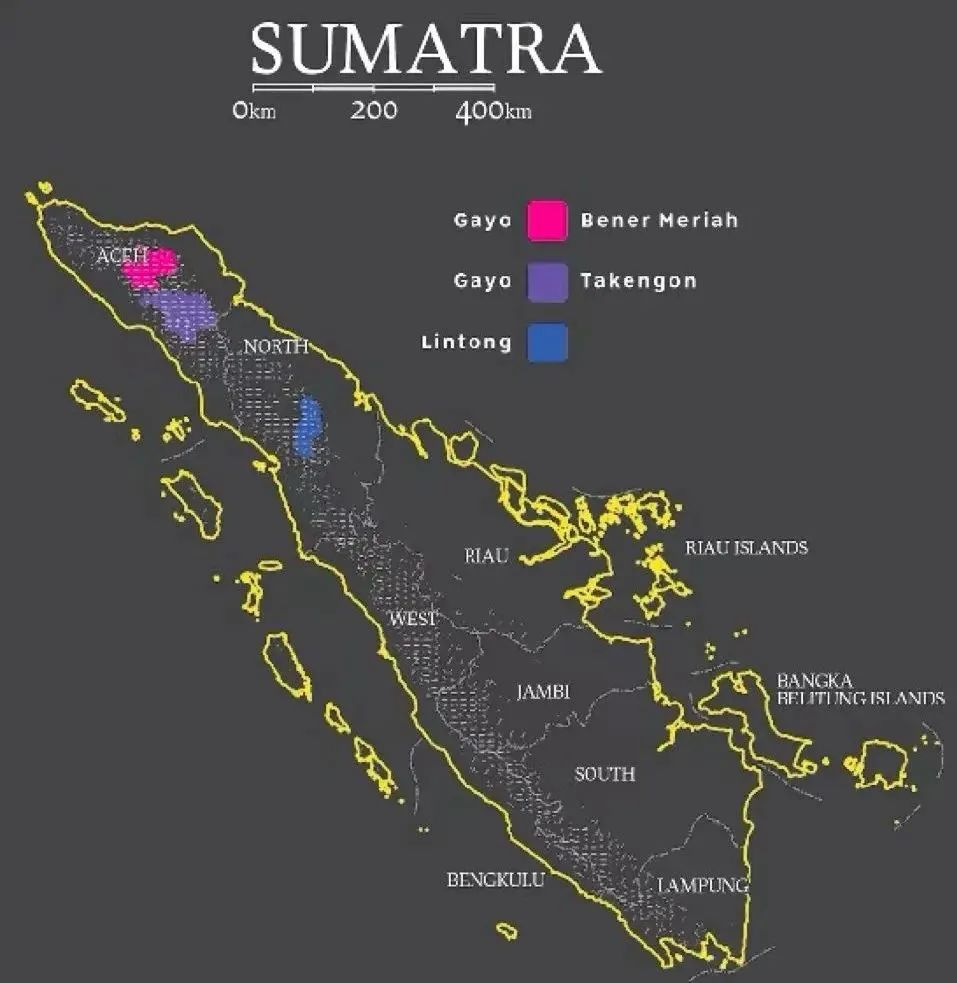
Take the commonly available Lintong Mandheling as an example: it is mostly processed from Ateng and TimTim varieties using the wet-hulling method, and when brewed, it often exhibits pronounced herbal and dark chocolate flavors, with a full body and a sweet caramel-like aftertaste. Understanding the origins of these flavor characteristics not only allows you to better appreciate Mandheling’s unique appeal, but also helps you adjust brewing parameters according to its traits — fully unlocking the potential of this classic Indonesian bean.
The above content is compiled by CoffeeHunters, a coffee news website.


