








Introduction:Recently, Nayuki Tea Drinks has frequently closed stores in multiple second- and third-tier cities, including Quzhou, Pingdingshan, and Pingxiang, sparking widespread discussion among users about the handling of recharge balance funds and brand strategy. Data shows that in the past 90 days, Nayuki has closed 85 stores while opening only 10 new ones. This article delves into the reasons behind Nayuki’s store contraction, user feedback, and the brand’s future direction, along with providing refund notices and practical advice regarding stored value balances.
Many consumers have recently discovered that familiar Nayuki stores have quietly disappeared from local mini-programs, or they’ve arrived at a store only to find a handwritten “temporarily closed” sign with staff busy packing up items. For example, in Quzhou, one netizen initially thought there was a system issue but found out in person that the city’s only Nayuki store had ceased operations. This has left local customers facing a practical issue: how to handle the remaining balance in their accounts?
Similar situations are playing out in many other second- and third-tier cities across the country. In Pingdingshan, Henan, users found the only local store had shut down; in Pingxiang, Jiangxi, a netizen posted photos saying they could no longer enjoy Nayuki locally; consumers in Zhangjiagang recalled a store that was still operating last November but is now also closed. From Tai’an in Shandong to Urumqi in Xinjiang and Suzhou in Jiangsu, users from many areas are reporting that Nayuki is gradually exiting the second- and third-tier market.
According to data from Jihai Brand Monitoring, Nayuki currently still has1,801 stores in operationnationwide. However, in the past 90 days, despite opening 10 new stores, it has also closed 85. This shows that the perception among consumers that “Nayuki stores are getting fewer” is not an illusion, but rather the actual result of the brand’s strategic adjustment.
Regarding this wave of Nayuki store closures, opinions online vary. Some observations point out that some of the closed stores may be related torising rents and difficulties renewing leases in commercial districts; other analyses suggest that due to the relatively weaker consumer purchasing power and profitability in second- and third-tier cities, the brand has opted to cut losses early and focus resources on more high-yield areas.
On the other hand, some users have raised questions about Nayuki’s brand positioning. Over the past year, although Nayuki has engaged in33 brand collaboration campaigns, most consumers still struggle to recall a standout flagship product. Compared to competitors such as ChaBaiJi’s “Bo Ya Jue Xian” or Heytea’s “Slim Bottle”, Nayuki shows relatively vague differentiation and memorability in product offerings.
Some long-time Nayuki supporters further note that after the brand decided to drop its freshly baked European-style bread business, the once distinctive bakery product line also disappeared, causing the brand’s image to gradually blur—leaving only the eye-catching green logo, with little association to specific product names or flavors.
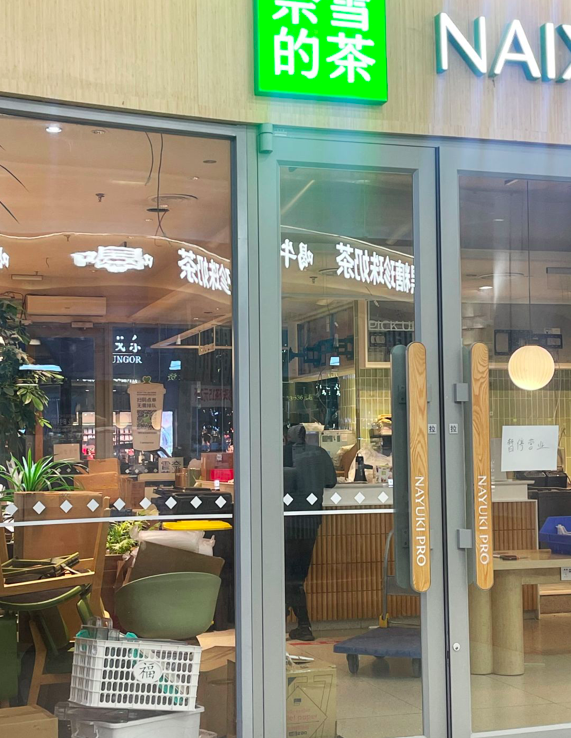
Nevertheless, the brand has not come to a halt. Nayuki has recently been actively expanding into overseas markets, having opened a new store in Bangkok, Thailand, and reinitiated development in the bakery business by launching directly operated bakeries, aiming to seek new growth points through diversified layouts. These moves show that the brand is not giving up easily, but is instead seeking transformation and breakthroughs.
However, for loyal customers, they hope that before completely withdrawing from any city, the brand would notify local consumers in advance through official channels, allowing users sufficient time to handle stored value card balances and to say goodbye with dignity to stores they’ve patronized for years. This is not just a matter of service detail, but a key aspect of brand trust.
In summary, Nayuki’s current wave of store closures reflects common challenges faced by tea beverage brands during market adjustments, including rental pressures, regional profitability disparities, and clarity around core product offerings. For consumers, understanding the recharge refund process and staying informed about brand developments will help protect their own rights amid change, and allow for a more rational view of the gains and losses during the brand’s transformation.
The above content is compiled by CoffeeHunters, a coffee news website.


